
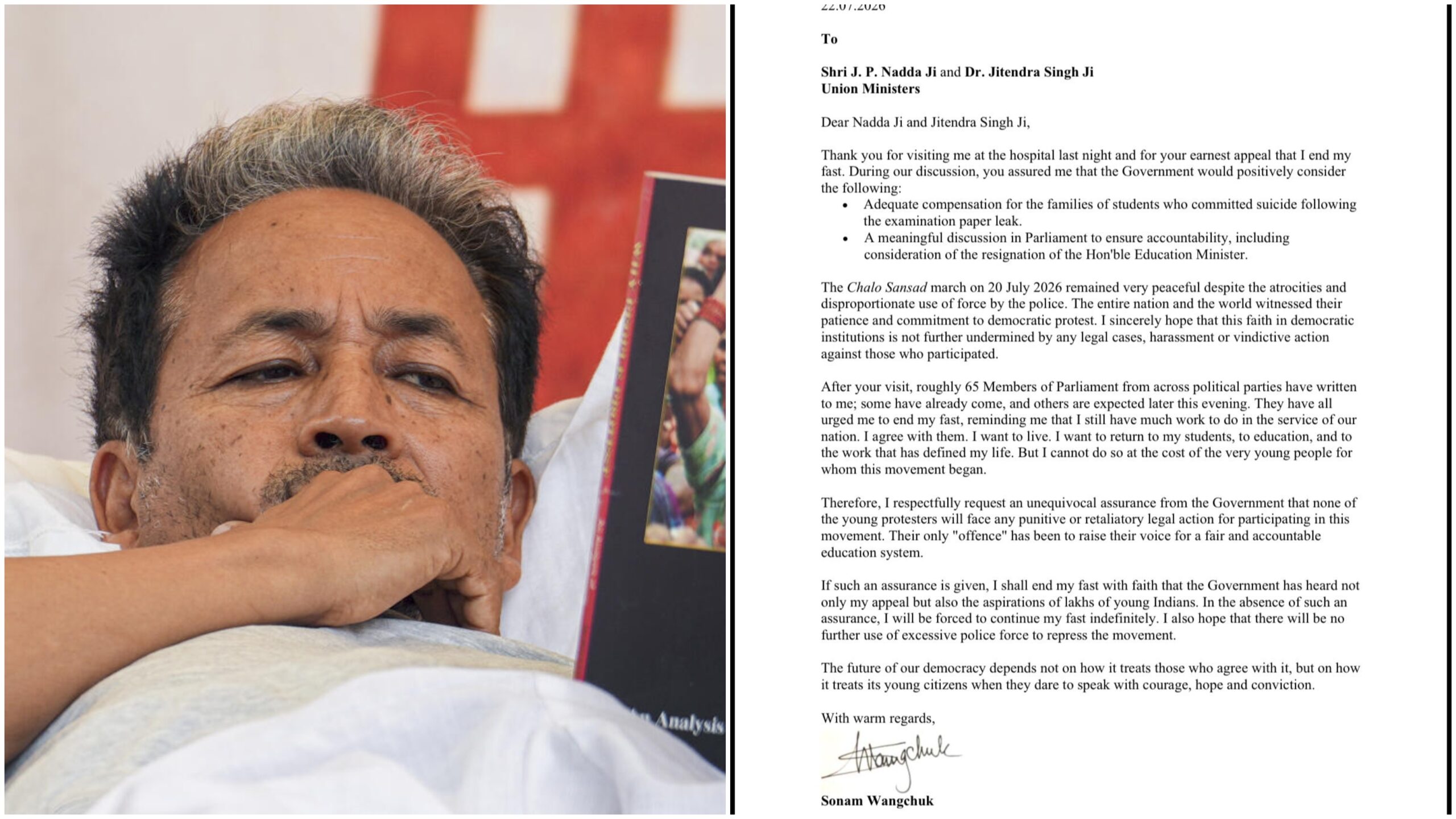
Activist Sonam Wangchuk has ended his 26-day indefinite hunger strike after receiving written assurances from the central government that peaceful protesters would not face punitive or retaliatory legal action in connection with the July 20 demonstration in Delhi.
Wangchuk shared details of the government’s assurance in a video message, saying the commitment played a key role in his decision to call off the prolonged fast. The written communication indicated that the government was positively considering not registering cases against people who had participated peacefully in the protest at Jantar Mantar and those who had joined the march towards Parliament on July 20.
The assurance came after days of discussions between Wangchuk and government representatives over the possible legal consequences for young protesters who had taken part in the movement. The activist had specifically sought a clear commitment that students and youths involved in peaceful demonstrations would not be subjected to punitive action.
According to the written assurance shared by Wangchuk, the government said it was positive on the issue of not registering cases against peaceful protesters. Wangchuk described the commitment as an important development and said the protection of young demonstrators from retaliatory action was among the key reasons behind his decision to end the fast.
Government gives assurances on NEET and examination reforms
The government’s assurances were not limited to the issue of cases against protesters. The written statement also addressed concerns surrounding alleged irregularities in competitive examinations, including the NEET controversy and the broader examination system.
The government indicated that detailed discussions on examination reforms and ways to address paper leaks would be held in Parliament. The assurance comes amid growing concerns among students and their families over the credibility and security of major entrance examinations.
The government also said it was positively considering suitable compensation for families of students who had died by suicide in the aftermath of recent NEET paper-leak controversies.
These commitments formed part of the broader set of assurances that Wangchuk received before bringing his hunger strike to an end. The development marked a temporary easing of tensions between the protest movement and the government, while also shifting attention towards the promised parliamentary discussions on examination reforms.
Ministers meet Wangchuk before fast ends
Wangchuk said Union ministers JP Nadda and Jitendra Singh met him at a hospital in Gurugram on Thursday and conveyed the government’s assurances. Representatives of Ladakh’s apex body were also present during the discussions.
According to Wangchuk, several Members of Parliament from different political parties had either visited him or expressed their support for ending the hunger strike. He said around 65 MPs had either met him or signed appeals urging him to end his fast.
The activist said the discussions over his demand for protection of protesters continued for several days. He indicated that negotiations over the issue of possible legal action against demonstrators were one of the reasons he continued the hunger strike for an additional two days before finally agreeing to end it.
The government assurances ultimately provided the basis for ending the protest, with Wangchuk saying that the commitment regarding peaceful protesters was particularly significant. 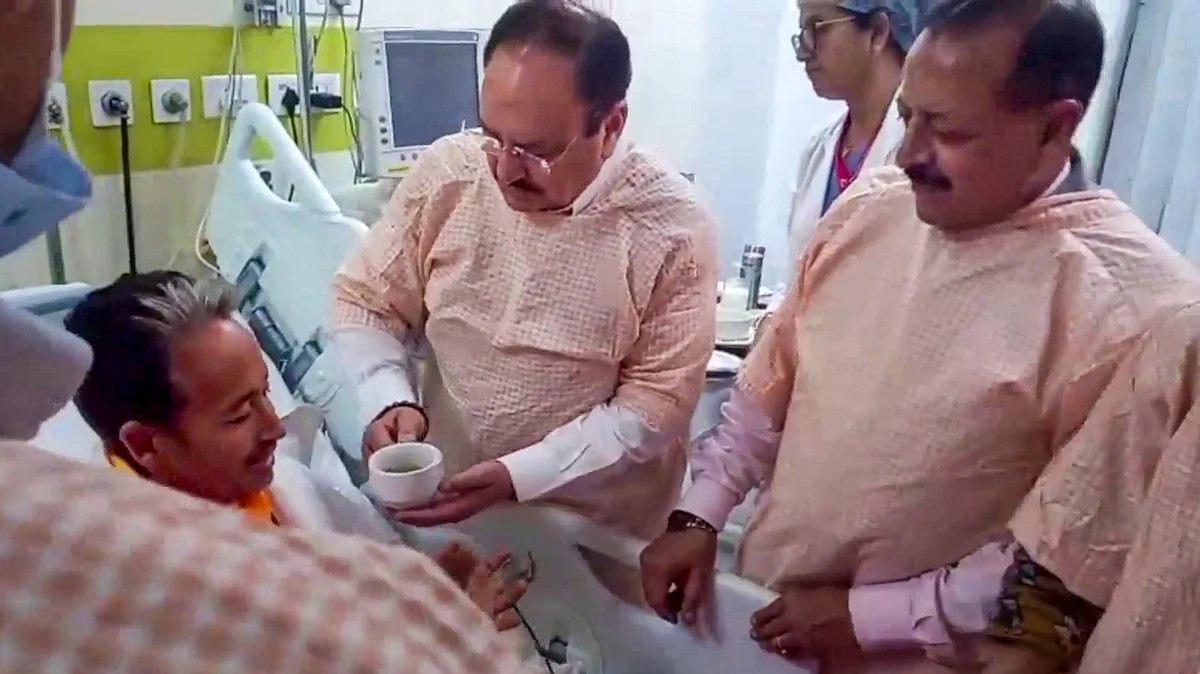
Wangchuk’s 26-day hunger strike
Wangchuk began his indefinite hunger strike on June 28, raising concerns over alleged irregularities related to the NEET examination and demanding greater accountability in the country’s examination system.
His protest also included demands for action over concerns surrounding examination paper leaks and calls for Education Minister Dharmendra Pradhan to step down.
The prolonged fast took a significant toll on his health. Over the course of 26 days, Wangchuk reportedly lost around 11 kilograms of body weight, raising concerns about his physical condition and prompting continued discussions over the future of the protest.
The hunger strike became a focal point of a wider student-led campaign, with young people and supporters seeking greater transparency and accountability in the examination process.
Removal from protest site and hospitalisation
The developments surrounding Wangchuk’s hunger strike intensified after he was removed from the Jantar Mantar protest site by Delhi Police on July 18 and taken to Safdarjung Hospital.
The move became a subject of legal proceedings after Wangchuk’s wife challenged his transfer. The Delhi High Court subsequently directed that he be shifted to a private hospital of his choice.
Wangchuk was later treated at Medanta Hospital in Gurugram, where government representatives met him and discussed the demands associated with his protest.
The episode highlighted the growing political and public attention surrounding the movement, particularly its focus on examination integrity and the concerns of students affected by alleged irregularities and paper leaks.
Focus shifts to government action
With Wangchuk’s hunger strike now over, attention is expected to turn towards whether the assurances made by the government will translate into concrete action.
The proposed parliamentary discussions on examination reforms could become an important next step in addressing concerns about paper leaks, examination security and accountability. Students and their families have repeatedly called for stronger mechanisms to prevent irregularities and ensure fairness in competitive examinations.
The government’s position on potential cases against peaceful protesters is also likely to remain closely watched. While the written assurance indicates a positive stance against registering cases involving peaceful participation in the July 20 events, the implementation of that commitment will be significant for protesters and their supporters.
For Wangchuk, ending the fast represents the conclusion of a physically demanding 26-day protest, but the broader issues raised during the movement remain unresolved. The next phase will depend on the government’s follow-up actions, parliamentary discussions and the response to demands for reforms in the examination system.
The conclusion of the hunger strike therefore does not necessarily mark the end of the larger campaign. Instead, it places the focus on the government’s assurances and whether they lead to meaningful measures on examination reforms, paper leaks and the concerns raised by students and young protesters