
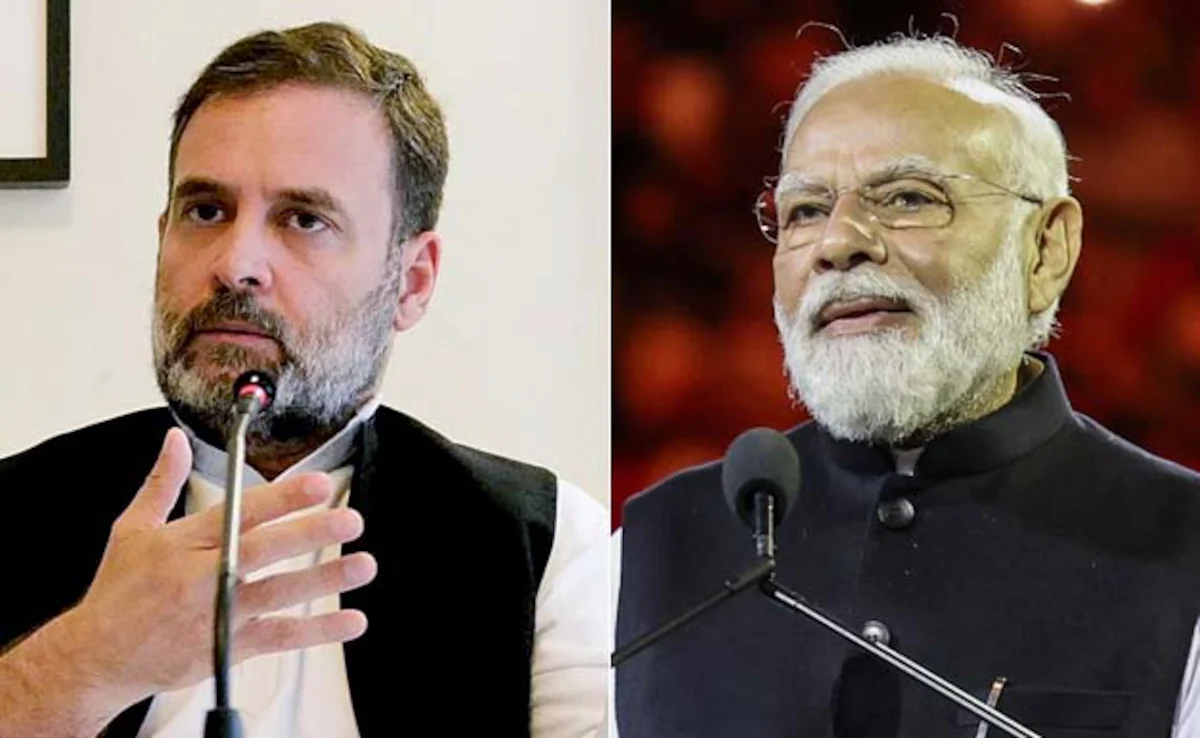
Congress leader and Leader of Opposition in the Lok Sabha Rahul Gandhi has strongly criticised Prime Minister Narendra Modi over his remarks concerning student protests and examination paper leaks, accusing the government of failing to protect the interests and future of India’s young population.
Responding to the Prime Minister’s message, Gandhi argued that the concerns being raised by students should not be dismissed and reiterated that the government must address allegations surrounding irregularities in the education and examination systems.
In a strongly worded post, Gandhi accused the government of contributing to what he described as the weakening of India’s education system. He alleged that the system had been allowed to come under excessive influence and claimed that those responsible for problems within it had not been held adequately accountable.
Gandhi’s response came amid growing political debate over examination paper leaks and the concerns of students preparing for competitive and government recruitment examinations. The issue has emerged as a major point of contention between the opposition and the government, with questions being raised over the credibility and security of examination processes.
The Congress leader said the impact of such controversies extends beyond individual examinations, arguing that repeated allegations of paper leaks and irregularities can have serious consequences for young people who spend years preparing for competitive examinations. For many students, such examinations are seen as an important pathway towards higher education, government employment and professional opportunities.
According to Gandhi, uncertainty surrounding examinations can create frustration and anxiety among students, particularly those who invest significant amounts of time and financial resources in preparation. He maintained that young people deserve a transparent and reliable examination system in which their efforts are protected from malpractice and administrative failures.
The exchange also highlights the wider political dispute over the government’s handling of education-related issues. While the opposition has repeatedly raised concerns about examination integrity and student grievances, the government has maintained its own position on the challenges facing the education sector.
The latest remarks from Gandhi are likely to intensify the political discussion around paper leaks and the broader functioning of India’s examination system. The issue has gained prominence as students and youth groups have demanded greater accountability, stronger safeguards against question paper leaks and measures to ensure that examinations are conducted fairly.
At the centre of the controversy is the question of how examination authorities can maintain public confidence in the recruitment and education process. Paper leaks and alleged irregularities can affect thousands of candidates, forcing authorities to cancel or postpone examinations and leaving students uncertain about their academic and career plans.
The political confrontation comes at a time when youth employment and access to quality education remain significant issues in the national debate. Opposition parties have sought to use student concerns to question the government’s record, while the ruling establishment has faced pressure to ensure that examination systems remain secure, transparent and credible.
Gandhi’s criticism reflects the Congress party’s broader effort to highlight issues affecting students and young job seekers. By focusing on examination integrity, the opposition has sought to draw attention to the challenges faced by candidates who depend on competitive examinations to secure employment and build their careers.
The Congress leader’s remarks also underline the growing importance of youth-related issues in India’s political discourse. With millions of students preparing for examinations each year, any disruption or allegation of malpractice can have a far-reaching impact on families and communities.
The latest political exchange is therefore not limited to a disagreement between two senior political leaders. It has also brought renewed attention to the larger questions of accountability, examination security and the government’s responsibility towards students.
As the debate continues, the focus is expected to remain on the concerns of candidates and the steps required to prevent examination-related irregularities. Students and their families are likely to seek stronger institutional safeguards, timely action against wrongdoing and greater transparency in the conduct of major examinations.
The controversy has once again placed the education system at the centre of political debate, with the opposition demanding accountability and the government facing questions over how it intends to protect the credibility of examinations. For students, however, the central concern remains unchanged: ensuring that their hard work, preparation and future opportunities are not undermined by failures in the examination system.