
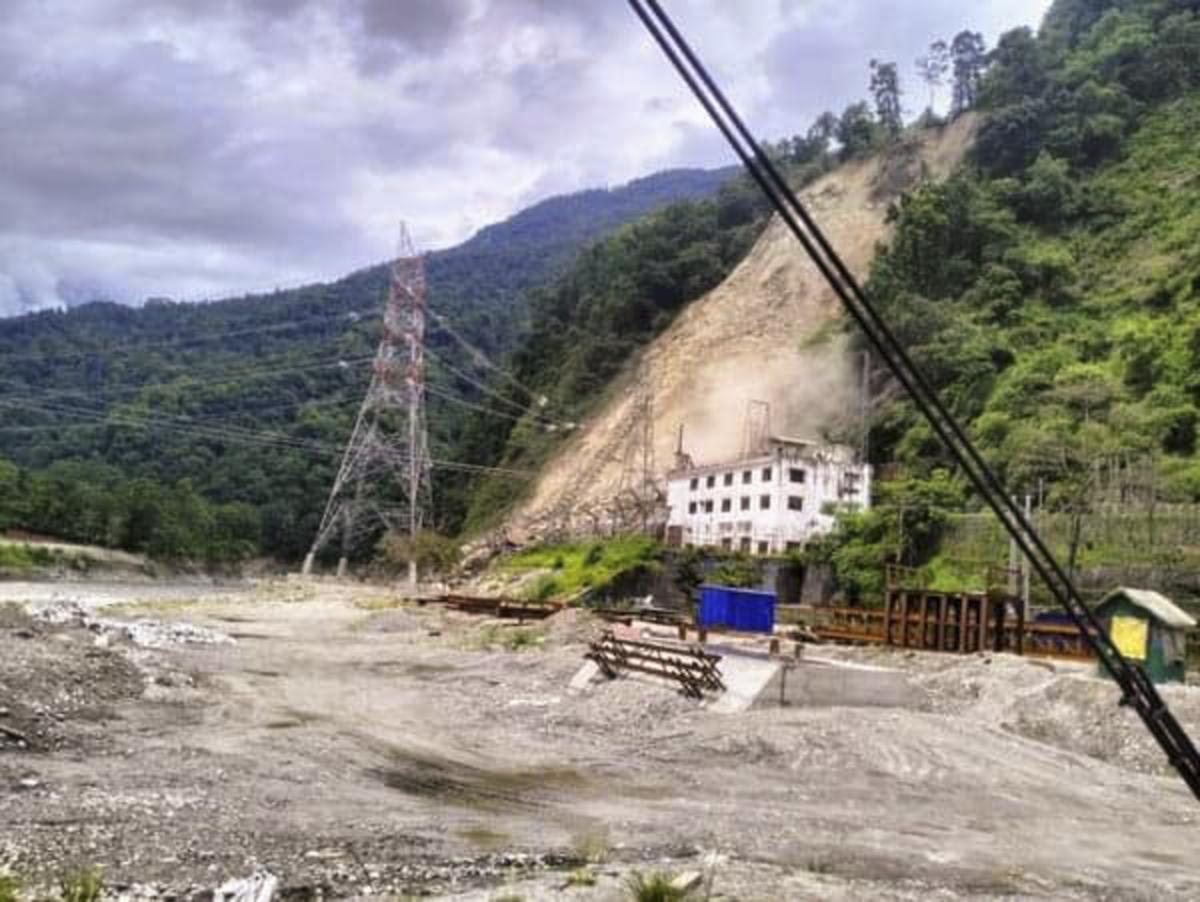
At least eight people have died and 19 others are feared trapped following a series of landslides that struck an under-construction tunnel of the Teesta hydropower project in Sikkim’s Namchi district, triggering a major rescue operation amid persistent rain and difficult terrain.
The incident took place at Samardung in the district, where workers were engaged in construction activities inside a tunnel linked to the Teesta Stage VI hydroelectric power project. The landslides reportedly blocked access to the workers, leaving several people trapped deep inside the tunnel.
According to officials, rescue teams recovered eight bodies in the early hours of Tuesday after working through the night. However, efforts to reach the remaining workers have been severely affected by continuous rainfall, unstable terrain and challenging conditions at the disaster site.
Authorities said the workers believed to be trapped are located several kilometres inside the tunnel, making the rescue operation particularly difficult. Teams have been working to clear the debris and create a safe passage to reach those who may still be alive.
The scale of the incident became clearer as officials assessed the number of people present at the site when the landslides occurred. Officials said 19 workers employed by a private company and six personnel associated with the hydroelectric project were at the location. While some workers managed to escape, others remained trapped following the collapse and obstruction caused by the landslides.
There was also initial confusion over the exact number of people trapped inside the tunnel. At one stage, officials reported that 16 workers had been rescued, but subsequent information indicated that the situation was more serious than initially understood. Officials later attributed the discrepancy to a communication gap between different departments involved in the emergency response.
The rescue mission has faced repeated setbacks since the landslides occurred. Three initial attempts to reach the trapped workers were reportedly unsuccessful, with heavy rainfall and the difficult mountainous terrain creating additional risks for rescue personnel. The unstable conditions have made it difficult for teams to safely approach the affected section of the tunnel.
Officials said that rescue operations continued throughout the night, with personnel working under challenging circumstances to locate and evacuate the trapped workers. The recovery of the eight bodies has added to concerns about the fate of those still believed to be inside the tunnel.
The state administration has mobilised multiple agencies to coordinate the rescue and recovery effort. Teams from the district administration, police, State Disaster Response Force, Fire and Emergency Services and the National Disaster Response Force have been deployed at the site. Specialised teams from nearby areas have also been involved in the operation.
Sikkim Chief Minister Prem Singh Tamang-Golay expressed deep sorrow over the deaths and conveyed his condolences to the families of the workers who lost their lives. He said the state government was closely monitoring the situation and that all available resources were being used to support the ongoing rescue operation.
The chief minister also said that disaster response personnel and other specialised agencies were working continuously to evacuate those still trapped and recover the bodies of the victims.
The landslide has once again highlighted the serious risks associated with infrastructure construction in Sikkim’s mountainous terrain, particularly during periods of intense rainfall. The northeastern Himalayan state is vulnerable to landslides and other weather-related disasters because of its steep slopes, fragile geological conditions and heavy monsoon precipitation.
The Teesta river basin has witnessed several major natural disasters in recent years, underlining the challenges faced by communities and infrastructure projects in the region. Construction activity in mountainous areas can become particularly hazardous during periods of prolonged rainfall, when soil saturation and slope instability increase the possibility of landslides.
For the rescue teams at Samardung, however, the immediate priority remains reaching the workers who are still feared trapped. The presence of debris and the unstable conditions inside and around the tunnel have slowed the operation, while continuing rainfall has created further obstacles.
Authorities are expected to continue clearing the affected area and assessing the structural condition of the tunnel before advancing deeper into the site. The rescue operation is being carried out cautiously because any further movement of earth or debris could pose a threat to both trapped workers and emergency personnel.
The tragedy has caused grief among the families of those working at the project site, while officials continue to gather information about the exact sequence of events and the number of people affected. The focus remains on locating the 19 workers feared trapped and determining whether further survivors can be brought out safely.
As rescue operations continue, the death toll could change depending on the progress made by emergency teams inside the tunnel. Authorities are also expected to examine the circumstances surrounding the incident, including the impact of heavy rainfall and landslides on the under-construction infrastructure.
The incident has brought renewed attention to the need for strict safety measures at large infrastructure projects in ecologically sensitive and disaster-prone Himalayan regions. For now, rescue personnel remain engaged at the site, working against adverse weather and challenging terrain in an effort to save lives and bring the operation to a conclusion.