
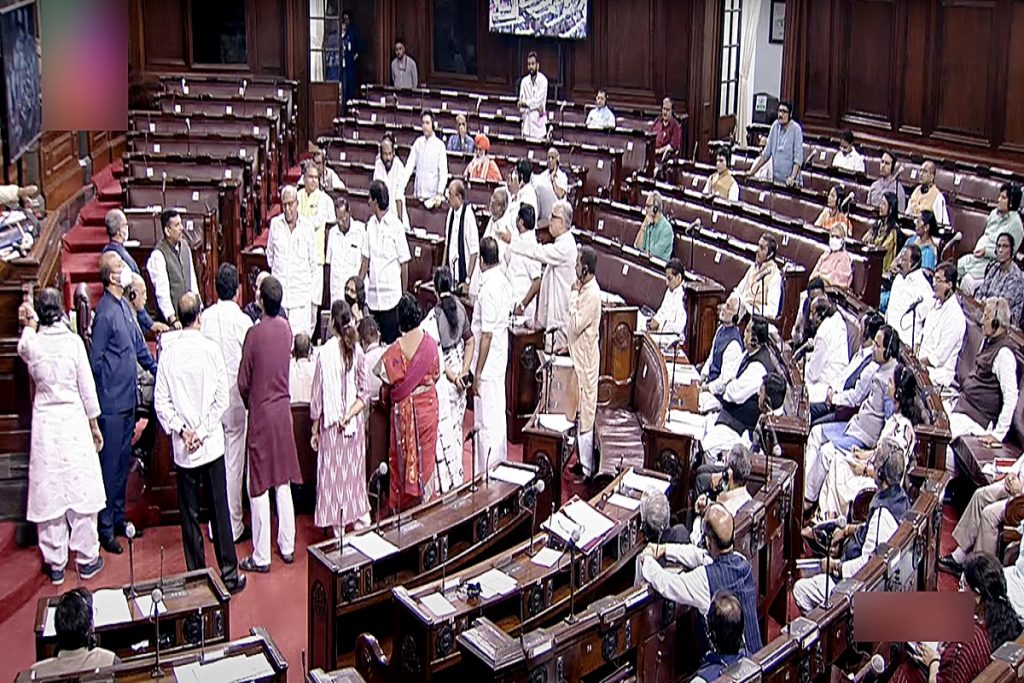
The Monsoon Session of Parliament commenced amid high political drama as members of the Opposition staged coordinated protests over the ongoing revision of Bihar’s electoral rolls and several other pressing national issues. The opening day witnessed disruptions in both the Lok Sabha and the Rajya Sabha, reflecting the growing political tensions between the ruling government and the Opposition alliance ahead of upcoming elections.
The Opposition accused the government of avoiding discussions on matters of significant public importance, while the ruling side maintained that Parliament should function smoothly and focus on legislative business. The developments set the tone for what is expected to be a highly contentious session.
Opposition Raises Concerns Over Bihar Electoral Roll Revision
One of the central issues raised by Opposition parties was the ongoing revision of the voter list in Bihar. Leaders from several Opposition parties alleged that the exercise could potentially disenfranchise eligible voters if not carried out with complete transparency and fairness.
Opposition members demanded an immediate discussion in Parliament, arguing that the revision process must protect every citizen’s constitutional right to vote. They questioned the timing and implementation of the exercise, expressing concerns that genuine voters might face unnecessary difficulties in proving their eligibility.
The government, however, defended the electoral revision process, stating that maintaining an accurate and updated electoral roll is a routine administrative exercise conducted in accordance with established legal procedures.
Heated Scenes in Both Houses
As Parliament assembled for the first sitting of the session, Opposition MPs gathered inside and outside both Houses carrying placards and raising slogans demanding accountability on various issues. Their protests resulted in repeated interruptions during proceedings.
The Speaker and the Chair urged members to maintain order and allow parliamentary business to continue. Despite these appeals, frequent disruptions affected the functioning of both Houses, highlighting the sharp political divide between the government and the Opposition.
Parliamentary officials repeatedly requested members to return to their seats and participate in discussions through established parliamentary procedures rather than protests. 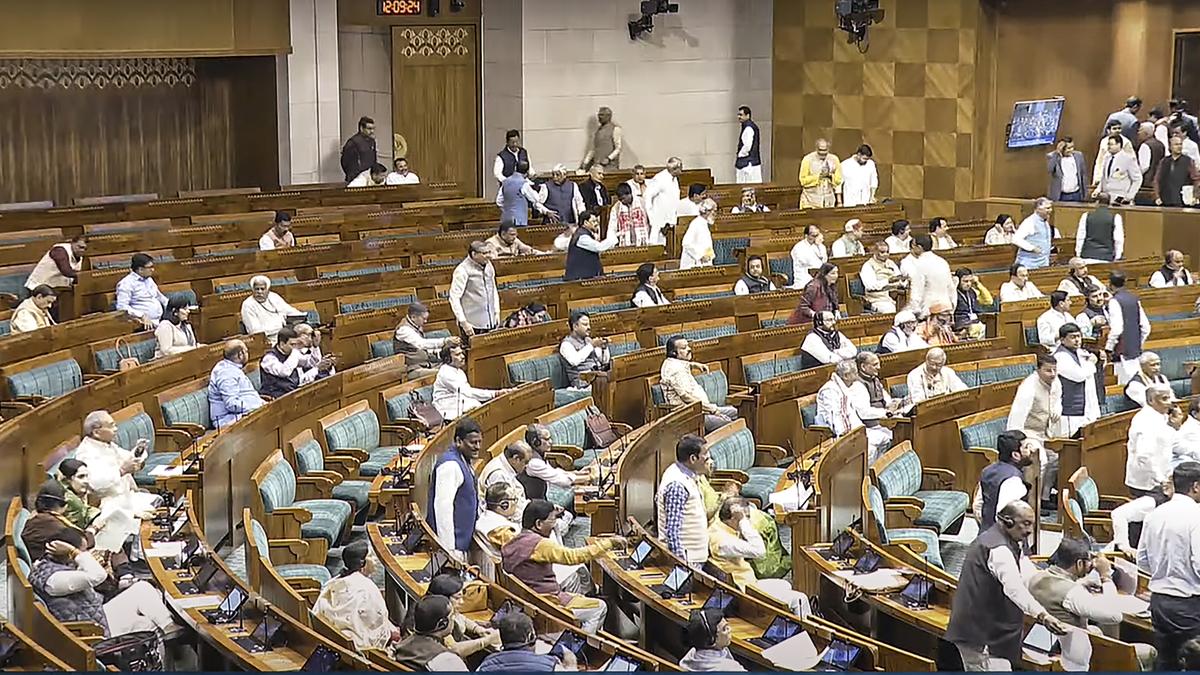
Government Appeals for Constructive Debate
The government called upon all political parties to ensure the smooth functioning of Parliament, emphasizing that the Monsoon Session provides an important opportunity to debate national issues and consider legislative proposals.
Senior ministers stated that Parliament remains the appropriate platform for discussing matters raised by the Opposition, provided debates take place in an orderly manner. The government expressed its willingness to engage in discussions while stressing that repeated disruptions reduce the time available for legislative work.
The ruling alliance also appealed to Opposition parties to prioritize public interest by allowing scheduled business to proceed.
Opposition Seeks Discussion on Multiple National Issues
Apart from the Bihar voter roll revision, Opposition parties sought discussions on several issues they described as being of national importance. They argued that Parliament should address concerns relating to governance, democratic institutions, public welfare, and administrative decisions affecting citizens.
Leaders from the Opposition alliance maintained that elected representatives have a constitutional responsibility to question the government and seek explanations on issues impacting the public.
They also insisted that sensitive matters should receive dedicated debates instead of brief statements or procedural responses.
Legislative Agenda Expected During the Session
The Monsoon Session is expected to witness the introduction and discussion of several important bills and policy proposals. Alongside legislative business, members are likely to raise questions concerning economic policies, governance, social welfare schemes, infrastructure development, education, agriculture, employment, and national security.
Parliament is also expected to examine government initiatives through debates, question hour, and committee proceedings. The session offers an opportunity for both the treasury benches and the Opposition to present their positions on significant policy matters.
Political Significance Ahead of Future Elections
Political observers believe the Monsoon Session carries considerable importance as it takes place during a period of heightened political activity across the country. The debates and exchanges inside Parliament are expected to influence the broader political narrative, particularly as parties prepare for future electoral contests.
The Opposition appears determined to use Parliament as a platform to press the government on issues it believes require greater public accountability. Meanwhile, the government aims to advance its legislative agenda while projecting an image of stability and effective governance.
Session Likely to Witness Intense Debates
With both sides firmly committed to their respective positions, the Monsoon Session is expected to feature intense debates, procedural confrontations, and discussions on a wide range of political, economic, and constitutional issues.
As the session progresses, attention will remain focused on whether Parliament can balance robust democratic debate with the smooth conduct of legislative business. The outcome of these discussions is likely to shape the national political discourse in the weeks ahead, making this session one of the most closely watched parliamentary proceedings of the year.