
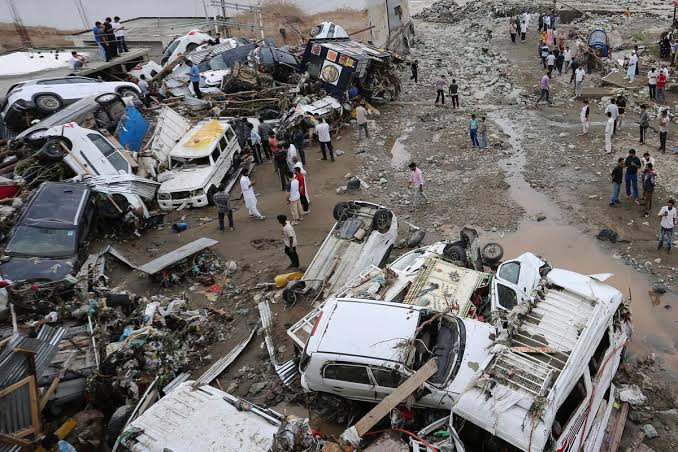
Persistent heavy rainfall has significantly slowed rescue and relief operations across several flood-affected areas of Jammu and Kashmir, where the death toll from the recent flash floods and landslides has risen to 12. Emergency response teams continue to battle challenging weather conditions as swollen rivers, damaged roads, and unstable terrain make access to affected villages increasingly difficult.
Authorities said continuous downpours have disrupted ongoing search efforts, raising concerns that more people could still be trapped or missing in remote locations. Rescue personnel, including disaster response teams, police, local administration officials, and volunteers, are working around the clock despite adverse weather to locate survivors and provide assistance to stranded residents.
The severe weather has caused widespread destruction across multiple districts, with flash floods washing away roads, bridges, and agricultural land. Landslides triggered by the relentless rainfall have blocked major transportation routes, isolating several villages and delaying the movement of rescue teams, relief supplies, and heavy equipment.
Officials reported that many affected families have been evacuated to safer locations, where temporary relief camps have been established. These camps are providing food, drinking water, medical assistance, and emergency shelter to displaced residents. However, difficult weather conditions continue to pose serious logistical challenges for relief agencies.
Search-and-rescue teams have been using specialized equipment wherever possible, but ongoing rainfall has limited visibility and increased the risk of further landslides. Authorities have urged rescue personnel to proceed with extreme caution while carrying out operations in vulnerable areas.
The latest fatalities were reported from regions severely affected by flash floods and landslides. Several victims lost their lives after being trapped under debris or swept away by fast-moving floodwaters. Officials are continuing to verify reports of missing persons while assessing the full extent of the disaster.
Infrastructure across the affected districts has suffered extensive damage. Numerous roads remain blocked, electricity supply has been disrupted in several areas, and communication networks have been impacted, making coordination of rescue operations more challenging. Restoration teams have begun repair work wherever weather conditions permit, though progress remains slow.
The administration has intensified relief measures by deploying additional personnel and machinery to vulnerable locations. Heavy earthmoving equipment has been mobilized to clear landslides and reopen blocked highways, while medical teams have been dispatched to monitor public health concerns in relief camps and affected communities.
Weather authorities have warned that more rainfall is likely over the coming days, raising fears of fresh landslides and additional flooding. Residents living near rivers, streams, and landslide-prone slopes have been advised to remain alert and follow evacuation instructions issued by local authorities.
Officials have appealed to the public to avoid unnecessary travel, particularly through mountainous routes where road conditions remain highly unstable. Tourists and pilgrims have also been advised to closely monitor official weather updates before planning any journeys within the region.
The disaster has once again highlighted the vulnerability of the Himalayan region to extreme weather events. Experts note that intense rainfall over short periods can rapidly trigger flash floods, landslides, and river overflows, especially in mountainous terrain where infrastructure is often exposed to natural hazards.
Relief agencies continue to assess damage to homes, public infrastructure, agricultural fields, and livestock. Financial assistance and rehabilitation measures are expected to be announced after detailed assessments of losses are completed.
As rescue teams continue their search under extremely difficult conditions, authorities remain focused on saving lives, restoring essential services, and ensuring that relief reaches every affected community. With rain continuing across much of Jammu and Kashmir, emergency agencies remain on high alert for any further deterioration in the situation.