
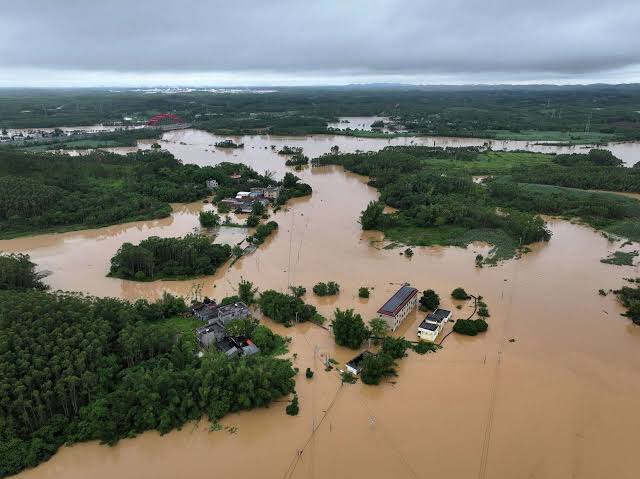
At least 39 people have lost their lives after relentless rainfall triggered severe flooding across parts of southern China, leaving communities submerged, infrastructure damaged, and emergency teams racing to rescue stranded residents. The disaster has once again highlighted the growing challenges posed by extreme weather events in the region, where prolonged downpours have disrupted daily life and forced thousands from their homes.
Authorities continue to assess the full scale of the devastation as floodwaters inundate residential areas, destroy roads and bridges, and isolate several communities. Rescue workers remain on the ground, conducting search-and-rescue operations while providing emergency relief to affected families.
Torrential Rains Trigger Deadly Flooding
Days of intense rainfall caused rivers to overflow, resulting in widespread flooding across multiple locations in southern China. Water levels rose rapidly, overwhelming drainage systems and inundating low-lying neighborhoods.
The powerful floods swept away vehicles, damaged homes, and cut off transportation links in several districts. Emergency responders worked around the clock to evacuate residents trapped by rising waters and provide temporary shelter for those displaced by the disaster.
Officials confirmed that the flooding has claimed 39 lives, while rescue teams continue searching for anyone who may still be missing.
Extensive Damage to Infrastructure
The heavy rains caused significant damage to public infrastructure, disrupting transportation and essential services. Several roads were rendered impassable due to flooding and landslides, making it difficult for emergency teams to reach isolated areas.
Bridges, power facilities, and communication networks also suffered varying degrees of damage, creating additional challenges for rescue operations and relief efforts. Local authorities have begun assessing structural damage while working to restore basic services as quickly as possible.
Public transportation in some affected areas experienced major disruptions, with residents advised to avoid unnecessary travel until conditions improve. 
Emergency Response Intensifies
Chinese authorities deployed emergency response teams, firefighters, police personnel, and disaster management officials to the worst-hit regions. Rescue boats and specialized equipment were used to reach stranded residents, while temporary evacuation centers were established to accommodate displaced families.
Medical teams have also been mobilized to provide treatment for the injured and prevent the spread of waterborne diseases that often follow major flooding events.
Emergency agencies continue to monitor rainfall patterns and river levels closely, warning residents in vulnerable locations to remain alert as additional rainfall could worsen flooding in some areas.
Communities Face Significant Challenges
Thousands of residents have been affected by the floods, with many forced to leave their homes after floodwaters entered residential neighborhoods. Families have lost personal belongings, crops, and livestock, while businesses have suffered financial losses due to prolonged flooding.
Agricultural regions have also reported extensive damage, raising concerns over crop losses and their potential impact on local food production.
Authorities are coordinating relief efforts, including the distribution of food, drinking water, blankets, and other essential supplies to affected communities.
Extreme Weather Raises Fresh Concerns
Southern China experiences seasonal heavy rainfall each year, but experts have increasingly warned that climate-related weather extremes are contributing to more intense and unpredictable storms.
Episodes of prolonged rainfall have become more frequent in several parts of Asia, increasing the risk of flash floods, landslides, and urban flooding. Governments continue investing in flood-control infrastructure, early warning systems, and disaster preparedness measures to reduce future risks.
Meteorological agencies remain vigilant as weather forecasts indicate that additional rainfall could affect parts of the region in the coming days, prompting authorities to maintain emergency response measures.
Rescue and Recovery Continue
Recovery efforts are expected to continue for several days as floodwaters gradually recede. Officials are prioritizing the restoration of transportation routes, electricity, clean water supplies, and communication services while conducting detailed damage assessments.
Humanitarian assistance remains focused on supporting displaced families and helping communities begin the long process of rebuilding after one of the latest deadly flooding events to strike southern China.
Authorities have urged residents to follow official weather advisories, avoid flooded areas, and cooperate with emergency personnel as rescue and relief operations continue across the affected regions.