
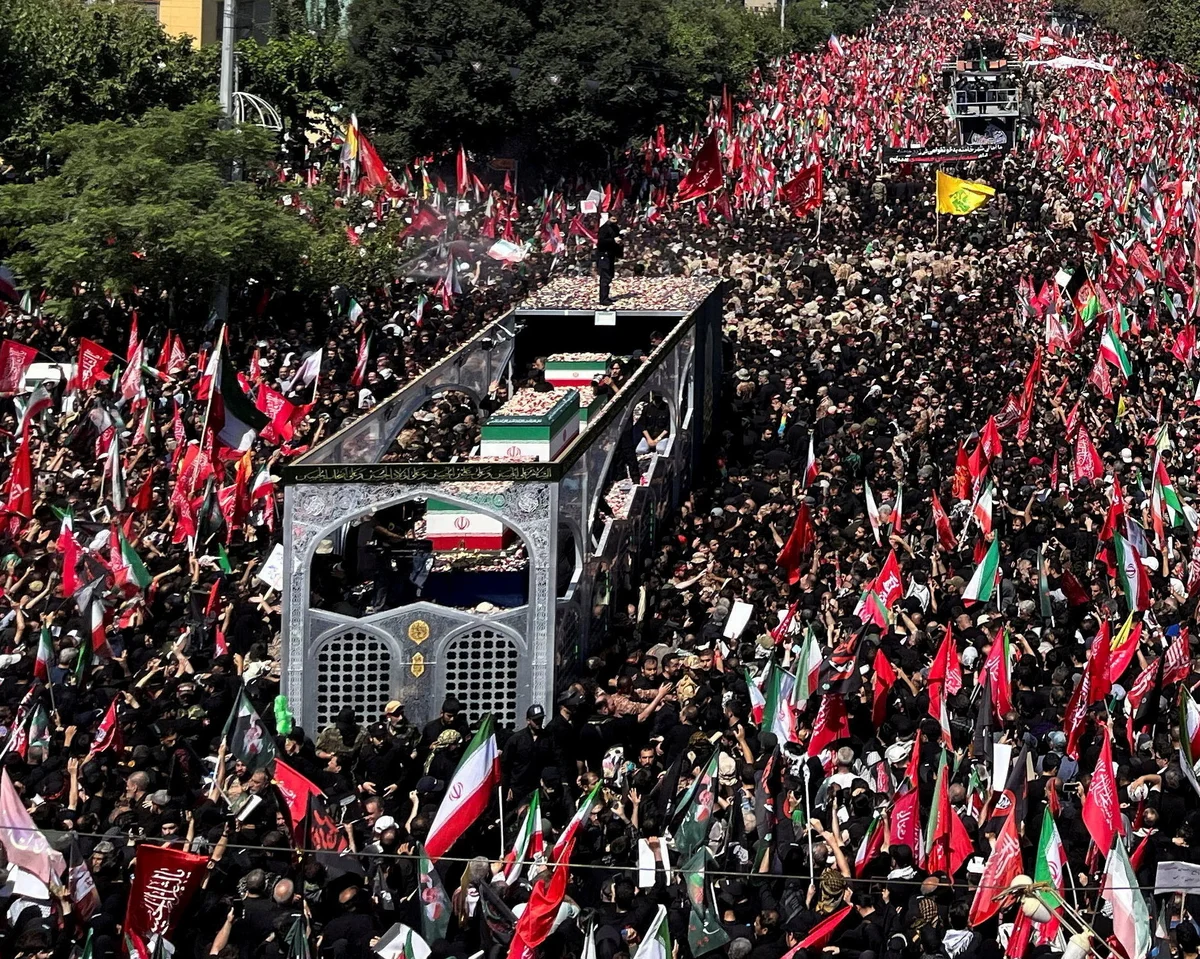
Iran has entered one of the most significant chapters in its modern political history following the funeral of Supreme Leader Ayatollah Ali Khamenei. His passing marks the end of an era that shaped the country’s domestic governance, regional influence, and international relations for decades. While state authorities have projected an image of unity and continuity, the nation now finds itself deeply divided over what comes next.
For millions of Iranians, Khamenei’s death represents more than the loss of a political and religious leader. It has triggered intense debate over the future direction of the Islamic Republic, the leadership transition, and whether the country can address mounting economic, political, and social challenges that have intensified in recent years.
A Nation Divided Over Khamenei’s Legacy
Ayatollah Ali Khamenei led Iran for decades, overseeing periods of political transformation, economic sanctions, military expansion, and growing regional influence. Supporters regard him as the architect of Iran’s strategic resilience, arguing that he safeguarded the nation’s independence despite international pressure and geopolitical isolation.
His critics, however, view his tenure differently. They point to restrictions on political freedoms, limitations on civil liberties, suppression of dissent, and prolonged economic hardships as defining characteristics of his leadership. The divide reflects broader tensions that have existed within Iranian society for years.
These contrasting perspectives have become increasingly visible following his funeral, highlighting the challenge facing the country’s next leadership in uniting a politically polarized population.
Leadership Transition Becomes the Central Question
Attention has now shifted to the process of selecting Iran’s next Supreme Leader. Under Iran’s constitutional framework, the Assembly of Experts holds the responsibility of appointing the country’s highest authority. The selection process is expected to be closely watched both inside Iran and internationally due to its far-reaching political and strategic implications.
Political observers believe the decision will influence every aspect of Iranian governance, including domestic reforms, economic policy, foreign relations, and national security. The next leader will inherit a country facing multiple internal and external pressures that demand careful management.
The transition is expected to be among the most consequential political developments in Iran since the establishment of the Islamic Republic.
Economic Challenges Continue to Weigh on the Country
Beyond the leadership transition, Iran faces significant economic difficulties that have affected daily life for millions of citizens. Inflation, unemployment, currency instability, and the continued impact of international sanctions have created persistent financial strain across the country.
Many Iranian families continue to struggle with rising living costs, while businesses face challenges linked to restricted international trade and investment. Analysts believe economic recovery will remain one of the most urgent priorities for the incoming leadership.
The ability of the new administration to restore public confidence may depend heavily on its capacity to improve economic conditions while navigating complex international diplomatic relationships.
Growing Public Expectations for Reform
The political transition has also renewed discussions about governance and reform. Different sections of Iranian society have expressed varying expectations regarding the country’s future.
Some citizens hope the leadership change could create opportunities for greater political openness, economic modernization, and stronger engagement with the international community. Others support maintaining the country’s existing ideological framework while focusing on national stability and security.
These competing expectations illustrate the broader debate over Iran’s identity and future direction, making the coming months particularly significant.
Regional and Global Implications
Iran’s leadership transition extends beyond its national borders. As one of the Middle East’s most influential powers, the country’s political stability has direct implications for regional security, diplomatic relations, and ongoing geopolitical developments.
Neighboring countries, international allies, and global powers are closely monitoring the succession process. Any shift in Tehran’s strategic priorities could influence regional alliances, nuclear negotiations, security cooperation, and diplomatic engagement across the Middle East.
Foreign policy experts suggest that continuity is likely in many core strategic areas, but the approach and style of future leadership could introduce important changes over time.
Balancing Stability With Public Confidence
Iranian authorities have emphasized institutional stability throughout the transition, seeking to reassure both domestic audiences and international observers that governance will continue without disruption.
However, political analysts note that maintaining stability alone may not be sufficient. The incoming leadership will also need to address growing public concerns over economic opportunity, social development, governance, and international engagement.
Successfully balancing these priorities could determine Iran’s political trajectory for years to come.
An Uncertain Yet Historic Turning Point
The passing of Ayatollah Ali Khamenei represents one of the most consequential moments in contemporary Iranian history. His decades-long leadership left an undeniable mark on the country’s political institutions, foreign policy, and national identity.
As Iran moves beyond his era, it faces difficult choices about leadership, governance, economic recovery, and its place in an increasingly complex global landscape. Whether the next chapter brings continuity, gradual reform, or significant political change remains uncertain.
What is clear is that Iran now stands at a historic crossroads, with decisions made during this transition likely to shape the nation’s future for generations.