
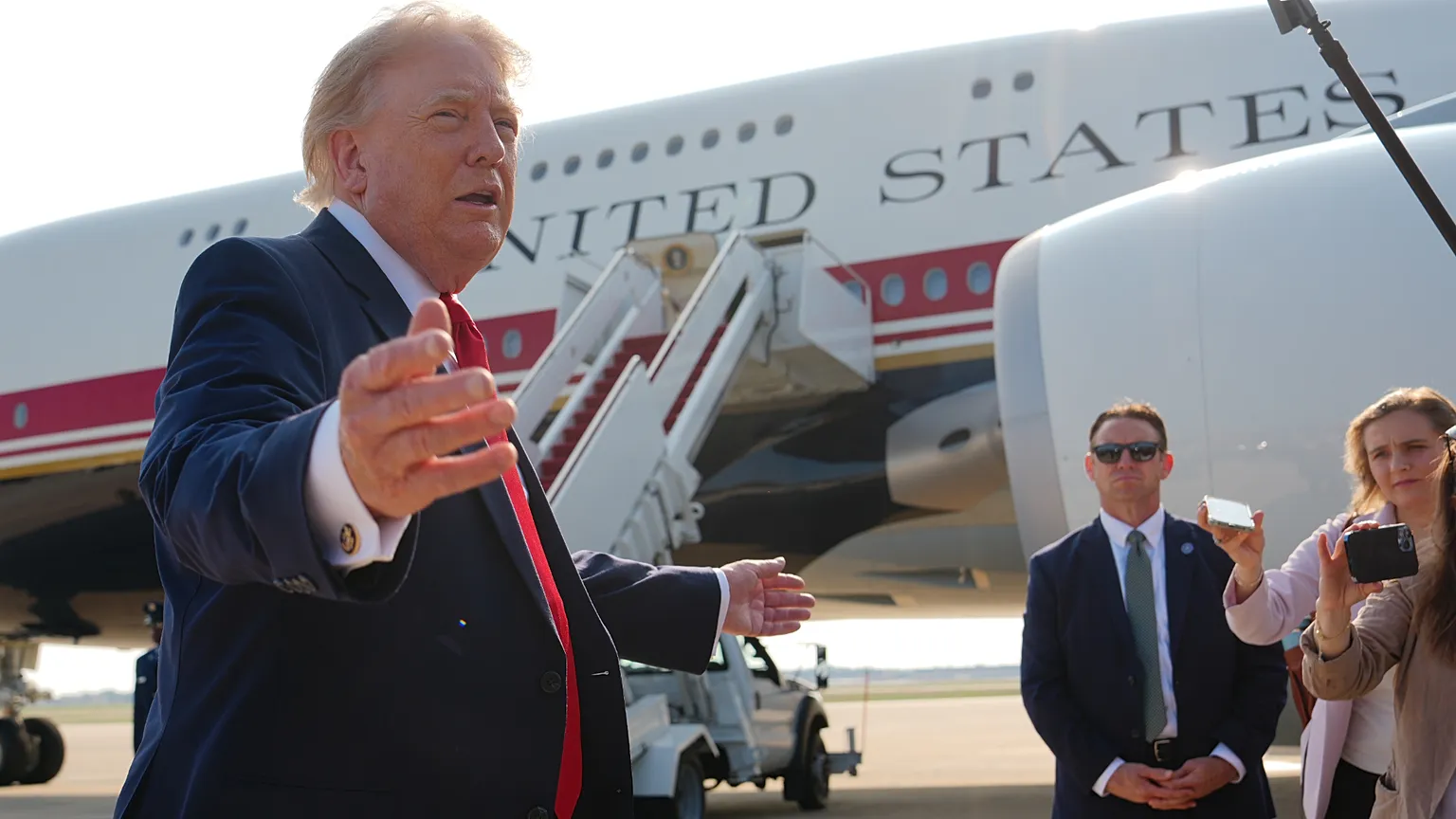
U.S. President Donald Trump has once again cast doubt on the extent of America’s commitment to the North Atlantic Treaty Organization (NATO), arguing that it is unreasonable for the United States to continue carrying what he described as an outsized share of the alliance’s defense responsibilities. His latest remarks have reignited debate over burden-sharing within NATO and raised fresh questions about the future direction of U.S. foreign policy toward its long-standing military allies.
Speaking during a public interaction, Trump criticized the current structure of NATO funding and defense commitments, asserting that the United States contributes disproportionately to the alliance while several European members fail to match America’s level of investment. He argued that the financial imbalance is unfair to American taxpayers and suggested that Washington should reconsider its existing level of support unless allied nations contribute more significantly.
Renewed Criticism of NATO
Trump has consistently maintained that many NATO members have relied too heavily on American military strength for decades. During his previous presidency, he repeatedly urged allied nations to increase their defense expenditures, warning that the alliance could not continue functioning effectively if member states failed to meet agreed spending targets.
His latest comments echoed those earlier positions, describing the current arrangement as “ridiculous” and emphasizing that European countries should assume greater responsibility for their own security. According to Trump, the United States should no longer bear the largest share of military and financial obligations while other wealthy nations contribute comparatively less.
The remarks are expected to resonate with supporters who favor a more restrained American role in global military commitments and advocate prioritizing domestic economic and security interests.
Longstanding Debate Over Defense Spending
Burden-sharing has remained one of the most contentious issues within NATO for years. The alliance encourages member countries to spend at least two percent of their gross domestic product (GDP) on defense to ensure collective readiness and military capability.
Although several European nations have significantly increased defense budgets in recent years, particularly following heightened security concerns across Europe, spending levels continue to vary among alliance members. Some countries have reached or exceeded the agreed benchmark, while others remain below the target despite ongoing commitments to strengthen their armed forces.
Trump argued that these disparities reinforce his belief that the United States has been subsidizing European security for far too long. 
Implications for NATO’s Future
Trump’s remarks have renewed attention on how a future U.S. administration under his leadership could reshape relations with NATO. During his previous term, his criticism of the alliance prompted concerns among allies about America’s long-term commitment to collective defense.
Despite repeated assurances from NATO leadership regarding the alliance’s unity and effectiveness, Trump’s comments suggest that burden-sharing would once again become a central issue if he returns to office. Analysts note that any significant shift in Washington’s approach could have far-reaching consequences for European security planning, military cooperation, and transatlantic diplomacy.
NATO’s collective defense principle, enshrined in Article 5 of its founding treaty, remains one of the alliance’s defining commitments. The provision states that an attack on one member is considered an attack on all, making mutual defense the cornerstone of NATO’s security framework.
Growing Security Challenges
Trump’s statements come at a time when NATO faces multiple security challenges, including ongoing geopolitical tensions, increased military modernization, cyber threats, and regional conflicts that have prompted member states to strengthen collective defense capabilities.
Many European governments have accelerated investments in defense infrastructure, weapons procurement, and military readiness in response to evolving security conditions. Several nations have also announced long-term plans to increase defense budgets and modernize armed forces to better meet alliance objectives.
Supporters of these initiatives argue that stronger European military capabilities complement rather than replace American leadership within NATO.
Political and Diplomatic Reactions
Trump’s renewed criticism is likely to generate mixed reactions across both the United States and Europe. Supporters argue that demanding greater financial contributions from allies represents responsible fiscal policy and encourages a more balanced partnership.
Critics, however, warn that repeated public criticism of NATO could create uncertainty among allies and potentially embolden strategic rivals by raising questions about the alliance’s cohesion. They contend that NATO has remained one of the world’s most successful security alliances because of its commitment to collective defense and coordinated military cooperation.
European leaders have increasingly acknowledged the need to strengthen defense capabilities while continuing to emphasize the importance of maintaining close transatlantic ties with Washington.
Looking Ahead
As discussions over defense spending and alliance responsibilities continue, Trump’s latest remarks underscore the broader debate over America’s global security role. Whether the United States should continue serving as NATO’s principal military contributor or encourage greater European self-reliance is expected to remain a defining issue in international politics.
With security challenges continuing to evolve across multiple regions, future decisions regarding NATO funding, defense cooperation, and strategic priorities will likely influence the alliance’s effectiveness and the broader international security landscape for years to come.