

The world is witnessing an unprecedented increase in the production, trafficking, and consumption of synthetic drugs, according to a new global assessment by the United Nations. The report highlights a rapidly changing drug landscape that is becoming increasingly difficult for authorities to monitor and control, posing serious threats to public health, law enforcement systems, and international security.
The findings indicate that synthetic drugs are reshaping global narcotics markets at a pace never seen before. Unlike traditional plant-based narcotics such as cocaine, heroin, and cannabis, synthetic substances can be manufactured in laboratories using chemical ingredients, making production faster, cheaper, and less dependent on agricultural cultivation.
Synthetic Drugs Transforming Global Drug Markets
The report notes that synthetic narcotics have emerged as one of the most significant challenges facing governments worldwide. Criminal networks are increasingly shifting toward these substances because they can be produced almost anywhere, require limited physical space, and are easier to conceal during transportation.
Experts warn that the synthetic drug market is becoming more diversified, with hundreds of new substances appearing across different regions. These include powerful stimulants, synthetic opioids, and designer drugs that are often modified to evade legal restrictions and regulatory oversight.
The rapid emergence of these compounds is creating difficulties for health authorities, forensic laboratories, and law enforcement agencies, many of which struggle to identify new substances quickly enough to prevent their spread.
Growing Public Health Concerns
Health officials have expressed alarm over the increasing availability of potent synthetic drugs, some of which are significantly stronger than traditional narcotics. Many of these substances carry a heightened risk of overdose, poisoning, addiction, and long-term health complications.
The report emphasizes that users frequently consume synthetic drugs without fully understanding their potency or chemical composition. In many cases, illicit manufacturers alter formulas or mix substances with other compounds, increasing the likelihood of accidental overdoses and severe medical emergencies.
Synthetic opioids, in particular, continue to raise concerns because even tiny quantities can be lethal. Authorities in several regions have reported rising fatalities linked to these substances, prompting calls for stronger monitoring systems and enhanced public awareness campaigns.
Criminal Networks Exploiting Technological Advances
The expansion of synthetic drug markets is closely linked to technological advancements and globalization. Criminal organizations are increasingly using sophisticated methods to source chemical precursors, manufacture drugs, and distribute them across borders.
Online platforms, encrypted communication tools, and digital payment systems have enabled traffickers to operate with greater efficiency while reducing the risk of detection. Authorities say these developments have complicated traditional enforcement efforts and created new challenges for international cooperation.
The report also highlights the growing role of transnational criminal groups that coordinate production and trafficking activities across multiple countries. Such networks often adapt quickly to regulatory changes, shifting manufacturing locations and altering chemical formulas to stay ahead of law enforcement measures.
Record Seizures Reflect Expanding Markets
Law enforcement agencies worldwide have reported record levels of synthetic drug seizures in recent years. While these operations demonstrate increased enforcement activity, they also underscore the scale and growth of the illicit market.
The report suggests that rising seizure volumes indicate expanding production capacity and stronger trafficking networks. In several regions, authorities have dismantled large-scale clandestine laboratories capable of producing vast quantities of synthetic substances.
Despite these successes, officials acknowledge that enforcement actions alone are unlikely to solve the problem. The adaptability of criminal organizations allows them to quickly replace disrupted supply chains and resume operations elsewhere. 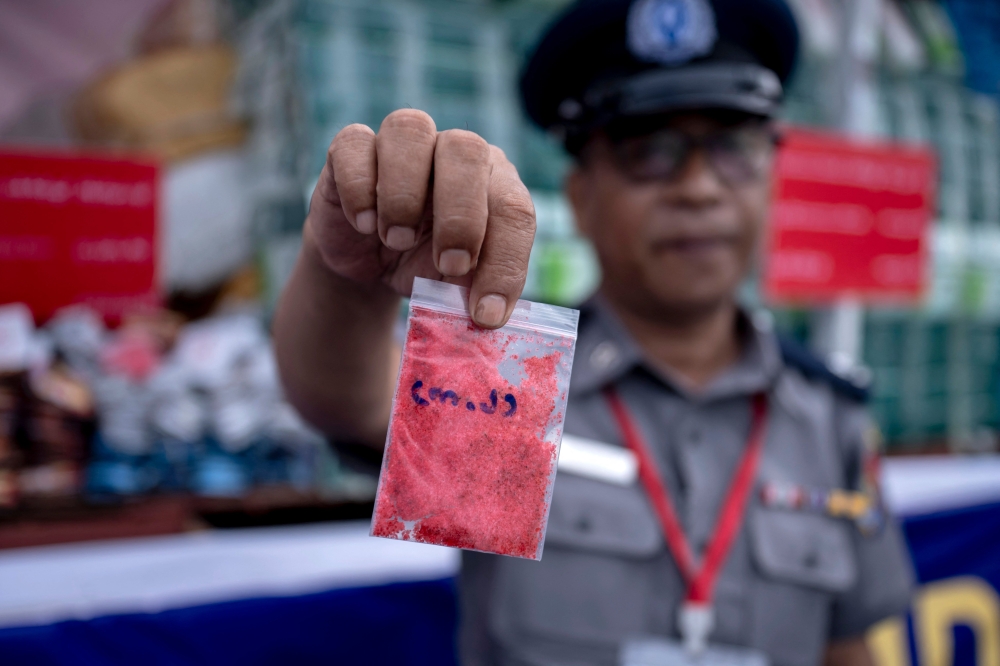
Impact Extending Beyond Traditional Drug-Producing Regions
One of the most significant trends identified in the report is the globalization of synthetic drug production. Unlike traditional narcotics, which are often concentrated in specific geographic areas due to agricultural requirements, synthetic substances can be manufactured in virtually any country with access to precursor chemicals and basic laboratory equipment.
As a result, regions previously considered peripheral to global drug production are increasingly becoming manufacturing, transit, or consumer hubs. This shift is creating new security and public health challenges for governments that may have limited experience dealing with large-scale synthetic drug markets.
Need for Stronger International Cooperation
The United Nations has called for enhanced international cooperation to address the growing threat posed by synthetic drugs. The report stresses the importance of intelligence sharing, coordinated law enforcement operations, stricter monitoring of precursor chemicals, and stronger regulatory frameworks.
Experts argue that an effective response will require a balance between enforcement, prevention, treatment, and harm-reduction strategies. Governments are encouraged to invest in early-warning systems capable of detecting new substances before they become widespread.
Public health agencies are also being urged to expand treatment services and educational campaigns aimed at reducing demand and increasing awareness of the risks associated with synthetic narcotics.
A New Era in the Global Drug Crisis
The report concludes that the rapid expansion of synthetic drugs represents a major transformation in the global drug landscape. Their ease of production, evolving chemical composition, and ability to cross borders quickly have created a complex challenge that extends beyond traditional anti-narcotics efforts.
As criminal networks continue to innovate and adapt, international organizations and governments face mounting pressure to develop more agile and coordinated responses. Without sustained global action, experts warn that synthetic drugs could further deepen public health crises, strengthen organized crime networks, and increase instability in affected regions around the world.
The findings serve as a stark reminder that the global drug problem is entering a new phase—one defined by synthetic substances, technological sophistication, and rapidly changing trafficking patterns that demand urgent attention from policymakers and law enforcement agencies alike.