
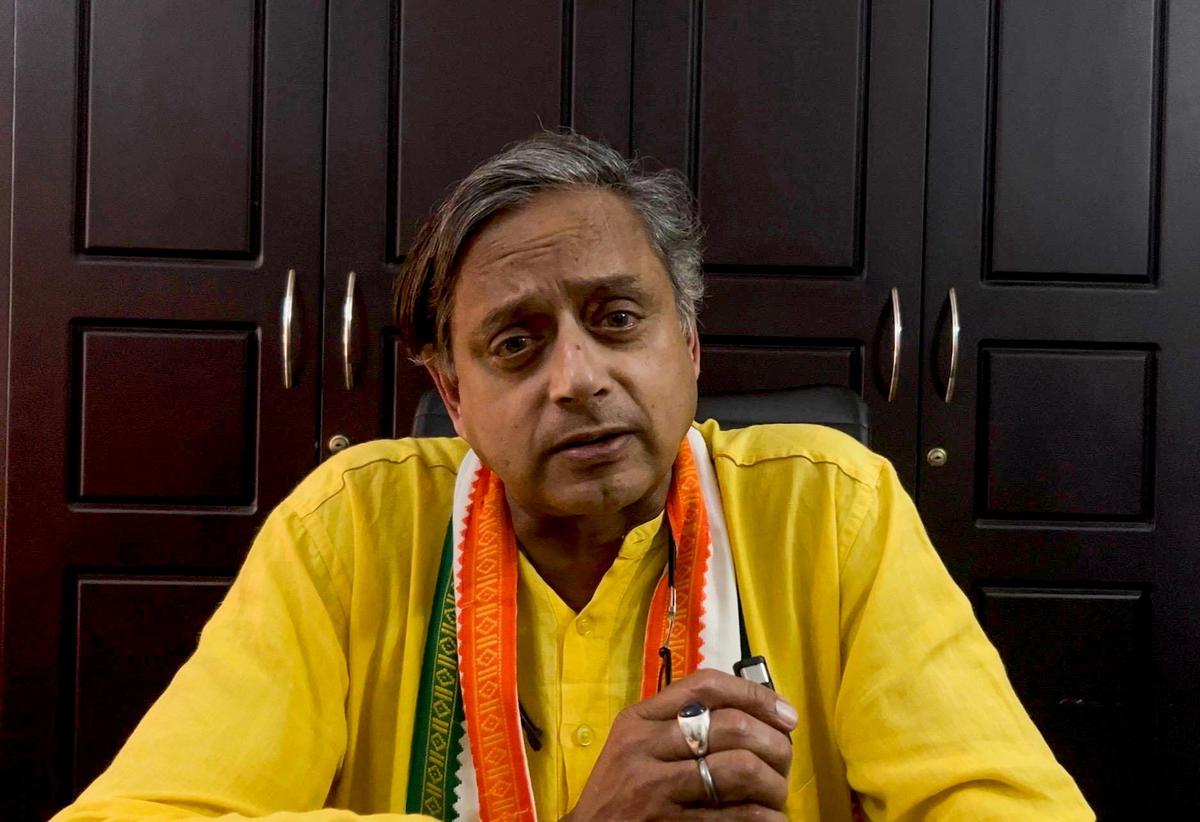
A fresh political controversy has emerged within the Congress party following senior leader Shashi Tharoor’s recent visit to Jammu and Kashmir, where he met Lieutenant Governor Manoj Sinha. The visit has sparked criticism from within the party itself, revealing growing differences among Congress leaders regarding engagement with the Union Territory’s administration and the broader political situation in Kashmir.
The disagreement has once again highlighted the challenges facing the opposition party as it seeks to maintain a unified stance on key national issues while accommodating diverse viewpoints among its senior leaders.
Tharoor’s Kashmir Visit Draws Attention
Shashi Tharoor’s visit to Jammu and Kashmir included interactions with local stakeholders and a meeting with Lieutenant Governor Manoj Sinha. While such meetings are often viewed as part of a broader effort to understand regional concerns and governance issues, the visit quickly became a subject of political debate.
The controversy intensified after some Congress leaders questioned the purpose and timing of the meeting, arguing that it could be interpreted as sending mixed political signals at a time when the party has been critical of the Centre’s policies in Jammu and Kashmir.
Party leaders who voiced concerns suggested that engagements with the Lieutenant Governor should be carefully calibrated, given the Congress party’s longstanding position on issues related to democratic representation, statehood, and governance in the region.
Ravinder Sharma Voices Objections
Among those expressing reservations was senior Congress leader Ravinder Sharma, who publicly questioned aspects of Tharoor’s outreach. Sharma’s comments reflected concerns shared by a section of the party leadership that individual initiatives should align closely with the party’s collective political messaging.
His remarks triggered a wider discussion within Congress circles, with supporters and critics of Tharoor offering differing interpretations of the visit. While some viewed the meeting as a routine political engagement, others argued that it risked creating confusion about the party’s official stance on Jammu and Kashmir.
The exchange underscored the broader challenge facing Congress as it balances regional political sensitivities with national-level opposition politics. 
Tharoor’s Independent Political Style Under Spotlight
The episode has once again brought attention to Shashi Tharoor’s distinctive political approach. Known for frequently expressing independent views on national and international issues, Tharoor has often occupied a unique space within the Congress party.
Over the years, he has occasionally taken positions that differ from the dominant narrative within the organization, leading to debates but also earning support from those who advocate greater internal discussion and ideological flexibility.
Supporters of Tharoor argue that engagement with constitutional authorities and regional stakeholders should not automatically be viewed through a partisan lens. They contend that dialogue remains an essential component of democratic politics and governance.
Critics, however, maintain that senior leaders must ensure their actions are consistent with the party’s official positions, particularly on sensitive political issues.
Kashmir Remains a Sensitive Political Issue
Jammu and Kashmir continues to be one of the most politically sensitive regions in India. Since the constitutional changes introduced in 2019, opposition parties, including Congress, have repeatedly raised concerns regarding statehood, democratic representation, and political rights in the region.
The Congress leadership has consistently called for the restoration of full statehood and greater democratic participation. Against this backdrop, any interaction involving prominent opposition leaders and government-appointed administrators often attracts heightened scrutiny.
Political analysts note that such disagreements are not uncommon within large national parties. However, public exchanges between senior leaders can amplify perceptions of internal divisions, especially ahead of significant political developments.
Wider Implications for Congress
The latest controversy arrives at a time when Congress is attempting to strengthen its organizational structure and present a cohesive political narrative. Internal disagreements over strategy and messaging have periodically surfaced within the party, reflecting the diversity of views among its leaders.
While differences of opinion are a normal part of democratic political organizations, public disputes can create challenges in communicating a unified message to voters.
The debate surrounding Tharoor’s Kashmir visit is therefore being viewed not only as a regional political issue but also as a reflection of broader discussions within Congress about leadership, strategy, and engagement with institutions.
Political Reactions Continue
As reactions continue to emerge, the controversy has fueled discussions across political circles regarding the balance between individual political outreach and party discipline. Observers believe the episode may prompt further conversations within Congress about how senior leaders engage with government institutions and communicate their initiatives.
For now, the dispute has once again placed the spotlight on both Shashi Tharoor’s role within the party and the ongoing debate over Congress’s approach to Jammu and Kashmir.
The developments underline the complexities of opposition politics in India, where regional sensitivities, national strategies, and individual leadership styles often intersect, creating challenges as well as opportunities for political parties seeking to maintain unity while accommodating diverse perspectives.