

Amid growing concerns over food adulteration and misleading social media claims about so-called “plastic eggs” and artificially coloured fruits, the Food Safety and Standards Authority of India (FSSAI) has urged consumers to remain vigilant and use simple home-based methods to verify the quality and purity of commonly consumed food items.
The food regulator has highlighted easy techniques that can help people identify possible adulteration in products such as eggs and watermelons, two staple foods that often become the subject of health-related rumours and safety concerns.
Rising Concerns Over Food Purity
Food safety has emerged as a major issue in recent years as consumers increasingly seek healthier and more natural food options. Viral claims regarding plastic eggs and chemically enhanced fruits have frequently sparked panic among the public.
Health experts, however, emphasize that while complete “plastic eggs” are largely a myth, certain forms of food adulteration and artificial enhancement do occur and can pose risks to consumers if not identified in time.
To increase awareness, FSSAI has encouraged people to perform basic checks at home before consuming such products.
How to Identify Suspicious Eggs
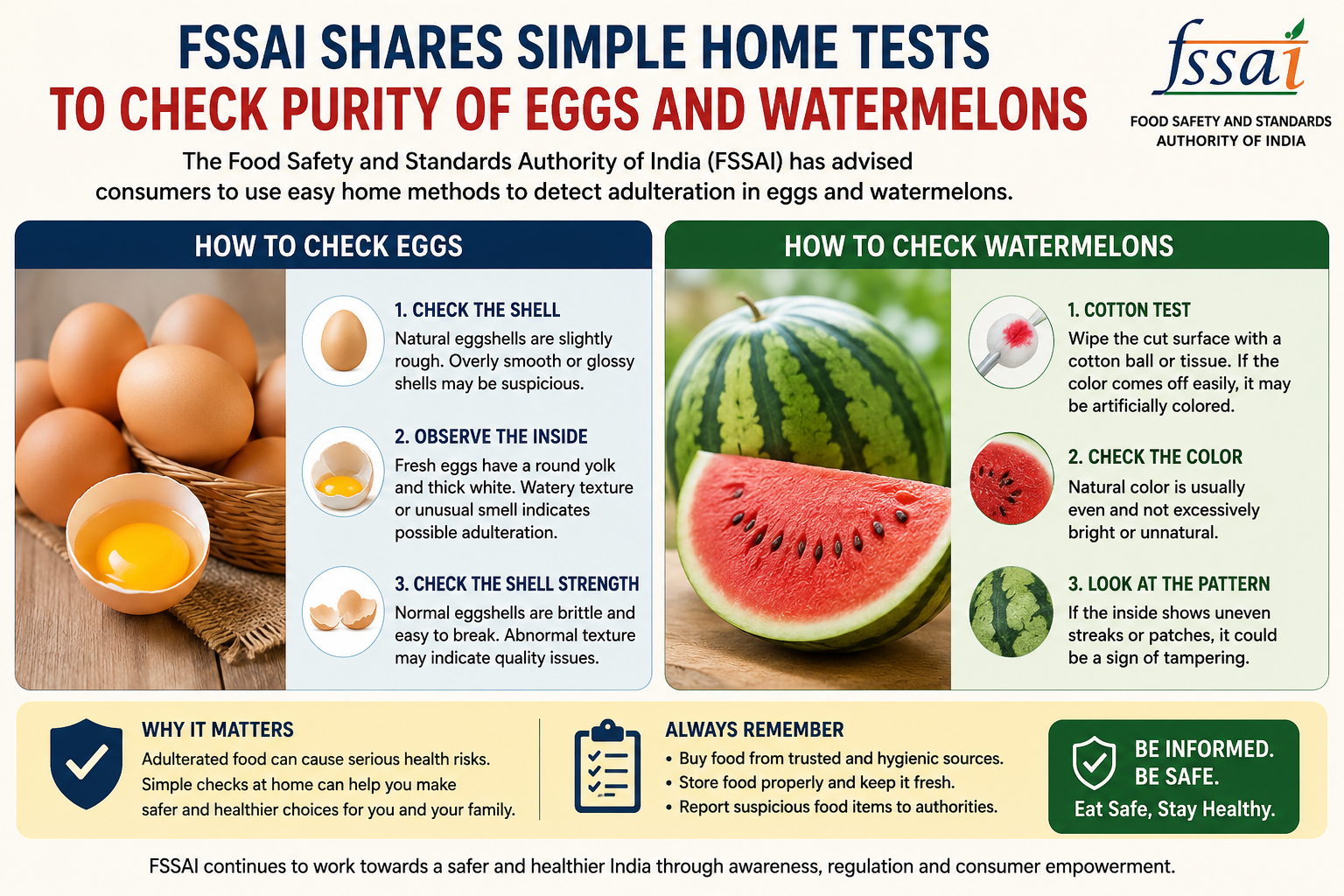
According to food safety guidelines, consumers should closely examine the shell and internal structure of eggs before use. Genuine eggs generally have a slightly rough shell surface, while unusually glossy or excessively smooth shells may warrant closer inspection.
Once cracked open, a fresh and natural egg usually has a well-defined yolk surrounded by thick egg white. If the contents appear excessively watery, emit an unusual smell or show irregular consistency, consumers are advised to avoid consumption.
Another useful indicator is the behavior of the shell after breaking. Natural eggshells are generally brittle and easy to crush, whereas abnormal texture may indicate quality concerns.
Checking Watermelons for Artificial Colouring
Watermelons are another food item that often raises concerns regarding artificial colouring. Some reports have suggested that unethical practices may involve the use of synthetic dyes to enhance the appearance of the fruit.
To verify quality, consumers can wipe the cut surface of a watermelon using a cotton ball or tissue paper. If excessive colour transfers onto the cotton, it could indicate the presence of external colouring agents.
Experts also recommend examining the flesh carefully. Naturally ripened watermelons typically have evenly distributed colour and a fresh appearance, while unusual bright shades or inconsistent patterns may require caution.
Importance of Consumer Awareness
Food safety specialists believe consumer awareness plays a critical role in preventing health risks associated with adulterated products. Although regulatory authorities conduct regular inspections and quality checks, informed buyers can act as the first line of defence against unsafe food practices.
Nutrition experts advise purchasing food items from trusted vendors, maintaining proper storage conditions and paying attention to unusual texture, smell or appearance before consumption.
Role of FSSAI in Strengthening Food Safety
The Food Safety and Standards Authority of India continues to conduct awareness campaigns aimed at educating the public about food quality and hygiene. The organization regularly shares information on safe eating practices and encourages consumers to report suspicious products through appropriate channels.
As food adulteration concerns continue to evolve, authorities stress that public awareness and scientific verification remain essential in ensuring consumer safety.
With growing dependence on packaged and commercially supplied food, experts say that simple household checks combined with responsible purchasing habits can significantly reduce health risks and help families make informed choices.