
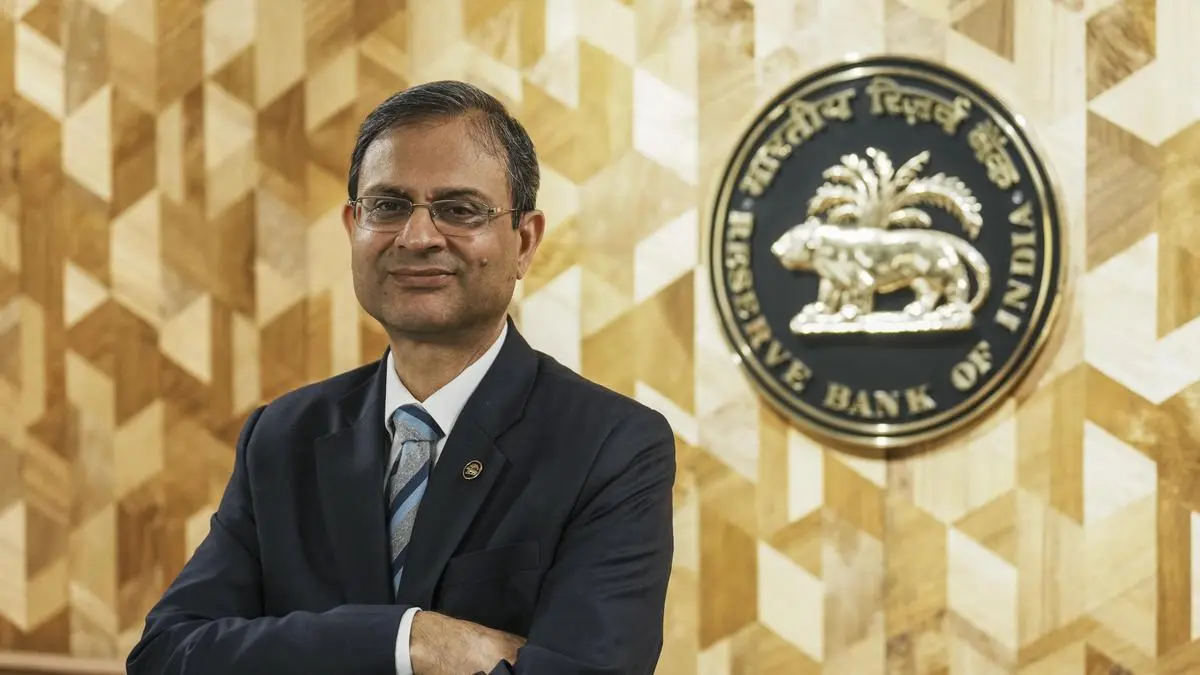
The Reserve Bank of India (RBI) has decided to keep the benchmark repo rate unchanged at 5.25% following the latest meeting of its Monetary Policy Committee (MPC), signaling a cautious approach as policymakers navigate a complex economic environment marked by inflationary pressures, global uncertainties, and currency volatility.
The decision, announced after the MPC’s policy review, reflects the central bank’s effort to strike a balance between supporting economic growth and ensuring price stability. Alongside the unchanged repo rate, the RBI retained its “neutral” monetary policy stance, indicating that future policy actions will remain data-dependent and responsive to evolving economic conditions.
Key Policy Rates Remain Unchanged
Under the latest policy framework:
Repo Rate: 5.25%
Standing Deposit Facility (SDF) Rate: 5.00%
Marginal Standing Facility (MSF) Rate: 5.50%
Bank Rate: 5.50%
The MPC voted to maintain the current rate structure, continuing a trend of policy stability after significant rate reductions over the past year.
Why the RBI Chose to Pause
The central bank’s decision comes at a time when the Indian economy faces a mix of domestic and external challenges. Rising global crude oil prices, geopolitical tensions, supply-chain disruptions, and pressure on the rupee have complicated the inflation outlook. Despite these concerns, the RBI assessed that underlying inflation remains manageable and does not currently warrant a policy tightening cycle.
Officials emphasized that while inflationary risks have increased, particularly from imported energy costs, economic growth remains resilient. High-frequency indicators, including manufacturing activity and business sentiment, continue to point toward steady economic momentum. 
Growth Support Remains a Priority
A key factor behind the RBI’s decision was the need to support economic growth amid a challenging global backdrop. Policymakers acknowledged uncertainties arising from geopolitical developments and fluctuations in commodity markets, which could affect both domestic demand and investment sentiment.
By maintaining the repo rate, the central bank aims to preserve favorable financing conditions for businesses and consumers while closely monitoring inflation trends. The neutral stance provides flexibility to either tighten or ease policy in the future depending on incoming economic data.
Impact on Borrowers and Businesses
For borrowers, the RBI’s decision means lending rates are likely to remain stable in the near term. Home loan customers, especially those with floating-rate loans linked to external benchmarks, can expect their equated monthly installments (EMIs) to remain unchanged for now.
Businesses also benefit from predictable borrowing costs, which can support investment plans and expansion strategies. Stability in interest rates is particularly important for sectors such as real estate, infrastructure, manufacturing, and consumer finance, where financing costs play a crucial role in growth decisions. 
Financial Markets React Positively
The policy announcement was broadly in line with market expectations, resulting in a positive response from investors. Equity markets remained stable after the RBI reaffirmed its neutral stance and maintained rates, with rate-sensitive sectors such as financial services and real estate attracting attention.
Market participants are now expected to focus on future inflation readings, currency movements, and global economic developments to assess the likely direction of monetary policy in upcoming reviews.
Focus on Inflation and the Rupee
One of the central concerns for policymakers remains the depreciation of the rupee and its potential impact on imported inflation. Rising energy prices and external uncertainties have added pressure on the currency, prompting authorities to adopt additional measures aimed at supporting financial stability and attracting capital inflows.
The RBI reiterated its commitment to keeping inflation within the target range while ensuring that economic growth is not unnecessarily constrained by premature policy tightening.
Outlook for the Coming Months
The June 2026 policy decision underscores the RBI’s preference for caution in an environment characterized by geopolitical tensions, volatile commodity prices, and evolving global financial conditions. By maintaining the repo rate at 5.25% and retaining a neutral stance, the central bank has signaled that it will continue to assess incoming economic data before making any significant policy adjustments.
Going forward, inflation trends, crude oil prices, monsoon performance, currency movements, and global economic developments will remain critical factors shaping the RBI’s policy decisions. For now, the central bank appears focused on preserving macroeconomic stability while ensuring that India’s growth momentum remains intact.