
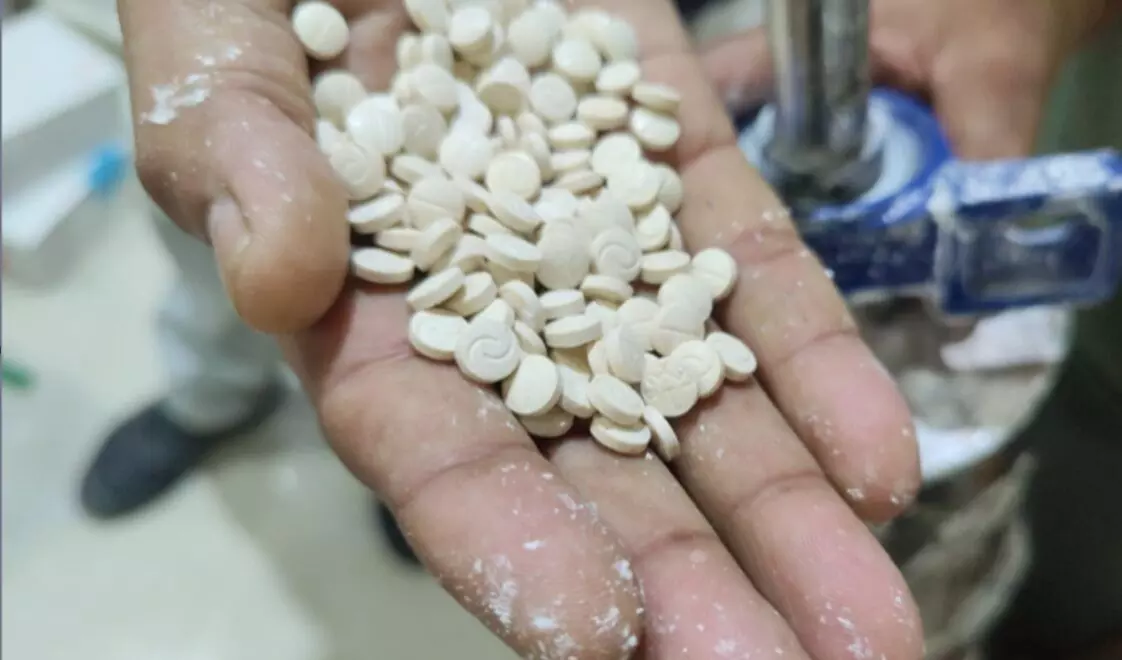
In a major anti-narcotics breakthrough, the Narcotics Control Bureau (NCB) has dismantled a clandestine drug manufacturing unit in Uttarakhand’s Dehradun that was allegedly producing Captagon, a banned synthetic stimulant widely associated with international smuggling networks and extremist groups in West Asia. The operation has exposed what investigators believe is a sophisticated transnational narcotics network involving Syrian nationals, illegal manufacturing infrastructure, and large-scale trafficking routes extending beyond India.
The crackdown forms part of a wider investigation launched after authorities seized massive consignments of Captagon tablets and powder valued at nearly ₹182 crore in separate operations linked to Delhi and Gujarat. Officials described the development as one of India’s most significant seizures involving the banned psychotropic substance, often referred to globally as the “jihadi drug” because of its alleged links to militant groups operating in conflict regions.
According to investigators, the Dehradun facility was being used as a covert production unit where Captagon tablets were manufactured using industrial pharmaceutical machinery. The NCB reportedly traced the operation after interrogating a Syrian national arrested earlier in connection with a drug seizure in Delhi’s Neb Sarai area.
Officials stated that approximately 31.5 kilograms of Captagon recovered from a residence in Delhi had been produced inside the Dehradun laboratory. Another consignment weighing more than 196 kilograms was allegedly intercepted at Gujarat’s Mundra Port and is believed to have originated from Syria before entering the trafficking chain connected to the accused network.
The probe revealed that the illegal laboratory operated from a factory premises that had allegedly been rented out specifically for the production of the banned stimulant. Investigators claimed that the owner of the facility charged around ₹50,000 per day to allow the premises to be used for manufacturing activities. Authorities have since arrested the factory owner, while another Syrian national suspected to be closely associated with the operation remains absconding.
During searches conducted at the premises, officials recovered sophisticated machinery typically associated with pharmaceutical production. These reportedly included tablet compression units, capsule-filling systems, coating and blister packaging machines, granulation equipment, and raw chemical materials believed to have been used in the production process. Investigators also seized packaging supplies and precursor substances suspected to be linked to the illicit manufacturing chain. 
NCB officials believe the network was operating with a high level of planning and technical expertise, raising concerns about India potentially being exploited as a manufacturing and transit point for synthetic narcotics destined for international markets.
Captagon, historically linked to the synthetic stimulant fenethylline, was originally developed decades ago for medical treatment of attention disorders and narcolepsy. However, due to its addictive properties and abuse potential, the drug was eventually banned internationally. Modern illicit Captagon tablets are often manufactured illegally and may contain mixtures of amphetamine, methamphetamine, caffeine, and other psychoactive chemicals.
Over the past decade, Captagon trafficking has emerged as a major security concern across the Middle East, particularly in countries bordering Syria. International agencies and regional governments have repeatedly reported large seizures of the drug, with authorities alleging that criminal and extremist networks profit heavily from its production and smuggling.
Indian investigators are now examining whether the Dehradun operation was part of a broader international supply chain involving overseas handlers, illegal financial transactions, and coordinated trafficking routes connecting South Asia and West Asia. Intelligence agencies are also assessing whether the seized network had links to other narcotics syndicates operating through ports and logistics hubs.
Sources involved in the investigation indicated that the arrested Syrian national had allegedly entered India on a tourist visa before overstaying. Authorities suspect he played a key role in coordinating manufacturing and shipment activities connected to the Captagon consignments.
Officials said the operation highlights the growing sophistication of transnational synthetic drug networks and the increasing use of legal industrial infrastructure for clandestine narcotics production. Security agencies are expected to widen the investigation further to identify additional associates, financial backers, chemical suppliers, and logistical facilitators connected to the racket.
The bust has also prompted heightened scrutiny of pharmaceutical units and industrial facilities that could potentially be misused for illegal narcotics manufacturing under the cover of legitimate operations.
India’s anti-narcotics agencies have intensified enforcement efforts in recent years amid concerns about the rising trafficking of synthetic drugs through international trade corridors. Investigators believe the latest seizure represents an important breakthrough in preventing India from becoming a larger hub in the global Captagon trade.
The search for the absconding Syrian suspect is currently underway, while forensic examination of the recovered chemicals, machinery, and digital evidence is continuing as investigators work to map the full extent of the international network.