
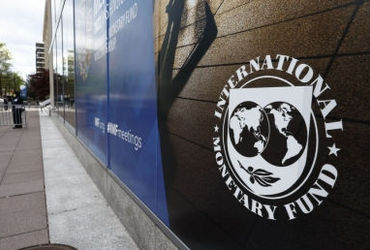
International Monetary Fund Managing Director Kristalina Georgieva reportedly has cautioned that escalating tensions in the Middle East could trigger fresh inflationary pressures worldwide if energy prices remain elevated for an extended period.
Speaking at a symposium hosted by Japan’s finance ministry on Monday, Georgieva said the global economy was once again facing uncertainty due to geopolitical tensions in the region. She noted that prolonged disruptions in oil supply could significantly affect global price stability.
“We are seeing resilience tested again by the new conflict in the Middle East,” urging policymakers to prepare for worst-case scenarios. “My advice to policymakers in this new global environment is to think of the unthinkable and prepare for it”, Georgieva said, as per reports.
According to reports, a sustained 10% increase in oil prices throughout the year could push global inflation higher by around 40 basis points. The warning comes amid rising concerns that the ongoing confrontation involving Iran, the United States and Israel could disrupt key global oil supply routes.
As per the recent reports from the Ministry of Finance also highlighted potential economic risks if the crisis continues. The ministry’s Monthly Economic Review for February noted that the conflict has already affected shipping through the Strait of Hormuz, a vital maritime corridor that carries nearly 20% of global oil supplies.
A report stated that the US‑Israel strikes on Iran on February 28, 2026, which reportedly killed Iran’s Supreme Leader Ali Khamenei, marked a significant escalation with potential long-term consequences for global energy markets.
Energy markets have already reacted sharply to the crisis. Benchmark Brent crude prices have climbed roughly 9% to about $80 per barrel, while liquefied natural gas (LNG) prices have surged nearly 50%.
India’s finance ministry warned that a prolonged conflict could weaken the rupee, widen the current account deficit and add to inflationary pressures through higher fuel costs. However, the report maintained that India’s macroeconomic fundamentals remain relatively strong, citing healthy foreign exchange reserves, moderate current account deficit levels and steady economic growth.
As per reports, the ministry has estimated India’s real GDP growth at 7.6% for FY26 and projected growth between 7 and 7.4% for FY27. Rising energy costs are already impacting regional economies. In Pakistan, the government has sharply increased fuel prices in response to higher global oil rates. Petrol and high-speed diesel prices were raised by PKR 55 per litre, an increase of nearly 20%. As of March 7, petrol is priced at PKR 321.17 per litre, while diesel costs PKR 335.86 per litre.
Reports suggest that steep price hike has triggered concern among citizens grappling with rising living costs during the holy month of Ramadan. Additionally, experts warn that higher fuel costs could lead to a second wave of inflation as transportation and logistics expenses push up the prices of food and essential goods. Pakistan’s government said it had little choice but to pass on the impact of rising international oil prices to consumers as it works to stabilise its energy sector and meet financial obligations linked to IMF consultations, as per reports.