
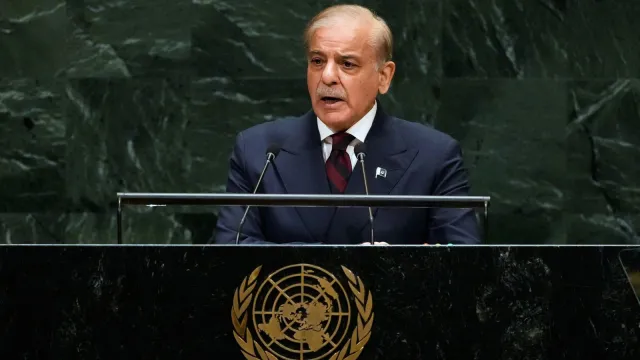
Pakistan Prime Minister Shehbaz Sharif has issued a strong warning to India over the future of the Indus River waters, saying any attempt to stop, restrict or divert Pakistan’s share of the water would be considered an “act of war”. Sharif made the remarks while addressing the United Nations General Assembly in New York on September 25, 2026.
The statement comes at a time when relations between India and Pakistan remain strained over security, terrorism, Kashmir and the status of the Indus Waters Treaty. The water-sharing agreement has become another major point of disagreement between the two nuclear-armed neighbours.
Sharif raises Indus water dispute at UN
During his address, Sharif highlighted the importance of the Indus River system to Pakistan and said water should not be used as a political or strategic weapon.
He strongly objected to India’s decision to place the Indus Waters Treaty in abeyance and maintained that Pakistan’s rights under the agreement should be protected.
Sharif warned that any effort to prevent Pakistan from receiving the water allocated to it could have serious consequences for bilateral relations.
“Any attempt to stop, impede, or divert Pakistan’s share of the waters will be treated as an act of war,” Sharif said during his UN address.
The Pakistani prime minister’s remarks represented a sharp escalation in the language used by Islamabad over the water dispute. By raising the issue before the international community, Pakistan sought to underline the importance it attaches to uninterrupted access to the Indus river system.
Why the Indus waters are important to Pakistan
The Indus River system is central to Pakistan’s agriculture, water supply and economy. Millions of people depend directly or indirectly on water from the river system for farming and other economic activities.
Agriculture remains an important part of Pakistan’s economy, making the availability of irrigation water particularly significant. The river system also supports drinking-water supplies and hydroelectric power generation.
Because of this dependence, Pakistan has repeatedly described the Indus Waters Treaty as a crucial agreement for the country’s economic and environmental security.
Any substantial change in the flow or availability of water could potentially affect agricultural production and water management. This has made the treaty a highly sensitive issue in Pakistan’s domestic and foreign policy.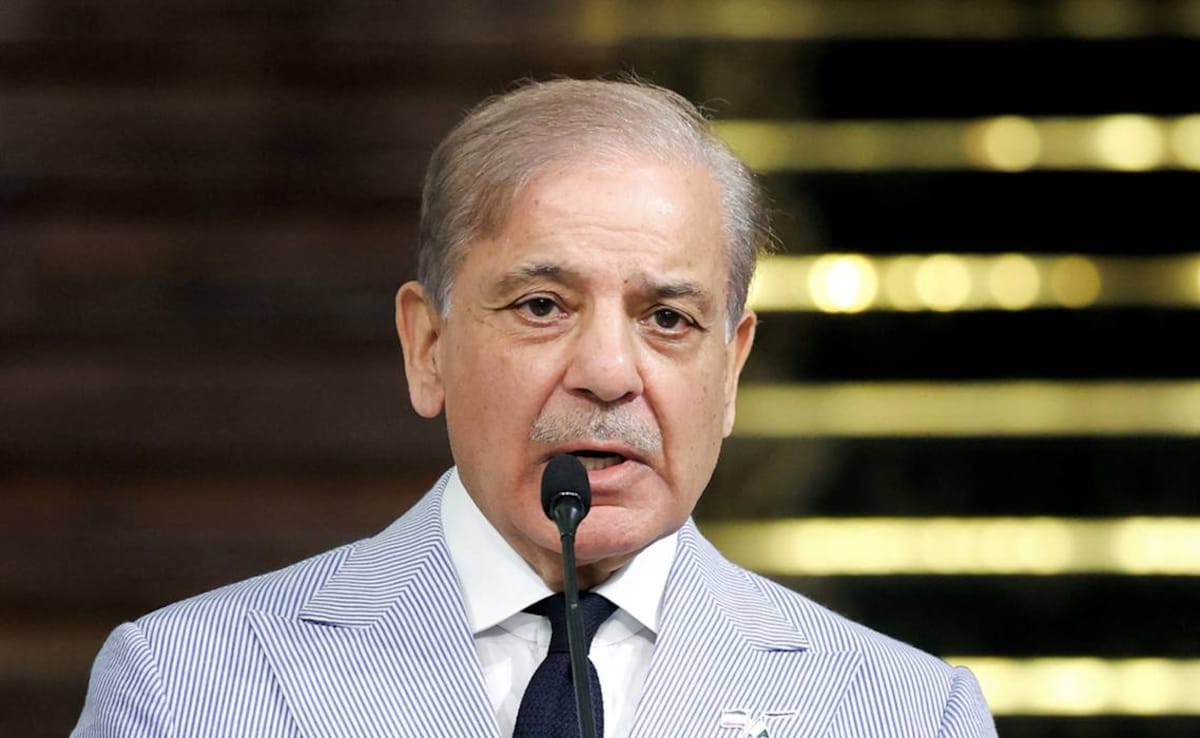
India places treaty in abeyance
India placed the Indus Waters Treaty in abeyance in April 2025 following the deadly terror attack in Pahalgam, Jammu and Kashmir.
The decision came after an attack in which 26 people were killed and significantly affected already fragile relations between India and Pakistan.
India has linked the future of the treaty to Pakistan taking credible and verifiable action against cross-border terrorism.
Pakistan, meanwhile, has rejected India’s position and continued to argue that the water-sharing agreement should remain operational.
The disagreement over the treaty has therefore become closely connected with the wider security dispute between the two countries.
Sharif refers to 2025 military confrontation
In his UN speech, Sharif also discussed the military confrontation between India and Pakistan in May 2025.
The two countries engaged in military action following the escalation in tensions after the Pahalgam attack. Sharif presented Pakistan’s position on the confrontation and said Islamabad had acted in self-defence.
He also referred to diplomatic efforts that helped bring the military confrontation to an end.
India and Pakistan have presented different accounts of the events surrounding the 2025 conflict, including the circumstances that led to the cessation of hostilities.
The episode remains one of the most serious recent confrontations between the two countries and continues to influence their bilateral relationship.
Kashmir issue also raised at UN
The Kashmir dispute was another major issue in Sharif’s address.
The Pakistani prime minister reiterated Islamabad’s long-standing position on Jammu and Kashmir and called for a resolution of the dispute.
Sharif referred to Pakistan’s demand for the implementation of UN-related commitments concerning Kashmir and said the issue remained important for regional peace.
India and Pakistan have fundamentally different positions on Jammu and Kashmir. India considers the region an integral part of the country, while Pakistan continues to describe Kashmir as a disputed territory requiring a political settlement.
The issue has remained at the centre of India-Pakistan tensions for decades and has contributed to several military confrontations between the two countries.
India responds to Pakistan’s statements
Pakistan’s remarks at the General Assembly were followed by a response from the Indian side.
An Indian diplomat criticised Pakistan’s record and challenged several of the claims made by Sharif during his speech.
The exchange reflected the continuing diplomatic differences between the two countries. India and Pakistan frequently use international forums such as the UN General Assembly to present their respective positions on terrorism, Kashmir, security and bilateral relations.
The sharp exchange also demonstrated that the two countries remain far apart on several fundamental issues.
Sharif calls for diplomacy
Despite his strong warning over the Indus waters, Sharif also spoke about the importance of diplomacy and dialogue.
He said Pakistan preferred dialogue and cooperation over confrontation and called for international efforts to resolve conflicts through diplomatic means.
His comments came against the backdrop of continuing tensions in South Asia as well as conflicts and humanitarian crises in other parts of the world.
Sharif also discussed the situation in Gaza and Afghanistan during his address. He called for international attention to humanitarian concerns in Gaza and raised Pakistan’s security concerns regarding militant groups operating from Afghan territory.
Water dispute adds to broader bilateral tensions
The Indus Waters Treaty has historically played an important role in managing the shared river system between India and Pakistan.
The agreement has survived several wars and periods of intense political tension between the two countries. However, the current dispute has placed the treaty at the centre of a broader strategic disagreement.
Pakistan considers access to the Indus waters essential to its national interests, while India has connected its decision regarding the treaty to security concerns following the Pahalgam attack.
Sharif’s latest warning indicates that the water issue is likely to remain an important part of Pakistan’s diplomatic campaign against India.
For India and Pakistan, the dispute over the Indus waters now exists alongside disagreements involving terrorism, Kashmir and military security. Any future developments surrounding the treaty could therefore have wider implications for bilateral relations.
What happens next
The future of the Indus Waters Treaty remains uncertain as India and Pakistan continue to hold opposing positions.
Pakistan is expected to continue raising the issue at international forums, while India has maintained its position linking the treaty to concerns over cross-border terrorism.
Sharif’s warning at the UN adds further diplomatic pressure to an already complicated relationship. His description of any attempt to restrict Pakistan’s water supply as an “act of war” highlights the seriousness with which Islamabad views the issue.
The dispute over the Indus waters is therefore no longer limited to technical questions concerning river management. It has become part of the wider political and security tensions between India and Pakistan.