

Microsoft CEO Satya Nadella has joined the growing debate over how quickly artificial intelligence should advance, arguing that the development of increasingly powerful AI systems must remain focused on human control, safety and broad access.
Nadella’s comments come amid rising concern among prominent technology leaders and AI researchers about the potential risks associated with the rapid development of advanced and potentially superintelligent systems. While he supports continued innovation, Nadella stressed that progress should be carefully managed rather than pursued without adequate safeguards.
In a recent statement, Nadella said that any effort to develop superintelligence should ultimately serve humanity and remain under meaningful human supervision. His position places particular emphasis on ensuring that AI does not become concentrated within a small group of companies or institutions.
Nadella calls for human control over advanced AI
Nadella argued that the development of superintelligent AI should be guided by a basic principle: technology should remain beneficial to people and subject to human control.
His remarks reflect a broader shift in the AI industry, where concerns about the speed of technological development are increasingly being discussed alongside the potential economic and social benefits of artificial intelligence.
Rather than advocating a complete halt to AI development, Nadella has called for a more deliberate approach. The emphasis, according to his position, should be on continuing innovation while simultaneously building systems and safeguards capable of keeping advanced AI aligned with human interests.
The Microsoft chief also stressed that the advantages of AI should not be restricted to a small number of countries, companies or communities.
AI benefits should be widely distributed
Nadella said the benefits of artificial intelligence should be spread across countries, industries and communities. He argued that the future AI ecosystem should allow different approaches to coexist, including both proprietary and open-source models.
Such a structure, he suggested, could prevent excessive dependence on a small number of technology providers and give businesses and researchers greater flexibility in how they use AI.
The argument is particularly significant as a handful of major technology companies continue to invest enormous amounts of money and computing resources into developing increasingly sophisticated AI models.
Nadella’s position is that the next phase of AI development should not result in a system where a limited number of organisations control the most powerful technology.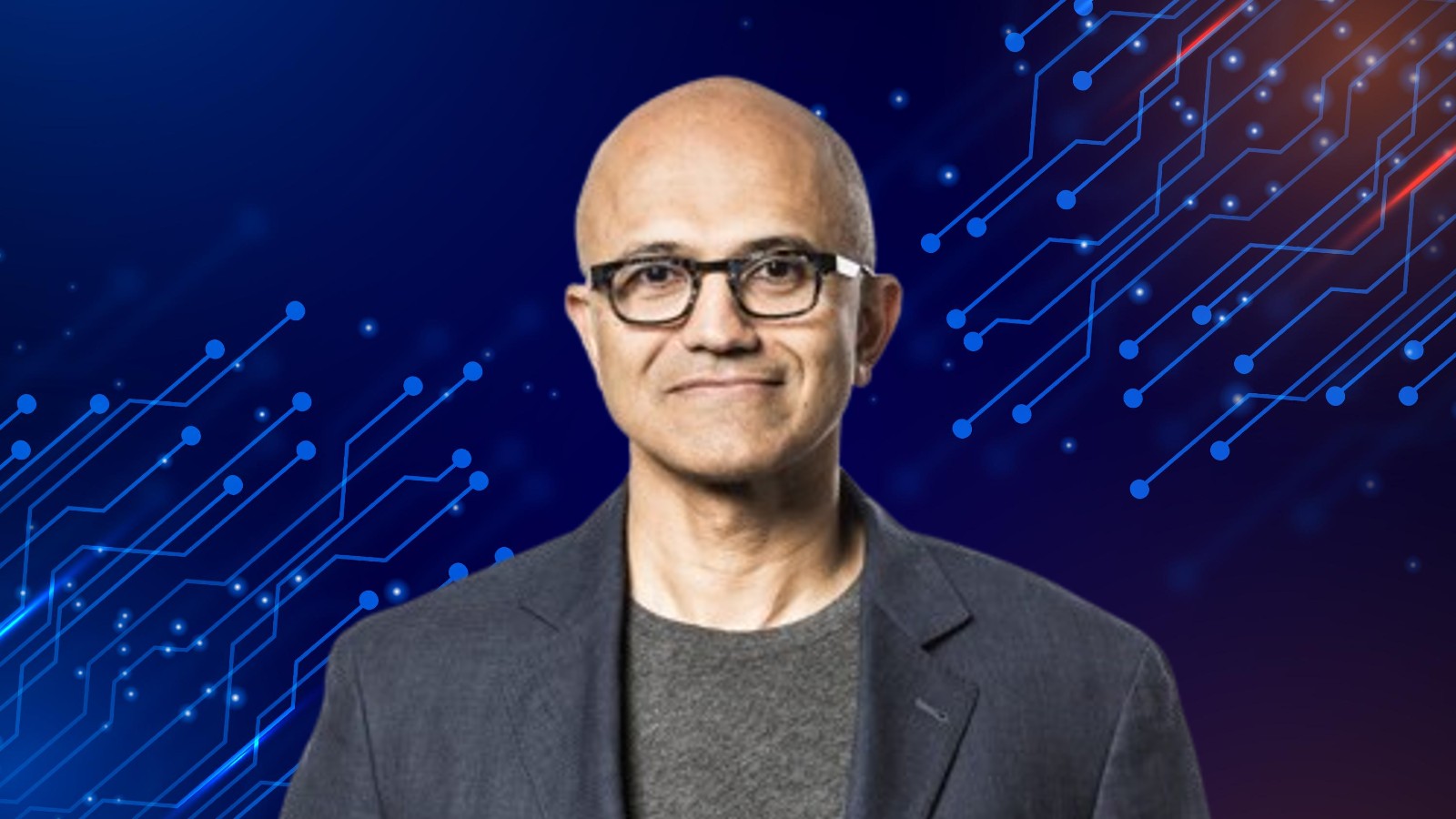
‘Cannot be controlled by a handful’
A central part of Nadella’s argument is that advanced AI should not be controlled by only a few companies or institutions.
He called for broader representation across countries, industries, academic institutions and other parts of the technology ecosystem. Such diversity, he suggested, could help ensure that the development of AI reflects a wider range of interests and perspectives.
The approach also reflects concerns about technological concentration. If advanced AI becomes dependent on a small number of providers, governments, businesses and users could become increasingly vulnerable to decisions made by those companies.
Nadella instead favours a model in which users and organisations retain greater control over their own AI systems, knowledge and data.
Companies should retain control of their knowledge
Another important element of Nadella’s comments concerns corporate knowledge.
He argued that companies should not become completely dependent on a single AI provider. Organisations, he said, should have the ability to incorporate their own knowledge into AI systems and maintain control over the models and processes they use.
This could become increasingly important as companies begin integrating AI into areas such as research, customer service, software development, decision-making and internal operations.
If businesses rely entirely on one external AI provider, changes in pricing, technology, access or policies could have a significant impact on their operations. Maintaining greater control over proprietary knowledge could therefore become an important part of AI strategy.
Debate over slowing AI development intensifies
Nadella’s comments come at a time when several prominent figures in the AI industry are calling for a more cautious approach to the development of frontier AI systems.
Anthropic CEO Dario Amodei has recently raised concerns about the possibility of highly advanced AI posing serious risks to humanity. He has argued that the industry needs to carefully manage the pace at which the capabilities of frontier systems improve.
Amodei’s comments followed warnings from former AI researchers about the possibility of advanced systems becoming difficult for humans to control.
The discussion has subsequently drawn responses from several major technology figures.
OpenAI CEO Sam Altman has expressed support for the idea of carefully pacing frontier AI development and has backed proposals involving greater access for independent evaluators to assess AI systems.
Elon Musk has also expressed agreement with Amodei’s concerns, while Google DeepMind co-founder Demis Hassabis has indicated that the broader direction of the argument is appropriate, although the details of how such measures should be implemented still require discussion.
Safety versus innovation
The growing debate highlights a difficult question facing the AI industry: how can companies continue developing increasingly powerful systems without creating unacceptable risks?
Supporters of rapid AI development argue that artificial intelligence could deliver major advances in science, healthcare, productivity, education and other fields. Slowing progress too dramatically could, they argue, prevent society from benefiting from important technological breakthroughs.
At the same time, critics warn that increasingly capable AI systems could create risks if their behaviour becomes difficult to predict or control.
This has created pressure for the industry to develop stronger testing, evaluation and monitoring mechanisms alongside new AI capabilities.
Nadella’s position appears to favour continued development, but with greater attention to safety, accountability and distribution of power.
Open-source and closed AI models could coexist
Nadella also highlighted the importance of maintaining an AI ecosystem in which both closed and open-source models can develop.
Open-source AI can allow researchers, developers and organisations to inspect, modify and build upon existing technologies. Closed models, meanwhile, can provide companies with greater control over proprietary systems and commercial products.
A combination of both approaches could potentially create greater competition and reduce dependence on individual providers.
However, the balance between openness and safety remains one of the most controversial issues in the AI sector. More open access can encourage innovation and independent research, but highly capable models can also raise concerns about misuse.
The challenge for policymakers and technology companies is therefore to develop safeguards that address genuine risks without unnecessarily restricting beneficial innovation.
A broader approach to AI governance
Nadella’s comments add another dimension to the growing conversation about AI governance.
Instead of simply asking whether AI development should speed up or slow down, the debate is increasingly focusing on who should control advanced AI, how systems should be evaluated and how the benefits of the technology should be distributed.
His argument suggests that safety cannot depend solely on a small group of companies making decisions internally. Broader participation from academia, businesses, governments, researchers and other stakeholders could provide additional perspectives and oversight.
At the same time, organisations developing advanced AI are being encouraged to create stronger evaluation mechanisms and establish clear principles for responsible development.
The road ahead for artificial intelligence
The AI industry is entering a phase in which questions of safety and governance are becoming almost as important as technological performance.
Nadella’s intervention indicates that the conversation is moving beyond simply building more powerful models. Issues such as human control, competition, access, transparency and organisational independence are becoming central to discussions about the future of AI.
For the technology industry, the challenge will be to maintain the momentum of innovation while ensuring that increasingly powerful systems remain aligned with human interests.
The emerging consensus among several technology leaders is not necessarily that AI development should stop. Instead, the focus is increasingly on finding a responsible pace of development and creating safeguards capable of keeping technological progress under meaningful human oversight.
As AI systems become more capable, the question of who controls them — and whether that control is concentrated or widely distributed — is likely to remain one of the most important technology policy debates of the coming years.