
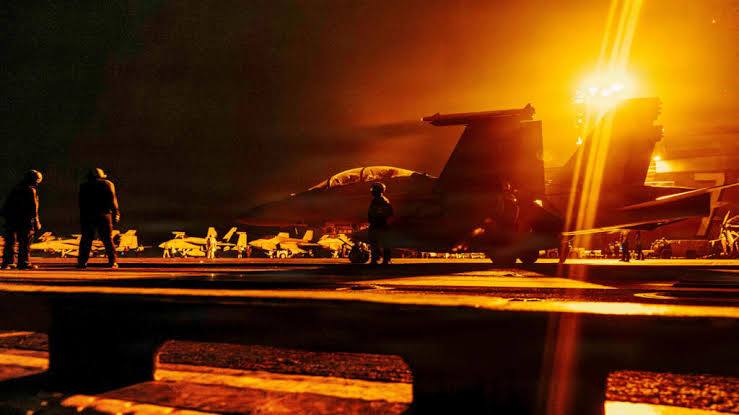
Iran launched fresh attacks against US military positions in the Gulf on Thursday, intensifying an already volatile conflict despite US President Donald Trump warning that Washington remained prepared to launch additional strikes against Tehran.
The latest exchange of attacks marks another major escalation in the six-month-old US-Iran war and threatens to widen the confrontation beyond Iranian territory. Iranian forces reportedly targeted American military installations in Kuwait, while additional strikes and attempted attacks were reported across parts of West Asia, including Jordan, the United Arab Emirates, Bahrain and Iraq’s autonomous Kurdistan region.
The renewed fighting has further complicated efforts to contain the conflict, with the strategically vital Strait of Hormuz remaining at the centre of the confrontation. Iran has effectively restricted shipping through the waterway, while the United States has tightened pressure on Iranian ports as part of its broader military and economic campaign.
Iran retaliates after US strikes
The latest Iranian attacks followed a series of US strikes against Iranian targets that began on Sunday. Washington said the military action was intended in part to prevent Iran from placing sea mines in the Strait of Hormuz, a critical maritime route for global energy supplies.
Iran described the US operation as an attack that caused casualties and responded by targeting American forces and interests in the region.
Kuwait’s military said it was intercepting Iranian missiles and drones after attacks were directed towards the Gulf state. Iranian state television confirmed that American bases in Kuwait were among the intended targets, describing the strikes as retaliation for US military action against Iran.
The confrontation has also extended to other locations. Iranian attacks have been reported against US-linked military positions in Jordan and the United Arab Emirates, while Bahrain and Iraq’s Kurdistan region have also faced attacks or attempted strikes.
Iranian security official Mohsen Rezaei warned that Tehran had adopted what he described as a new strategy for the conflict. His remarks signalled that Iran intended to maintain military pressure despite Trump’s threats of further American action.
Trump warns Iran of further strikes
Trump has maintained a confrontational position as the latest escalation unfolded. The US president said American forces were capable of attacking Iran whenever Washington decided to do so.
His warning came after a major US bombardment of Iranian targets reportedly killed at least 19 people, adding to the mounting human cost of the conflict.
The US administration has simultaneously pursued military and economic pressure on Tehran. Washington has threatened additional sanctions against countries and commercial partners that continue doing business with Iran.
US Energy Secretary Chris Wright said the administration’s expanded sanctions strategy would apply what he described as maximum economic pressure on Iran and its international partners.
The approach reflects Washington’s attempt to combine military operations with economic isolation in an effort to force Tehran to change its policies.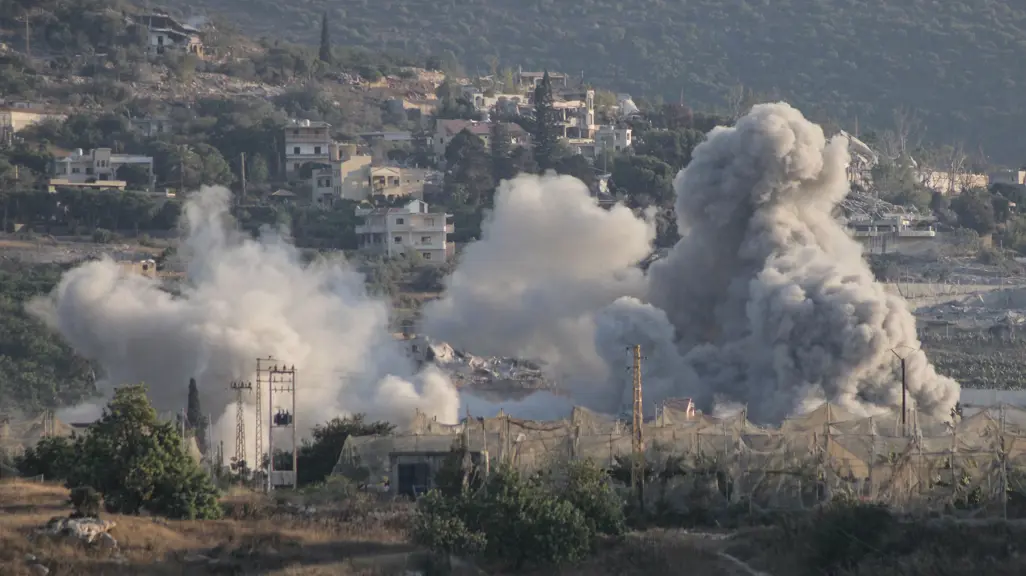
Wedding strike fuels Iranian anger
The latest escalation was intensified by a controversial US strike in southern Iran that Iranian authorities said hit a building where a wedding celebration was taking place.
The incident occurred in Kuhestak, a coastal town overlooking the Strait of Hormuz. According to Iran’s Red Crescent, missile shrapnel killed four people, including a child, and wounded more than 50 others.
The reported civilian casualties triggered strong condemnation from Iranian officials and added to public anger over the renewed American bombing campaign.
Iran’s top negotiator, Mohammad Bagher Ghalibaf, strongly criticised Washington over the incident and accused the United States of deliberately acting against Iranian civilians.
The US military did not directly address the reported strike on the wedding gathering. A spokesperson for US Central Command said American forces do not target civilians and accused Iran’s Islamic Revolutionary Guard Corps of doing so.
The competing accounts have added another layer of tension to the conflict, with each side continuing to blame the other for civilian suffering and escalation.
Growing fears over the Strait of Hormuz
The Strait of Hormuz remains one of the most important flashpoints in the conflict.
The narrow waterway connects the Persian Gulf with the Gulf of Oman and is one of the world’s most important routes for the transportation of oil and other energy commodities. Before the current conflict severely disrupted shipping, roughly one-fifth of global oil supplies passed through the strait.
Iran has maintained pressure on maritime traffic for months, while the United States has attempted to counter Tehran’s restrictions and maintain access for international shipping.
The latest violence has increased concerns about the safety of commercial vessels operating in and around the waterway.
Two oil tankers were reportedly struck in separate incidents for which no group immediately accepted responsibility. One of the attacks resulted in the deaths of two Filipino sailors, according to a Saudi shipping company.
Any prolonged disruption of commercial shipping through Hormuz could have consequences far beyond the Middle East, potentially affecting energy prices, international trade and global supply chains.
Washington expands economic pressure
Military action has been accompanied by a broader American campaign to isolate Iran economically.
Washington has threatened sanctions against countries and businesses that continue supporting Tehran’s trade network. The objective is to increase the economic cost of the conflict and restrict Iran’s ability to finance its military operations.
The pressure comes as Iran faces significant economic difficulties after months of war, sanctions and restrictions on maritime commerce.
At the same time, Tehran has demonstrated that it remains capable of striking US military positions and American partners across the region, raising questions over whether either side can secure a decisive outcome through military pressure alone.
Trump’s Strait of Hormuz remark
The confrontation over the strategic waterway has also featured provocative political rhetoric.
Trump suggested that the Strait of Hormuz could potentially be renamed the “Trump Strait”, arguing that the United States had established control over the strategically important route. He later indicated that the suggestion was not necessarily a serious proposal.
The remark came amid continuing disputes over who controls access through the waterway and highlighted the symbolic importance Washington attaches to reopening the route for international shipping.
Iran, meanwhile, has continued to portray control over the strait as an important component of its resistance against US military and economic pressure.
Calls for a return to negotiations
Despite the escalating military confrontation, there are growing concerns among civilians about the consequences of a prolonged war.
Some Iranians have expressed frustration and called for the two sides to return to negotiations rather than continue military operations.
The renewed violence has already produced casualties, damaged infrastructure and intensified uncertainty for people living in affected areas.
The conflict has also created wider concerns about the possibility of a regional war. Iran’s attacks have reached multiple countries hosting US military assets, increasing the risk that American allies and regional governments could become more directly involved.
Israel watches the escalation closely
Israel is also closely monitoring the latest developments.
Israeli Defence Minister Israel Katz said the country was prepared to respond forcefully if Iran attacked Israel during the Jewish high holiday period beginning in mid-September.
Iran’s current attacks have largely focused on US-linked targets elsewhere in the region rather than directly striking Israel, but Israeli officials remain alert to the possibility that the conflict could expand.
Any direct Iranian attack on Israel could trigger another major cycle of retaliation and potentially draw additional countries into the confrontation.
Conflict enters another dangerous phase
The current escalation follows months of fighting that began on February 28 with US and Israeli attacks on Iran. The conflict has already caused extensive casualties and disrupted regional security.
A fragile ceasefire had provided a temporary reduction in fighting, but tensions surrounding commercial shipping and the Strait of Hormuz eventually contributed to the resumption of hostilities.
The latest exchange demonstrates how quickly the conflict can escalate despite threats of retaliation and diplomatic pressure.
For Washington, the immediate challenge is to protect American forces and reopen regional shipping routes without triggering an even broader war. For Tehran, the objective is to demonstrate that sustained military and economic pressure will not force it to surrender its strategic interests.
With attacks now reaching US military positions across the Gulf and the Strait of Hormuz remaining heavily contested, the possibility of further escalation remains high.
The immediate priority for regional governments and international diplomatic efforts is likely to be preventing the conflict from expanding while keeping open a pathway back to negotiations. Without such an avenue, continued military exchanges could deepen the humanitarian crisis and create serious consequences for regional stability and the global energy market.