
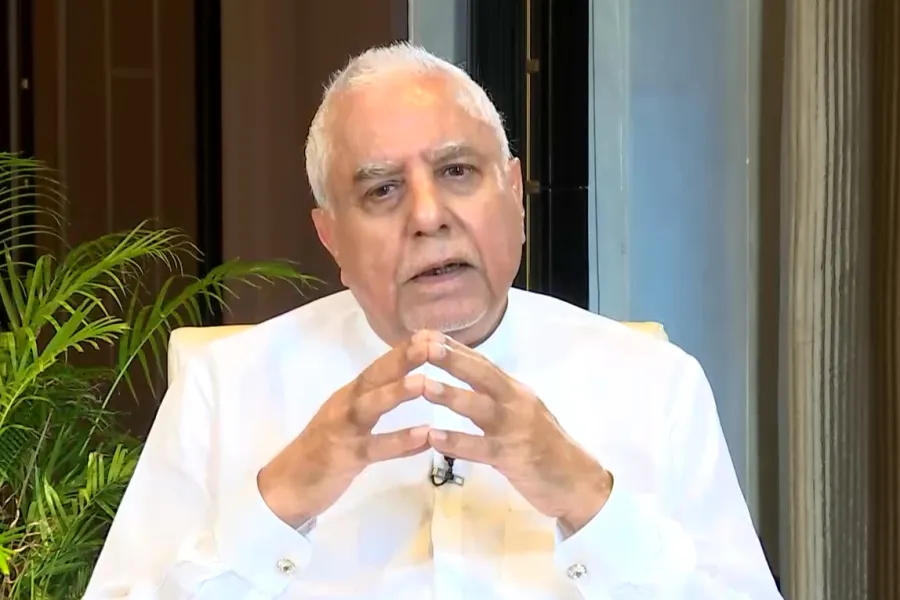
The National Company Law Tribunal (NCLT) has constituted a five-member special bench to reconsider the repayment plan submitted by Zee Group founder Subhash Chandra in connection with his personal insolvency proceedings.
The development follows differences among members of the earlier NCLT bench over the proposed resolution plan. The matter has also reached the National Company Law Appellate Tribunal (NCLAT), with several financial institutions challenging the earlier proceedings and raising concerns over the proposed recovery.
The case has drawn attention because of the significant gap between the total claims admitted against Chandra and the amount proposed to be paid to creditors under the repayment plan.
Five-member bench to examine the matter
The NCLT has formed a special five-member bench to consider the issues that remained unresolved before the earlier bench.
The panel includes NCLT president Justice Anupinder Singh Grewal, judicial members Bachu Venkat Balaram Das and Mahendra Khandelwal Das, and technical members Atul Chaturvedi and Ravindra Chaturvedi.
The formation of the larger bench follows a lack of consensus among members of the earlier panel. The new bench will examine the repayment proposal and related questions arising from the insolvency proceedings.
The decision could prove important for both Chandra and the lenders involved in the case, particularly those that have opposed the proposed settlement.
₹6.5 crore repayment against claims of more than ₹22,000 crore
The central issue is Chandra’s proposed repayment of ₹6.5 crore.
Under the plan, approximately ₹6.25 crore is proposed to be distributed to creditors, while around ₹25 lakh would be used to meet expenses related to the insolvency process.
The proposed payment is significantly lower than the admitted claims against Chandra, which stand at approximately ₹22,006.57 crore.
The huge difference between the total claims and the proposed repayment has become one of the most closely watched aspects of the case. Creditors opposing the plan have questioned whether the proposed arrangement provides an adequate recovery considering the scale of the liabilities involved.
Majority support for the repayment proposal
The repayment plan had received substantial support from creditors during the voting process. Creditors representing around 80.81% of the voting share by value supported the proposal.
However, the plan did not receive unanimous backing.
Several major lenders, including HDFC Bank, Axis Bank, Canara Bank, RBL Bank and Union Bank of India, voted against the proposal.
The disagreement among creditors has added complexity to the proceedings, particularly because the proposed payment is a small fraction of the overall claims admitted against the guarantor.
Why the earlier NCLT bench disagreed
The earlier NCLT bench was unable to arrive at a majority decision on the issues surrounding the repayment plan.
Following the disagreement, the matter required further consideration. The constitution of a five-member bench is intended to provide a broader judicial and technical assessment of the dispute and help resolve the questions that remained pending.
The proceedings are significant because a decision on the repayment plan could directly affect the recovery prospects of lenders that have challenged or opposed the arrangement.
Lenders approach the appellate tribunal
The dispute has also moved beyond the NCLT, with several lenders approaching the NCLAT.
Among the financial institutions involved in the challenge are LIC Housing Finance, HDFC Bank and Union Bank of India.
The lenders have raised objections regarding the proposed repayment arrangement and its potential impact on their recovery rights.
The appellate proceedings could influence the manner in which the insolvency case progresses, depending on the decisions taken by the tribunals.
Chandra’s liability as a personal guarantor
A key aspect of the proceedings is that the insolvency case relates to Chandra’s role as a personal guarantor.
Chandra has maintained that he did not personally borrow the money that forms the basis of the claims. Instead, he had provided personal guarantees for loans obtained by companies associated with the Essel Group.
Under the insolvency framework, however, personal guarantees can result in individual liability when the underlying corporate borrower defaults.
This makes the case significant beyond the individuals and companies directly involved. It raises broader questions about how personal guarantors are treated when large corporate debts remain unpaid.
Wider implications for creditors
The case highlights a broader challenge within India’s insolvency system: the difference between the amount claimed by creditors and the amount that can ultimately be recovered from a guarantor.
Where the liabilities are substantially larger than the assets or funds available to an individual, creditors may face significant limitations in recovering their dues.
The proposed ₹6.5-crore payment compared with admitted claims of more than ₹22,000 crore has therefore raised questions about the effectiveness of personal insolvency proceedings in cases involving very large corporate liabilities.
The outcome could be closely watched by banks, financial institutions and insolvency professionals because it may influence how similar repayment proposals involving personal guarantors are evaluated in the future.
What lies ahead
The five-member NCLT bench will now consider the repayment proposal and the issues that resulted in the earlier disagreement.
At the same time, the challenges filed by lenders before the appellate tribunal remain an important part of the legal proceedings.
The final outcome will determine whether the proposed repayment arrangement can proceed in its current form or whether further changes or legal proceedings will be required.
For Chandra, the case represents an important stage in resolving his personal insolvency proceedings. For creditors, the outcome could determine the extent of recovery available against the personal guarantor.
With billions of rupees in claims at stake and major lenders challenging the proposed settlement, the proceedings are likely to remain under close scrutiny.