
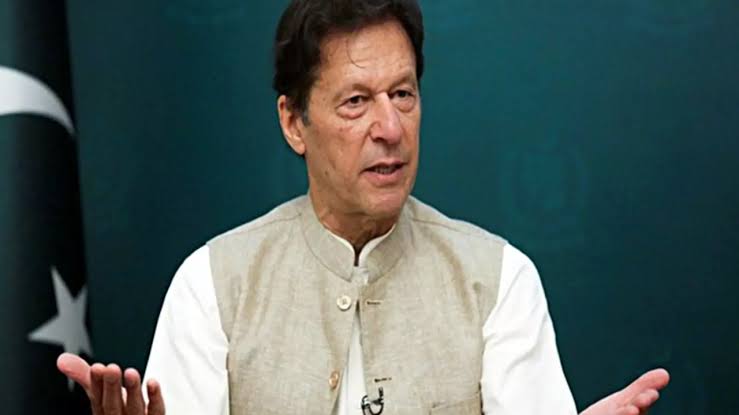
The health and prison conditions of former Pakistan Prime Minister Imran Khan have once again become a major point of concern, with his sons warning that they fear he may not survive his continued incarceration.
Sulaiman Khan and Kasim Khan, speaking during an online press conference, alleged that their father’s deteriorating health, prolonged isolation and inadequate access to independent medical treatment had created a potentially life-threatening situation. They also accused Pakistani authorities of failing to fully implement a Supreme Court order concerning Khan’s medical examination and family access.
Kasim said the family had reached a point where it appeared increasingly likely that his father might not survive his imprisonment. The remarks have intensified scrutiny over the treatment of the former prime minister, who has remained behind bars since 2023 while facing convictions and multiple legal proceedings.
The allegations come amid a continuing dispute between Khan’s legal team and Pakistani authorities over his medical condition and the conditions under which he is being held.
Sons Question Medical Treatment and Prison Conditions
According to Khan’s sons, the former prime minister has been kept in highly restrictive conditions and has not received the level of independent medical attention they believe is necessary given his health problems.
They alleged that authorities did not comply fully with a Supreme Court direction that permitted Khan to receive treatment at a private hospital. The court had ordered that he be taken to Shifa International Hospital in Islamabad for medical assessment, including treatment related to an eye condition.
Instead, according to the allegations, Khan was taken to a government hospital for a medical check-up under heavy security before being returned to prison. His sons said they disputed the subsequent assessment that their father was medically fit.
The disagreement over the medical examination has become central to the broader dispute surrounding Khan’s detention. His family and lawyers have argued that an independent assessment is essential because of concerns about his deteriorating health.
Lawyer Describes Prison Conditions as ‘Slow-Motion Murder’
Khan’s international lawyer, Jared Genser, has also made serious allegations about the conditions under which the former prime minister is being held.
Genser described the alleged treatment as a form of “slow-motion murder”, arguing that prolonged isolation and restricted access to natural light, medical care and outside contact could have serious consequences for Khan’s physical and psychological well-being.
According to the lawyer, Khan is being held in a small cell measuring approximately 1.8 metres by 2.4 metres. He alleged that Khan spends around 23 hours a day inside the cell and has limited access to natural light.
The allegations have not been independently established, and Pakistani authorities have rejected claims that Khan is being subjected to solitary confinement or denied meaningful contact with his family.
The competing accounts highlight the deep divide between Khan’s legal team and the Pakistani government over his treatment in custody.
Supreme Court Order Becomes Major Point of Dispute
The controversy escalated after Pakistan’s Supreme Court ordered that Khan be moved to Shifa International Hospital for medical treatment.
The order was viewed by Khan’s supporters and family as an important development because it appeared to provide a route for him to receive treatment outside the prison system and undergo a more independent medical assessment.
However, Khan’s lawyers allege that the order was not properly implemented. They claimed that while preparations were made for his transfer to the private hospital, Khan was instead taken to the Pakistan Institute of Medical Sciences, a government-run facility, before being returned to prison.
The legal team further alleged that an independent medical panel did not examine Khan.
The government has disputed these accusations and maintained that the former prime minister is not being held in solitary confinement. Authorities have also rejected claims that he has been completely cut off from family members.
Family Contact Remains a Sensitive Issue
Khan’s sons have also highlighted their inability to meet their father in person.
Sulaiman and Kasim, who live outside Pakistan, said they have not been permitted to visit the country to see Khan. They said their last meeting with their father took place in November 2022, months before his imprisonment began.
The issue of family access has repeatedly featured in the controversy surrounding Khan’s detention. His sons have continued to publicly raise concerns about his health and treatment, while authorities have maintained that Khan has been allowed contact with certain relatives.
Following the Supreme Court proceedings, Khan was reportedly permitted to meet his wife, Bushra Bibi, and his sister, providing some direct family contact after a prolonged period of restrictions.
However, the continued absence of his sons has remained a major concern for the family.
Imran Khan’s Legal Battles
Khan has been imprisoned since 2023 after being convicted in cases involving corruption and the disclosure of state secrets. He has consistently denied wrongdoing and has argued that the cases against him are politically motivated.
His imprisonment has remained one of Pakistan’s most contentious political and legal issues. The former cricket star and politician continues to have a significant political following, while his Pakistan Tehreek-e-Insaf party has repeatedly demanded his release and raised concerns about his treatment.
Khan’s legal troubles have involved several cases and convictions, some of which have subsequently been challenged, suspended or overturned. Despite developments in individual cases, he has remained in custody because of other legal proceedings and convictions.
His imprisonment has also intensified tensions between his supporters and Pakistan’s political and military establishment.
Government Rejects Claims of Severe Isolation
The allegations made by Khan’s sons and legal representatives have been strongly contested by Pakistani authorities.
The government has denied that Khan is being held in solitary confinement and has rejected claims that he has been denied meaningful contact with family members. Officials have also maintained that his medical condition does not justify the most serious allegations made by his supporters.
This disagreement has created two sharply contrasting narratives.
Khan’s family and lawyers say the former prime minister is being kept under harsh conditions and is not receiving adequate independent medical care. Authorities, on the other hand, maintain that he is receiving appropriate treatment and that claims of extreme isolation are inaccurate.
The absence of agreement over Khan’s medical condition has made independent verification particularly important.
Health Concerns Add to Political Tensions
The latest dispute is significant not only because of Khan’s health but also because of the wider political tensions surrounding his imprisonment.
Khan remains one of Pakistan’s most prominent political figures, and developments involving his detention frequently trigger strong reactions among his supporters. Any deterioration in his health could therefore have consequences extending beyond the prison system and into Pakistan’s already polarised political environment.
His sons’ latest statements are likely to increase international attention on his detention, particularly because they have directly questioned whether authorities are complying with judicial directions concerning his treatment.
For Khan’s family, the issue is now framed as an urgent humanitarian concern. For his lawyers, it is also a question of legal rights and the responsibility of the state toward a prisoner under its custody.
What Happens Next
The immediate focus is expected to remain on Khan’s health, access to independent medical care and the implementation of the Supreme Court’s directions.
The allegations made by his sons and lawyer have not been independently proven, while Pakistani authorities continue to dispute the most serious claims. The central question is therefore whether Khan will receive sustained access to independent medical professionals and whether his family and legal representatives will be granted adequate contact with him.
As the legal and political battle surrounding his imprisonment continues, the condition of the former prime minister is likely to remain a closely watched issue in Pakistan and abroad.
The latest warnings from his sons have brought renewed attention to the human and political dimensions of Khan’s prolonged imprisonment, while the conflicting accounts from his family, lawyers and the government leave his actual condition and prison circumstances at the centre of an escalating dispute.