
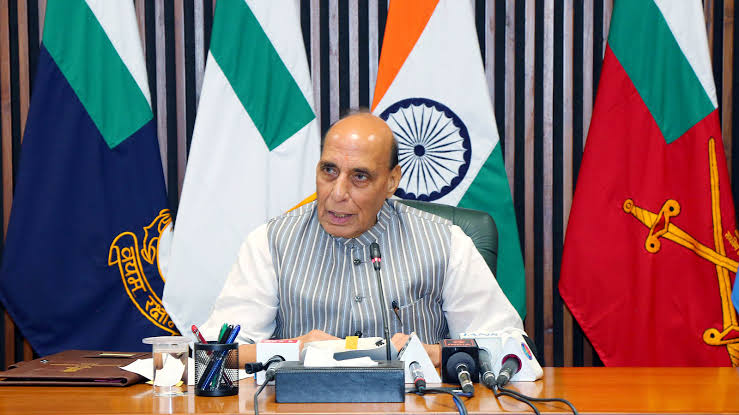
Defence Minister Rajnath Singh has approved a major technology-transfer initiative under which Indian defence companies will be permitted to manufacture conventional missile systems developed by the Defence Research and Development Organisation (DRDO). The decision is aimed at expanding domestic production capacity, reducing dependence on foreign suppliers and giving Indian industry a larger role in the country’s strategic defence manufacturing ecosystem.
According to the Defence Ministry, eligible Indian companies will be able to undertake production of DRDO-developed conventional missile systems after meeting the required qualifications, certifications and regulatory conditions. The initiative is expected to help move technologies developed through government-funded research from laboratories and testing programmes into larger-scale industrial production.
The decision comes at a time when India is seeking to strengthen its defence preparedness amid an increasingly complex regional security environment. Missile systems are now closely connected with wider military capabilities involving surveillance, communications, navigation, targeting and precision-strike networks. Building the ability to manufacture such systems domestically is therefore being viewed not only as an industrial policy measure but also as an important element of long-term national security planning.
Boost to indigenous missile manufacturing
The technology-transfer programme is expected to accelerate the domestic manufacture of conventional missile systems by allowing capable Indian companies to absorb and commercialise technologies developed by DRDO.
The move is particularly significant because missile development involves highly specialised technologies, testing infrastructure, precision manufacturing and strict quality-control requirements. By bringing more Indian industrial players into the production chain, the government hopes to create greater manufacturing capacity and improve the ability of the domestic defence sector to respond to military requirements.
The initiative also opens opportunities for micro, small and medium enterprises, which can participate as suppliers, technology partners and manufacturers of components and subsystems. A broader industrial base could help develop specialised capabilities across the defence supply chain rather than concentrating production in a limited number of large organisations.
The Defence Ministry has said that strengthening domestic manufacturing and creating opportunities for MSMEs and other technology partners are among the key objectives of the initiative.
Part of India’s Aatmanirbhar Bharat defence strategy
The approval represents another step in India’s broader effort to achieve greater self-reliance in defence production. Under the Aatmanirbhar Bharat approach, the government has increasingly sought to encourage domestic design, development and manufacturing while reducing the country’s reliance on imported military equipment.
For missile systems, technology transfer can play a crucial role in bridging the gap between research and mass production. DRDO’s role has traditionally centred on research, development, testing and technology creation, while industrial partners can contribute manufacturing capacity and production expertise.
The latest decision seeks to strengthen that connection. Instead of limiting advanced technologies to development programmes, the government wants Indian industry to absorb these capabilities and turn them into production-ready systems at scale.
This could also create a more sustainable defence ecosystem in which research institutions, established defence manufacturers, private companies and smaller industrial suppliers work together throughout the technology and production cycle.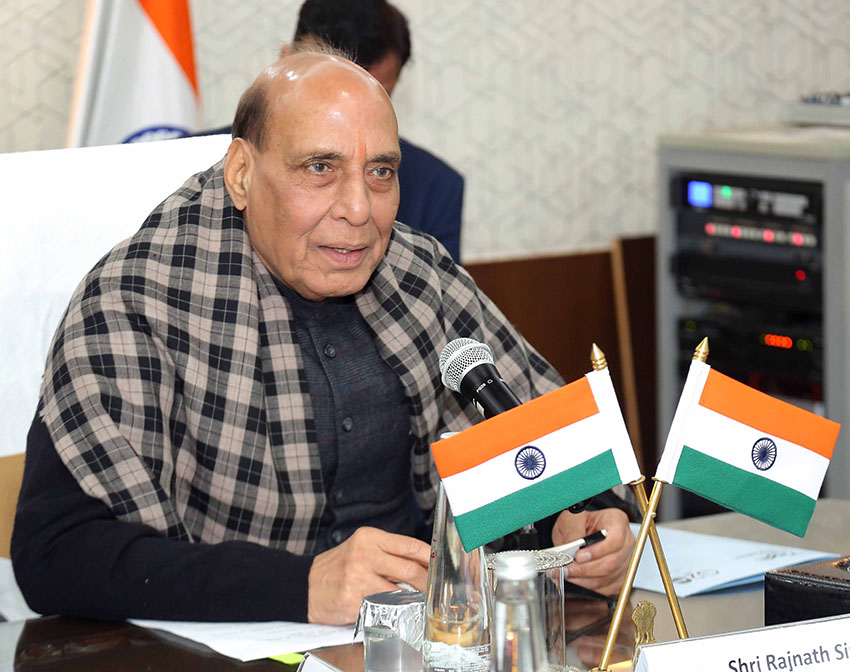
Regional security adds urgency to domestic capability
The decision has also gained significance against the backdrop of rapid technological and military developments in India’s neighbourhood.
Modern warfare increasingly depends on the integration of missiles with satellite-based intelligence, navigation, communications and surveillance systems. The ability to manufacture missiles domestically can therefore provide strategic advantages beyond simply increasing the number of weapons available to the armed forces.
Recent assessments have highlighted the expansion of Pakistan’s space capabilities, including its growing cooperation with China. Pakistan’s satellite activities and efforts to improve space-based surveillance have implications for the wider regional security environment because satellite intelligence and communications can support military planning and operational effectiveness.
For India, expanding indigenous production of critical missile systems can help strengthen resilience in the event of disruptions to international supply chains. A stronger domestic manufacturing base can also provide greater flexibility in meeting changing operational requirements.
Greater role for private industry
The latest approval is part of a wider policy shift towards greater participation by private companies in India’s defence sector.
For decades, defence production in India was dominated by government-controlled institutions and public-sector manufacturing organisations. In recent years, however, policy reforms have encouraged private companies and smaller enterprises to participate in defence development and manufacturing.
The growing involvement of private industry is intended to increase competition, expand production capacity and encourage technological innovation. It is also expected to give the armed forces access to a larger pool of industrial expertise.
The missile technology-transfer decision could deepen this public-private partnership by allowing qualified companies to work with technologies originating from DRDO laboratories.
However, participation will not be automatic. Companies will have to satisfy technical, quality, certification and regulatory requirements before they can manufacture the relevant systems. This is particularly important for missile technology, where production standards and operational reliability are directly linked to military effectiveness and safety.
Potential impact on India’s defence supply chain
One of the major potential benefits of the initiative is the development of a wider domestic defence supply chain.
Missile manufacturing requires numerous specialised components, materials, electronic systems, propulsion technologies, guidance systems and precision-engineered parts. Increased production could therefore generate opportunities well beyond the final assembly of missile systems.
Indian MSMEs and technology companies could become part of this wider ecosystem by supplying components and specialised services. Over time, this could encourage investment in advanced manufacturing, research and development and specialised engineering capabilities.
A deeper domestic supply chain could also reduce vulnerabilities associated with dependence on overseas suppliers. While India will continue to require international partnerships and imported technologies in several areas, increasing domestic capacity in critical systems can provide greater strategic flexibility.
Defence production reaches record levels
The technology-transfer decision comes as India’s defence manufacturing sector continues to expand.
Government data cited in the announcement showed that India’s defence production reached a record ₹1.54 lakh crore in 2024-25, while defence exports rose to ₹23,622 crore. The government has set further production targets, including ₹1.75 lakh crore for the current financial year and ₹3 lakh crore by 2029.
The expansion of missile manufacturing is expected to contribute to this broader objective by increasing the share of domestically produced military equipment.
Higher production could also support India’s ambitions to become a more significant defence exporter. Developing a domestic industrial base capable of manufacturing sophisticated missile systems at scale would strengthen the country’s position in the international defence market, subject to export controls and strategic considerations.
From research laboratories to industrial-scale production
The central significance of the latest approval lies in the attempt to close the gap between defence research and industrial manufacturing.
DRDO has developed a wide range of indigenous defence technologies over the years. However, developing a system and producing it in large quantities are two different challenges. Industrial-scale production requires substantial manufacturing capacity, quality assurance, supply-chain management and long-term investment.
By facilitating technology transfer to qualified domestic companies, the government is seeking to ensure that successful technologies can move more efficiently from development programmes into production.
The Defence Ministry has also emphasised that DRDO will continue working with Indian industry to support the transfer and absorption of advanced technologies. This indicates an approach in which technology transfer is intended to be accompanied by industrial capability-building rather than functioning simply as a one-time handover.
Strategic implications for India’s defence preparedness
The initiative could have implications for India’s long-term military preparedness. A stronger domestic manufacturing base can allow the country to expand production more rapidly when required and potentially reduce delays associated with international procurement.
It can also support greater technological autonomy. When critical defence systems depend heavily on external suppliers, geopolitical developments, export restrictions or disruptions in international supply chains can affect availability. Domestic production cannot eliminate such risks completely, but it can reduce exposure in strategically important areas.
For India’s armed forces, the availability of a stronger indigenous production ecosystem could eventually mean greater flexibility in acquiring and sustaining missile systems.
The move therefore represents more than a manufacturing policy. It is part of a larger effort to build an integrated defence ecosystem in which research institutions, private industry, MSMEs and government agencies contribute to the development, production and sustainment of military capabilities.
A significant step in India’s defence industrial transformation
Rajnath Singh’s approval of the transfer of DRDO conventional missile technologies to eligible Indian defence companies marks a significant expansion of the role of domestic industry in India’s missile manufacturing programme.
The initiative combines several strategic objectives: increasing indigenous production, reducing import dependence, strengthening the defence supply chain, expanding opportunities for MSMEs and supporting India’s broader Aatmanirbhar Bharat agenda.
Its eventual impact will depend on how effectively companies absorb the technologies, meet stringent production standards and scale up manufacturing. If implemented successfully, the programme could help transform India’s missile technology base from a primarily research-and-development capability into a broader industrial ecosystem capable of supporting sustained domestic production.
At a time when military technology is evolving rapidly and regional security dynamics are becoming increasingly complex, strengthening India’s ability to design, manufacture and sustain critical defence systems domestically could become an important component of the country’s long-term strategic preparedness.