
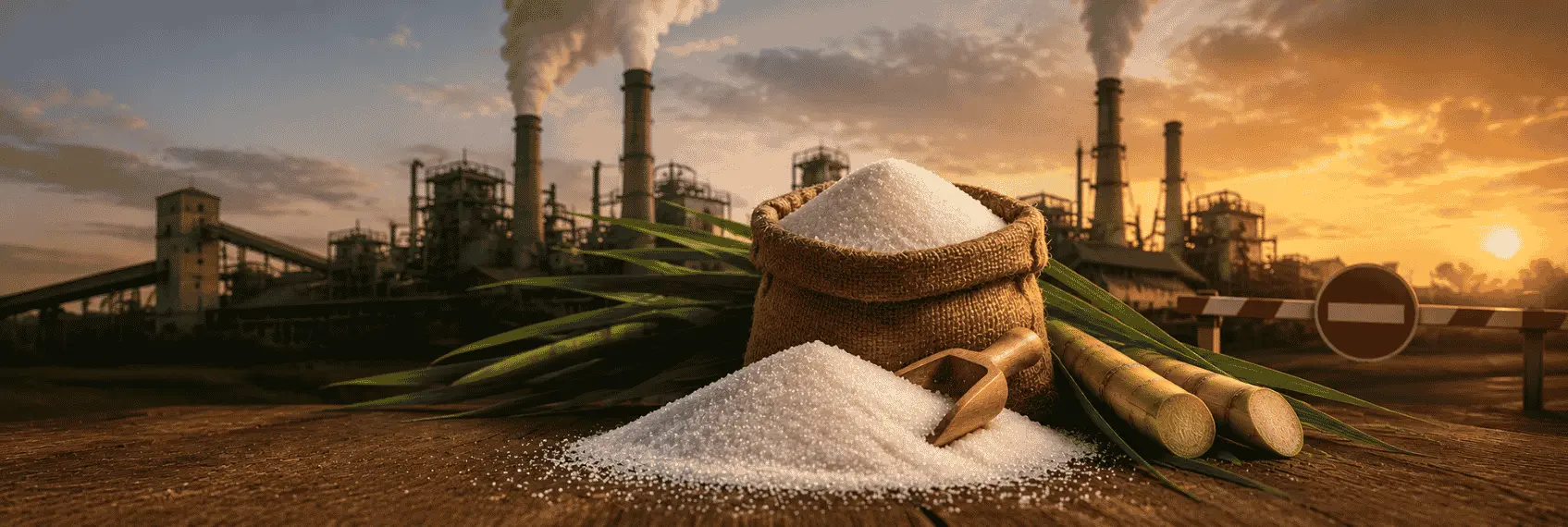
India’s sugar market has witnessed an unexpected reversal in the 2025-26 season. At the beginning of the season, the country appeared to be heading towards a comfortable surplus, with production expected to rise and sufficient stocks projected to remain available for domestic consumption and exports.
Instead, the market has moved into a period of sharply higher prices and tighter availability. Lower-than-expected sugar production, crop diseases, excessive rainfall in some producing regions, stronger demand ahead of the festival season and concerns over future stocks have combined to put pressure on the market.
The government has responded with a series of measures designed to increase availability and prevent excessive stockpiling. These include restrictions on stockholding, closer monitoring of sugar inventories and permission for duty-free imports of raw sugar.
However, the situation is more complicated than a straightforward shortage. Industry representatives have argued that India has sufficient stocks to meet domestic demand and that speculative buying and stockpiling have contributed significantly to the recent price surge.
Expectations of a Sugar Surplus Change
The current sugar season began on October 1, 2025, with expectations of strong production. Initial estimates suggested that production could reach around 343 lakh tonnes.
Such an outlook would normally provide enough room for domestic consumption, exports and the rebuilding of stocks. The expectation of a surplus also created pressure for the government to permit exports so that mills could avoid accumulating excessive inventories.
Higher production would have been beneficial for sugar mills and farmers as well. Excessive stocks can tie up working capital for mills and make it more difficult for them to clear payments to sugarcane growers.
But agricultural forecasts can change significantly as the season progresses. Weather conditions, crop diseases and actual yields eventually proved less favourable than the early estimates had suggested.
Production Estimates Revised Downward
The government’s latest assessment places sugar production for the season at approximately 306 lakh tonnes, considerably below the initial projection of around 343 lakh tonnes.
The decline represents a major change in the supply outlook.
Sugarcane crops in important producing areas have faced problems including Red Rot and Top Borer diseases. Excess rainfall and waterlogging have also damaged crops in some regions, particularly in parts of Maharashtra.
These problems affected both the quantity and quality of cane available to sugar mills. Since sugar production depends heavily on the amount of cane crushed and the recovery rate obtained from it, crop damage can quickly translate into lower sugar output.
The reduction in production has consequently narrowed the gap between domestic supply and consumption.
Festival Demand Adds to Market Pressure
The timing of the supply concerns is particularly important.
India is entering a period of strong seasonal demand, with festivals such as Ganesh Chaturthi, Dussehra and Diwali traditionally generating higher consumption of sugar and sugar-based products.
Households purchase more sugar, while sweet manufacturers, bakeries, restaurants, beverage companies and other food businesses increase their procurement.
This seasonal increase in demand has added pressure to an already tighter market.
Retail sugar prices have risen considerably in recent weeks. The average retail price increased from around ₹48.18 per kilogram on July 20 to approximately ₹55.70 per kilogram by August 20.
The sharp movement has raised concerns about the potential impact on household budgets as well as businesses that depend heavily on sugar as an input.
Government Moves to Control Prices
The central government has taken several steps to prevent the situation from worsening.
A stock limit of 400 tonnes has been imposed on sugar dealers for the period from August through November. From September, bulk consumers will also be restricted from holding stocks exceeding 15 days of their consumption.
The objective is to discourage excessive stockpiling and ensure that sugar moves through the supply chain rather than remaining stored with large buyers.
Government and state officials are also conducting physical verification of sugar stocks at mills to identify possible hoarding and artificial shortages.
These measures reflect concerns that the rapid rise in prices may not be explained entirely by actual supply conditions.
India Opens the Door to Sugar Imports
One of the most significant responses has been the decision to permit duty-free imports of one million tonnes of raw sugar.
The move is particularly noteworthy because India has traditionally been a major sugar producer and exporter. Opening the domestic market to imports indicates the government’s intention to strengthen supplies and calm the market before demand increases further during the festival season.
Imported raw sugar can help increase the quantity available for domestic consumption and provide an additional buffer while the country waits for the next crushing season.
The measure is also designed to send a signal to the market that the government is prepared to take action if prices continue to rise sharply.
Ethanol Becomes Part of the Debate
The role of ethanol has become another important part of the discussion surrounding sugar availability.
Sugarcane can be processed into sugar or diverted towards ethanol production. India’s ethanol programme has expanded significantly in recent years as the country seeks to increase the use of ethanol-blended fuel and reduce dependence on fossil fuel imports.
Some critics have linked the current rise in sugar prices to the diversion of sugar towards ethanol.
The government, however, has rejected that explanation as the primary cause of the latest price increase.
According to the government’s assessment, the share of sugar diverted for ethanol has actually declined, from around 12% in 2022-23 to approximately 9% in 2025-26. A substantial share of ethanol production also now comes from grains, particularly maize.
Officials therefore argue that ethanol diversion alone cannot explain the current increase in sugar prices.
Lower Production and Market Behaviour
The government has attributed the recent price increase to several factors rather than a single cause.
Lower-than-expected domestic sugar production is one of the major factors. Weather-related crop damage has also reduced the supply outlook.
At the same time, demand has increased ahead of the festival season. International sugar markets have also tightened, creating additional pressure on domestic prices.
Another factor under scrutiny is speculative buying and hoarding.
Industry representatives have said that the recent price movement appears disproportionate to the actual availability of sugar and have argued that bulk buyers may have accumulated stocks in anticipation of further price increases.
If buyers purchase significantly more sugar than they immediately require, it can temporarily reduce the amount circulating in the market and create the appearance of a shortage.
The government has therefore combined import measures with stricter stockholding rules and physical verification of inventories.
Is India Actually Facing a Sugar Shortage?
Despite the sharp increase in prices, the government maintains that India has adequate stocks to meet domestic requirements until the beginning of the next crushing season.
The Indian Sugar and Bio-energy Manufacturers Association has also stated that there is no fundamental shortage of sugar in the country.
This distinction is important.
A market can experience rapidly rising prices and tight availability without facing an absolute physical shortage. Expectations about future supplies, stock levels, demand and speculative activity can influence prices even when sufficient quantities remain available nationally.
The present situation therefore appears to be a combination of tighter supply conditions and market pressure rather than a complete depletion of sugar stocks.
The Global Market Is Also Tightening
India’s sugar market is not operating in isolation.
Global sugar supplies are also facing pressure, with concerns over weather conditions affecting major producing countries. International sugar prices have increased significantly in recent months.
A tighter global market can influence domestic prices even in a country that produces large quantities of sugar.
India’s position as one of the world’s major sugar producers means its export and import decisions can also affect global market expectations.
If India restricts exports or enters the international market as a buyer, it can alter the balance between global supply and demand.
Why Lower Stocks Matter for the Next Season
The immediate concern is whether current measures will be enough to maintain stable supplies until the next crushing season begins.
The more significant issue, however, is the level of stocks that India will carry into the next season.
Lower closing stocks mean the new season begins with a smaller safety buffer. If production in the next season is also affected by adverse weather, disease or weak yields, the country could face another period of supply pressure.
This makes the performance of the next sugarcane crop particularly important.
Farmers, sugar mills, traders and policymakers will closely monitor rainfall, water availability, crop health and acreage in major sugar-producing states.
Sugarcane Farmers Remain a Key Part of the Equation
The sugar market is not only about consumers and prices. Millions of farmers depend on sugarcane cultivation for their livelihoods.
One of the long-standing problems in India’s sugar industry has been the accumulation of unpaid cane dues when mills face financial difficulties because of excessive stocks and low sugar prices.
The ethanol programme has helped provide another revenue stream for mills and has been presented as one way of improving their financial stability.
The government has said that most of the cane dues for the current season have already been cleared, reflecting the stronger financial position of mills.
Maintaining this payment cycle will remain important because a sudden deterioration in sugar prices can quickly affect the ability of mills to pay farmers.
The Bigger Challenge: Predicting Agricultural Supply
The latest sugar episode highlights the difficulty of making accurate production forecasts in agriculture.
At the beginning of the season, India appeared to have the ingredients for a comfortable surplus. Months later, production estimates have been cut substantially and policymakers are taking steps to increase supplies.
Agricultural production depends on factors that cannot always be predicted accurately months in advance. Disease outbreaks, excessive rainfall, waterlogging and changes in crop yields can significantly alter the final output.
For policymakers, the challenge is to make decisions on exports, imports and stocks while balancing incomplete information with the need to protect both consumers and farmers.
What Happens Next
The coming months will determine whether the current sugar price surge is temporary or becomes a longer-lasting supply problem.
Government imports could add to domestic availability, while restrictions on stockholding may reduce speculative accumulation. The beginning of the new crushing season is also expected to provide fresh supplies to the market.
At the same time, the government will have to carefully balance consumer interests with the interests of sugar mills and farmers.
Keeping prices affordable is important for consumers, but excessively low sugar prices can weaken the finances of mills and ultimately affect farmers.
The immediate objective will therefore be to prevent sharp price increases without damaging the economics of sugarcane cultivation and sugar production.
A Market in Transition
India’s sugar market has moved rapidly from expectations of surplus to concerns over tight supply and high prices.
The reversal has been driven by lower-than-expected production, crop damage, seasonal demand, global market conditions and concerns about stock levels. Speculative buying and stockpiling may have further intensified the price movement.
The government has responded with import measures, stock limits and closer monitoring of inventories, while industry representatives maintain that India has enough sugar to meet domestic requirements.
The episode underlines the delicate balance at the heart of India’s sugar economy. Production must be sufficient to meet domestic demand, while mills need financially viable prices and farmers need timely payments for their crops.
As the festival season approaches and the next crushing season draws closer, the focus will remain on sugar availability, prices and the government’s ability to keep the market stable.
For consumers, the immediate question is how quickly prices can moderate. For policymakers, the larger question is whether India can prevent a temporary supply squeeze from becoming a structural shortage in the next sugar season.