
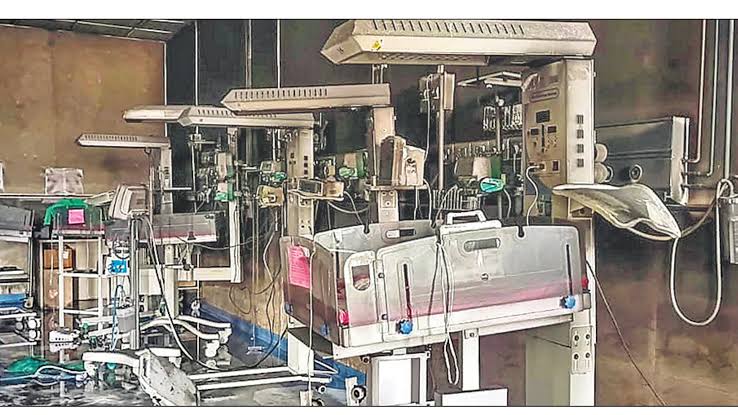
Three newborn babies died after a fire broke out in the Special Newborn Care Unit (SNCU) of the District Women’s Hospital in Amravati, Maharashtra, in the early hours of Monday. The tragedy occurred when the neonatal ward was housing critically ill and vulnerable infants, prompting an immediate rescue operation by doctors, nurses and other hospital staff.
The fire was reported at around 3.15 am on August 24 in a neonatal care unit located on the hospital’s third floor. Preliminary information indicated that a ventilator may have malfunctioned or exploded before the fire spread through the ward. However, authorities have not yet established the precise cause, and both the equipment involved and the circumstances surrounding the outbreak are being examined.
At the time of the incident, 39 newborns were being treated across the neonatal units. Hospital personnel responded quickly after smoke and flames were noticed and began evacuating the infants from the affected area.
Officials said 36 babies were rescued. Several infants were subsequently shifted to other medical facilities for continued treatment, particularly those who had been exposed to smoke or were in a critical condition.
The three infants who died were in the affected unit. Officials said they suffered severe burn injuries and smoke inhalation.
Rescue operation launched as smoke filled neonatal ward
The rescue operation was particularly challenging because the affected ward housed newborns requiring specialised medical support. Many of the infants were premature, underweight or critically ill and dependent on equipment for their care.
Doctors, nurses and other staff members entered the affected area and began disconnecting medical equipment before moving the babies to safety. The emergency response prevented the incident from becoming even more catastrophic, with dozens of newborns evacuated from the unit.
Six critically affected infants were shifted to nearby private super-speciality hospitals for further medical attention. Other rescued babies were either moved to safer areas or kept under observation with their mothers, depending on their medical condition.
The evacuation also highlighted the difficulties involved in responding to a fire in a neonatal unit. Unlike ordinary hospital wards, neonatal intensive and special-care units contain patients who cannot independently move away from danger and often require continuous respiratory or life-support assistance.
Ventilator malfunction suspected, but investigation continues
A preliminary assessment suggested that a ventilator may have sparked or exploded and triggered the fire. Officials have cautioned that this remains an initial assessment and that the exact cause will be known only after a detailed investigation.
The incident has therefore raised questions about the maintenance and safety of medical equipment used in critical-care wards. Ventilators and other life-support devices operate continuously and are essential to the survival of critically ill newborns. Any electrical or mechanical failure in such equipment can have particularly serious consequences when it occurs inside a densely occupied neonatal ward.
Investigators are expected to examine the ventilator involved in the incident, electrical connections, maintenance records and other equipment in the affected unit. The condition and functioning of the hospital’s fire-safety infrastructure will also be part of the wider assessment.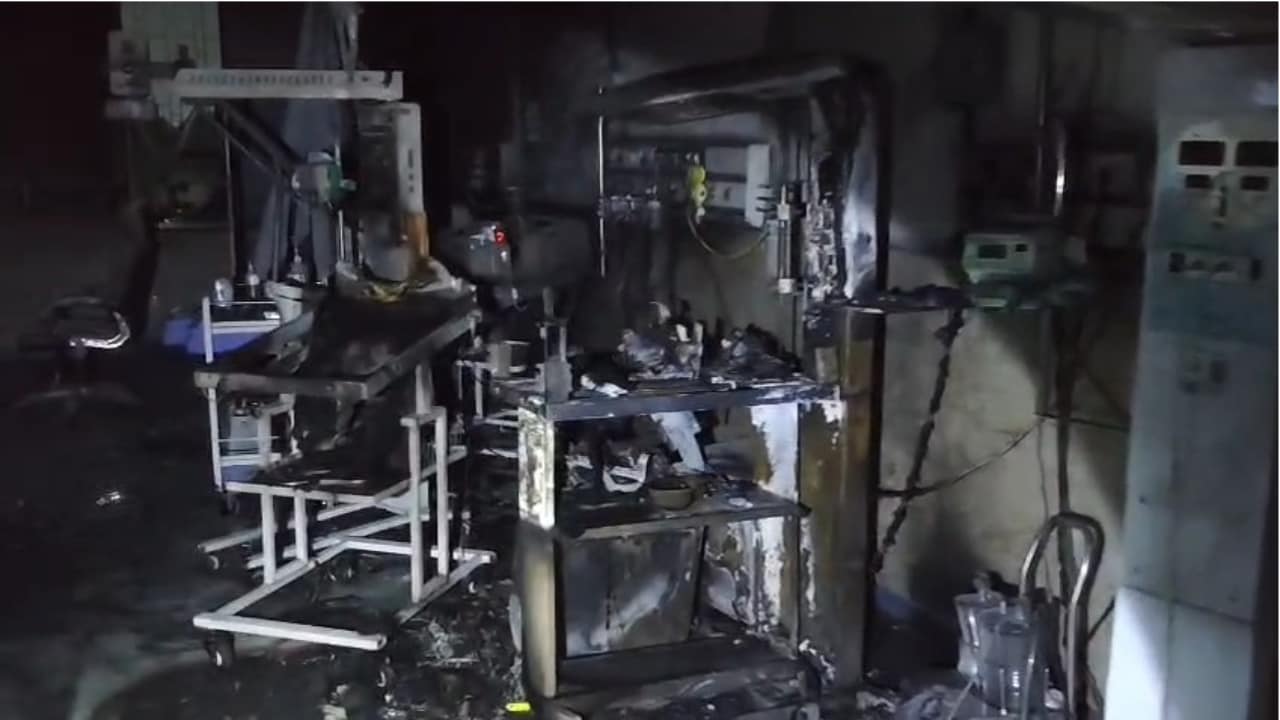
Fire safety systems face renewed scrutiny
The deaths have triggered questions over the effectiveness of fire-safety arrangements in government hospitals, particularly in areas where patients are highly vulnerable.
Officials have said the hospital had undergone fire-safety audits and had also applied for the current year’s audit. This has shifted attention towards whether safety equipment and procedures were functioning effectively at the time of the incident, rather than simply whether the facility had completed formal inspections.
Questions have also emerged over emergency preparedness, equipment maintenance, evacuation procedures and the ability of staff to respond to a rapidly spreading fire in a neonatal ward.
The incident has underscored a broader challenge for healthcare facilities: fire safety cannot depend solely on periodic inspections. Hospitals need functioning alarms, reliable firefighting equipment, properly maintained electrical and medical systems, clear evacuation routes and regular emergency drills.
Maharashtra government orders high-level inquiry
Following the tragedy, the Maharashtra government ordered a high-level inquiry into the incident. The investigation is expected to establish how the fire started, whether any equipment malfunction contributed to it and whether there were shortcomings in the hospital’s safety and emergency-response systems.
The inquiry is also expected to examine the sequence of events from the moment the fire began until the infants were evacuated. Investigators will need to determine how quickly the alarm was raised, how staff responded, whether firefighting systems operated as intended and whether any preventable factors contributed to the deaths.
The government has indicated that fire-safety audits and related checks will be strengthened across healthcare facilities in the state in the aftermath of the incident.
Tragedy raises wider concerns about hospital preparedness
The Amravati fire has once again brought hospital fire safety into focus, particularly after a series of incidents involving neonatal and critical-care facilities.
Neonatal units require special safety planning because they combine large amounts of electrical and medical equipment with patients who cannot be evacuated without assistance. A fire in such an environment can quickly create a life-threatening situation through smoke, heat, power disruption and the loss of essential medical support.
The incident therefore raises questions beyond the immediate cause of the fire. Authorities will also have to assess whether hospitals have adequate preventive maintenance systems, equipment monitoring, emergency response plans and trained personnel to handle such emergencies.
Families face devastating loss
For the families of the three newborns who died, the incident has resulted in an unbearable loss. The infants had been admitted for medical care and were among the most vulnerable patients inside the hospital when the fire erupted.
The tragedy has also caused distress among other families whose newborn children were being treated in the facility. While dozens of infants were successfully rescued, parents were left waiting anxiously for information about the condition and whereabouts of their children.
The loss of three newborn lives has intensified demands for a transparent investigation and accountability wherever negligence or safety failures are established.
A warning for healthcare safety standards
The Amravati hospital fire is not only an investigation into a suspected equipment failure; it is also a test of the safety systems designed to protect patients in public healthcare facilities.
Determining whether a ventilator malfunction caused the blaze will be an important part of the inquiry, but preventing similar tragedies will require a broader examination of hospital infrastructure and preparedness.
Authorities will have to establish whether equipment was properly maintained, whether safety systems were operational, whether staff received adequate emergency training and whether existing fire-safety standards were effectively implemented.
For the healthcare system, the immediate priority is to ensure that the surviving newborns receive uninterrupted medical care. The longer-term priority will be to ensure that lessons from the Amravati tragedy translate into stronger safety protocols, better equipment maintenance and more effective emergency preparedness across hospitals in Maharashtra.
The deaths of three newborns have consequently turned a local hospital tragedy into a wider warning about the need for uncompromising safety standards in medical facilities, especially in wards where patients are completely dependent on healthcare workers and life-support equipment for their survival.