
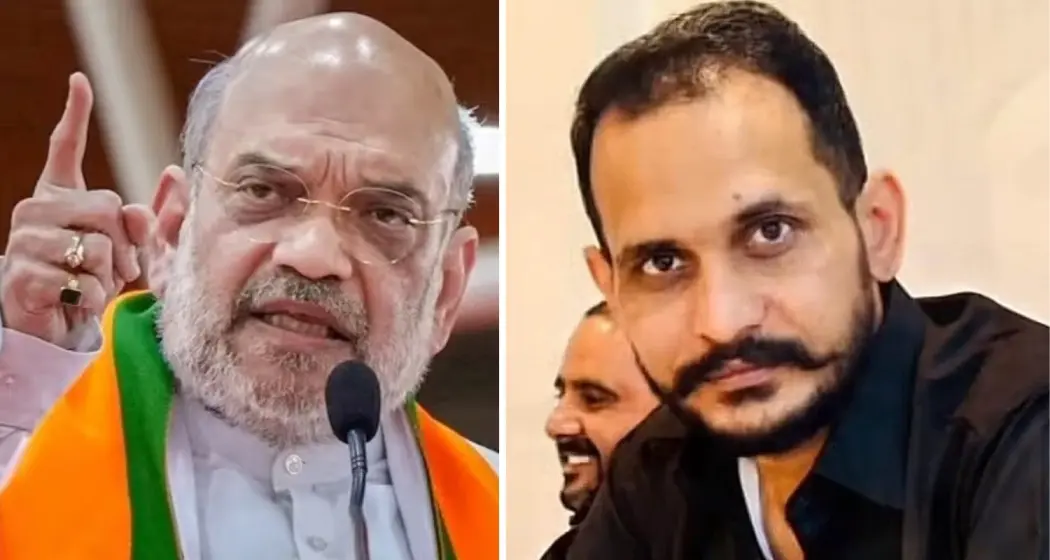
Indian security agencies have dismantled the Pakistan-based Shahzad Bhatti Network in a major multi-state operation conducted ahead of Independence Day, with authorities saying the action prevented the alleged terror group from carrying out planned subversive activities.
Union Home Minister Amit Shah said more than 200 alleged operatives linked to the network were arrested during coordinated operations conducted across 14 states. The operation, according to the Ministry of Home Affairs, resulted in 253 detentions and more than 80 First Information Reports being registered in connection with cases linked to the network.
The crackdown was carried out as part of the government’s stated policy of zero tolerance towards terrorism and cross-border terror activities. Security agencies moved against suspected members and associates of the network before Independence Day celebrations, when security arrangements across the country are traditionally strengthened.
Coordinated operation carried out across 14 states
According to the Ministry of Home Affairs, a coordinated operation was conducted on August 12 using a real-time intelligence-sharing mechanism involving state police forces.
The operation was aimed at countering alleged disruptions planned around Independence Day and identifying individuals suspected of having links with the Shahzad Bhatti Network.
The detentions were spread across several states, demonstrating the geographical reach of the investigation. Uttar Pradesh recorded the highest number of detentions with 62, followed by Haryana with 52, Delhi with 51 and Punjab with 44.
Rajasthan accounted for 15 detentions, while Maharashtra recorded eight and Uttarakhand five. Karnataka, Gujarat and Bihar recorded three detentions each. Telangana, Himachal Pradesh, Jammu and Kashmir and Kerala recorded two each.
Fresh FIRs were also registered in Delhi and Karnataka as part of the wider investigation.
Officials said more than 80 cases have cumulatively been registered against individuals associated with the network under provisions of the Unlawful Activities (Prevention) Act, Bharatiya Nyaya Sanhita, Arms Act, Narcotic Drugs and Psychotropic Substances Act and Explosive Substances Act.
Government alleges Pakistan-based terror links
The Shahzad Bhatti Network has been described by the government as a Pakistan-based terror syndicate allegedly backed by Pakistan’s Inter-Services Intelligence.
Authorities have linked the network to several types of violent activities, including grenade attacks, improvised explosive device attacks, petrol-bomb incidents and targeted killings in different parts of India.
Investigators are also examining the alleged role of local associates who were reportedly used by the network for logistical and surveillance-related activities.
According to the government, suspected local conduits were allegedly paid to conduct reconnaissance of police establishments, defence-related locations and religious sites. They were also allegedly involved in installing CCTV cameras that could be used for surveillance and espionage.
The alleged use of local contacts is a significant aspect of the investigation because such individuals can provide information about sensitive locations without necessarily being directly involved in the planning of attacks.&imwidth=800&imheight=600&format=webp&quality=medium)
Explosives and weapons recovered
Security agencies reportedly recovered a substantial quantity of material during the crackdown.
The seizures included improvised explosive devices, grenades bearing Pakistan Ordnance Factory markings, pistols and live ammunition. CCTV cameras allegedly used for surveillance were also recovered.
The recovery of explosives and weapons has become a major focus of the investigation as agencies attempt to establish how the material was obtained, transported and intended to be used.
Investigators are also expected to examine the seized electronic and surveillance equipment for information about suspected targets, contacts and communication channels.
The evidence could help agencies determine the operational structure of the network and identify other individuals who may have remained outside the initial round of arrests.
Independence Day security was a major concern
The timing of the operation was particularly significant because it took place shortly before Independence Day.
August 15 is one of India’s most heavily secured national occasions, with large public gatherings, official ceremonies and heightened security around government installations and other sensitive locations.
According to the government, the intelligence-led operation was specifically designed to prevent activities allegedly planned by the Shahzad Bhatti Network around Independence Day.
The use of real-time intelligence sharing between central agencies and state police forces allowed simultaneous action at multiple locations, authorities said.
Such coordination is considered important in cases involving networks that allegedly operate across state borders, particularly when investigators suspect that individuals in different locations may have separate roles within the same organisation.
Alleged reconnaissance of sensitive locations
Authorities have highlighted the alleged reconnaissance activities of people connected with the network.
Investigators believe that local conduits were allegedly used to gather information about police, defence and religious sites. CCTV cameras were reportedly installed as part of these surveillance efforts.
Reconnaissance can play an important role in terror planning because information about security arrangements, movement patterns, entry points and vulnerabilities can potentially be used to prepare an attack.
The investigation will therefore focus not only on the people arrested but also on the information they allegedly collected and the individuals who may have instructed or financed them.
Digital devices, CCTV equipment, communication records and financial transactions could provide investigators with further clues about the network’s functioning.
More than 250 people detained
The overall figure of 253 detentions makes the operation one of the largest multi-state crackdowns associated with the network.
The highest number of people were detained in Uttar Pradesh, Haryana, Delhi and Punjab. These were followed by Rajasthan, Maharashtra and Uttarakhand, while smaller numbers were detained in Karnataka, Gujarat, Bihar, Telangana, Himachal Pradesh, Jammu and Kashmir and Kerala.
Authorities have emphasised that the figures include detentions as part of an ongoing investigation, while more than 200 people have been arrested in cases registered against the network.
The distinction between detention and arrest is important because investigators may still be establishing the individual roles and alleged involvement of those taken into custody.
Further legal proceedings will determine the charges and evidence against the accused in individual cases.
Investigation into previous terror incidents
The crackdown also comes against the backdrop of investigations into several incidents that authorities have allegedly linked to Shahzad Bhatti.
The National Investigation Agency has been investigating multiple cases involving Bhatti, including an alleged connection to a grenade attack at the residence of social media influencer Roger Sandhu in Jalandhar in March 2025.
Investigators have also alleged that Bhatti was involved in attacks targeting police establishments in Haryana. These include an explosion at a women’s police station in Sirsa in November 2025 and a blast at Baldev Nagar police station in Ambala in January 2026.
The agency has previously filed chargesheets in some of these cases, naming Bhatti as an alleged Pakistan-based handler.
These investigations are significant because they could help authorities establish whether the recently dismantled network was connected to earlier incidents and whether the same individuals or communication channels were used across different operations.
Government praises security forces
Amit Shah credited Indian security forces for the operation and described the action as an example of the country’s zero-tolerance approach towards terrorism.
He said the government had disrupted the network before it could execute its alleged plans for subversive activities around Independence Day.
The Home Minister also highlighted the coordinated nature of the operation, noting that security agencies acted simultaneously across different locations in 14 states.
The government has presented the operation as an intelligence-led preventive action aimed at neutralising a suspected terror network before an attack could take place.
Focus now shifts to the wider network
Although authorities have described the operation as a major success, the investigation is expected to continue.
Security agencies will need to determine whether all important members of the network have been identified and whether additional facilitators or handlers remain active.
Investigators are likely to examine communication records, financial transactions, digital devices and other evidence recovered during the raids. These investigations could reveal how the alleged network recruited individuals, communicated with them and arranged logistical support.
The agencies will also seek to establish the precise role played by each person detained or arrested. This could help distinguish alleged core operatives from individuals suspected of providing logistical, financial or surveillance assistance.
A major pre-Independence Day security operation
The multi-state crackdown underscores the continuing security challenges posed by suspected cross-border terror networks and their alleged local support structures.
With 253 people detained, more than 80 FIRs registered and more than 200 arrests reported, the operation represents a substantial nationwide effort to disrupt the Shahzad Bhatti Network.
The recovery of explosives, weapons, ammunition and surveillance equipment has added another important dimension to the investigation.
For the government, the immediate objective was to prevent any disruption around Independence Day. The broader challenge for security agencies will now be to trace the remaining links of the alleged network, establish the full chain of command and ensure that individuals involved in previous or planned attacks are brought before the law.
The operation has also highlighted the importance of intelligence sharing between central agencies and state police forces in identifying potential threats before they can develop into major security incidents.