
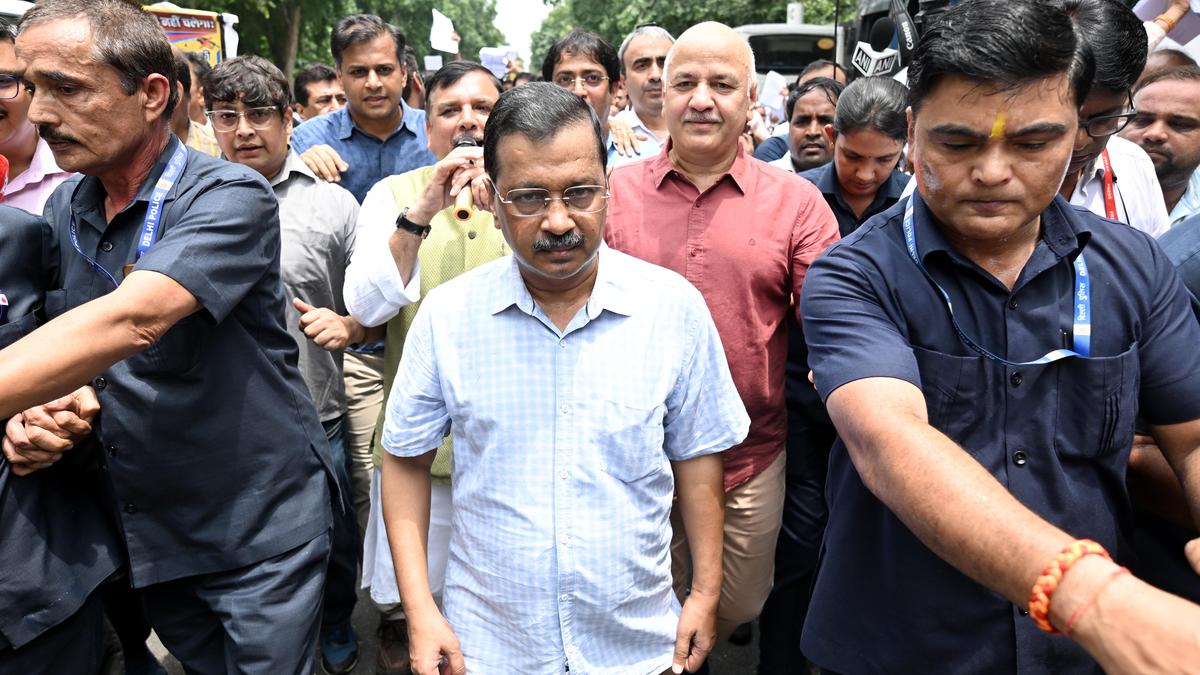
Former Delhi Chief Minister Arvind Kejriwal on Saturday said a new generation of children was beginning to question the condition of government schools and demand basic facilities, describing the development as a sign that young citizens were increasingly unwilling to accept poor public services as normal.
In an Independence Day message, Kejriwal said that after Generation Z, Generation Alpha was now beginning to raise its voice over issues affecting their education and everyday lives. He pointed to student-led demands from different parts of the country, arguing that children were increasingly seeking accountability from governments and authorities responsible for providing essential public infrastructure.
According to Kejriwal, students in places including Hamirpur in Himachal Pradesh, Dehradun and Barmer have raised concerns over basic facilities and infrastructure. Their demands, he said, include better roads and adequate availability of teachers. The examples were cited as evidence of a wider change in the way younger students are responding to deficiencies in public services.
The former Delhi chief minister said the concerns being raised by schoolchildren were particularly significant because they related to necessities that should ordinarily be guaranteed in government educational institutions. He highlighted issues such as damaged school buildings, leaking roofs, inadequate toilets, insufficient drinking-water facilities and shortages of teachers.
Kejriwal questioned why such conditions continued to exist decades after Independence. He argued that generations of citizens had become accustomed to shortcomings in government schools and, in many cases, had begun treating them as an unavoidable part of public education.
However, he suggested that younger students were approaching the issue differently. Rather than accepting inadequate infrastructure as routine, children were increasingly questioning why basic facilities were unavailable and demanding improvements.
Students increasingly raising basic infrastructure concerns
The remarks come against the backdrop of growing attention to the condition of government schools in different parts of India. While education remains a key responsibility of governments, the quality of infrastructure and availability of teachers can vary considerably between regions and between urban and rural areas.
For students, these shortcomings can have a direct impact on their education. Poorly maintained buildings, inadequate sanitation, unreliable drinking-water facilities and insufficient teaching staff can affect attendance, learning conditions and the overall school experience.
Kejriwal’s reference to student protests therefore places the issue within a broader debate about accountability in public education. His argument is that when children themselves begin demanding basic facilities, it reflects a deeper public concern about whether government institutions are meeting their responsibilities.
The emphasis on roads and access to teachers also highlights how education is connected to infrastructure beyond the school campus. Students may depend on safe and usable roads to reach schools, while the absence of sufficient teachers can limit the subjects and educational opportunities available to them.
Kejriwal contrasts conditions with Punjab’s education model
Kejriwal also highlighted the education record of the Aam Aadmi Party government in Punjab while making his broader argument about government schools.
He claimed that improvements in Punjab’s government schools had helped create an environment in which students were able to prepare for competitive examinations such as the National Eligibility cum Entrance Test and the Joint Entrance Examination. He further said students from these schools were now progressing towards professional careers, including medicine and engineering.
The claims form part of Kejriwal’s long-standing political emphasis on education and government-school reform. During his tenure in Delhi, improvement of public education infrastructure and school facilities was a prominent component of the Aam Aadmi Party’s governance narrative.
His latest remarks similarly place the quality of government education at the centre of a wider discussion about the role of the state in providing equal opportunities to children, particularly those who depend primarily on public institutions for their schooling.
A generational shift in expectations
Kejriwal’s use of the terms Gen Z and Gen Alpha gives the issue a generational dimension. Generation Alpha generally refers to children born after Generation Z, although the exact years used to define the cohort vary. Many members of this generation have grown up with smartphones, digital platforms and rapid access to information.
That environment may also influence how younger people understand public services and communicate their concerns. Children today are exposed to information and discussions from across the country at an early age. As a result, problems in one school or region can quickly become part of a wider public conversation.
Kejriwal’s remarks suggest that this changing environment could contribute to a greater willingness among young people to question authorities over issues that directly affect their lives.
The significance of such demands goes beyond individual schools. Government schools serve a large section of India’s student population, making their infrastructure and teaching standards an important component of the country’s broader social and economic development.
The larger education challenge
The concerns raised in the discussion point to several longstanding challenges facing public education. Building and maintaining adequate school infrastructure requires sustained investment, while ensuring an adequate number of trained teachers requires effective recruitment and deployment policies.
Basic amenities such as functional toilets, safe buildings and access to drinking water are also essential to maintaining a suitable learning environment. When such facilities are missing or poorly maintained, the consequences can extend beyond immediate inconvenience and affect students’ ability to learn comfortably and consistently.
At the same time, improving school infrastructure alone is not enough. Quality education also depends on teacher availability, classroom resources, learning outcomes and effective administration.
The emerging demands from students, as highlighted by Kejriwal, therefore raise a larger question about how governments respond when citizens—regardless of age—ask for better public services.
Accountability becomes the central issue
Kejriwal framed the participation of younger students as a sign of changing expectations from government. His central argument was that poor conditions should not be accepted simply because they have existed for a long time.
The remarks also underline the political importance of education in India. Government schools are closely connected to issues of social mobility, equal opportunity and access to professional careers. Improvements in public education can potentially reduce disparities between students from different economic backgrounds, while inadequate facilities can deepen existing inequalities.
By drawing attention to student demands, Kejriwal sought to portray the current generation of schoolchildren as more assertive about their rights and more prepared to question administrative failures.
Whether such student activism develops into a sustained movement remains to be seen. However, the concerns cited by Kejriwal reflect a broader expectation that government institutions should provide not only access to education but also the basic conditions necessary for students to learn effectively.
For India’s younger generation, the debate over government schools is ultimately about more than buildings, roads or teachers. It concerns the quality of public services, equal educational opportunities and the responsibility of authorities to respond when citizens demand improvements.