
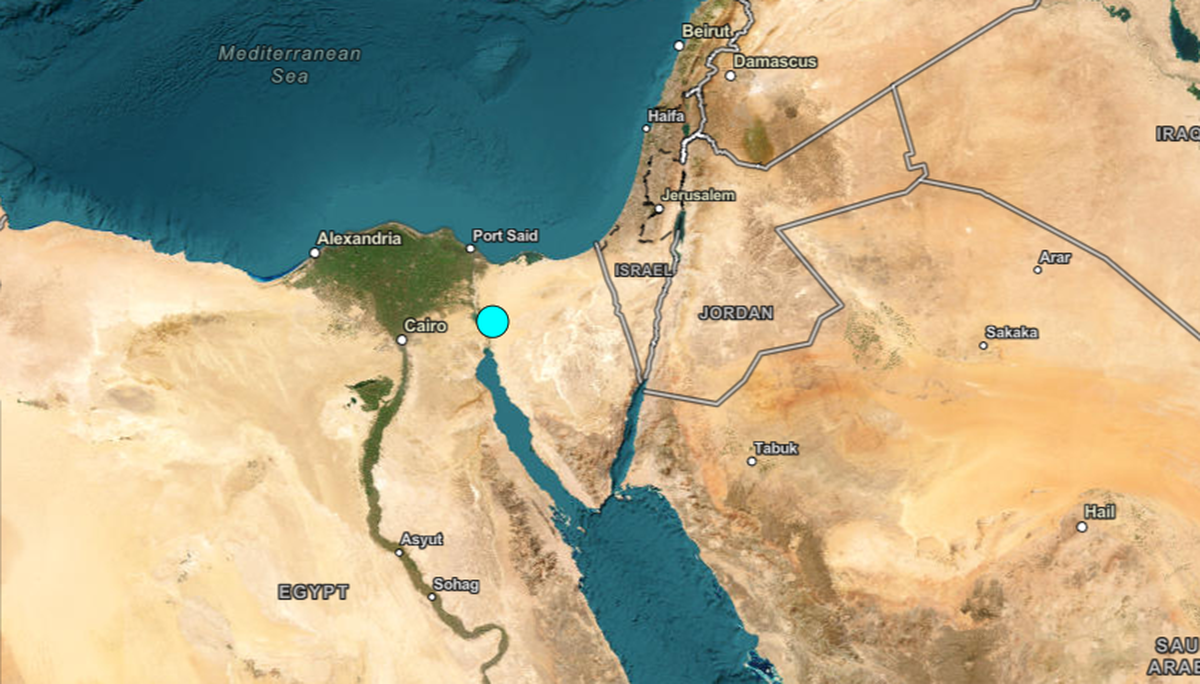
A powerful earthquake struck parts of Egypt, triggering panic among residents and prompting authorities to begin assessing the extent of damage and possible casualties. The tremors were felt across several regions, forcing many people to evacuate buildings as a precaution and gather in open areas.
The sudden seismic activity created fear among residents, particularly in populated areas where people reported feeling strong shaking inside homes, offices, and other structures. Many residents rushed outside following the tremors, while authorities urged the public to remain calm and follow safety instructions.
Emergency agencies and local authorities immediately began monitoring the situation to determine whether the earthquake caused structural damage, injuries, or disruptions to essential services. Initial assessments focused on residential buildings, public facilities, roads, and other important infrastructure.
Emergency Response Teams Activated to Monitor Situation
Following the earthquake, emergency response teams were placed on alert to handle any possible rescue operations and provide assistance to affected communities. Officials began collecting reports from different locations to understand the scale of the impact.
Authorities carried out inspections of buildings and public areas to identify potential risks caused by the tremors. Safety checks were considered important as earthquakes can weaken structures and increase the possibility of collapses, particularly in older buildings.
Experts explained that the severity of an earthquake’s impact depends on several factors, including its magnitude, depth, location, population density, and the quality of construction in affected areas.
Residents Report Strong Shaking and Fear Across Affected Areas
The earthquake caused widespread concern among residents, with many describing moments of fear as buildings and household objects began shaking. People moved outdoors to avoid possible risks and waited for further information from officials.
Social media platforms were filled with reactions from residents sharing their experiences of the earthquake. However, authorities advised people to rely only on verified information and avoid spreading rumours during the emergency situation.
Officials also warned residents about the possibility of aftershocks, which can occur after a major earthquake. People were advised to stay alert, avoid damaged structures, and immediately report any dangerous conditions. 
Authorities Continue Evaluation of Damage and Losses
Assessment teams continued examining affected areas to determine the actual extent of destruction caused by the earthquake. Officials focused on identifying damaged buildings, possible injuries, and any impact on public services.
A detailed evaluation of earthquake damage often requires time, as authorities must inspect infrastructure and collect information from multiple locations before announcing a complete picture of the situation.
Natural disasters such as earthquakes can create long-term challenges, affecting transportation systems, communication networks, businesses, and daily life. Recovery efforts usually involve coordination between government agencies, emergency services, and local communities.
Earthquake Highlights Need for Better Disaster Preparedness
The earthquake has once again highlighted the importance of disaster preparedness and strong safety measures in earthquake-prone regions. Experts emphasize that early warning systems, public awareness, and earthquake-resistant construction can significantly reduce risks.
Authorities continue to strengthen monitoring systems and emergency response strategies to improve their ability to handle future seismic events. Public awareness campaigns and preparedness drills are also considered important tools in reducing casualties during natural disasters.
As officials continue analysing the impact of the earthquake, the priority remains ensuring public safety, supporting affected residents, and preventing further risks. Further updates are expected as damage assessments and emergency operations progress.