
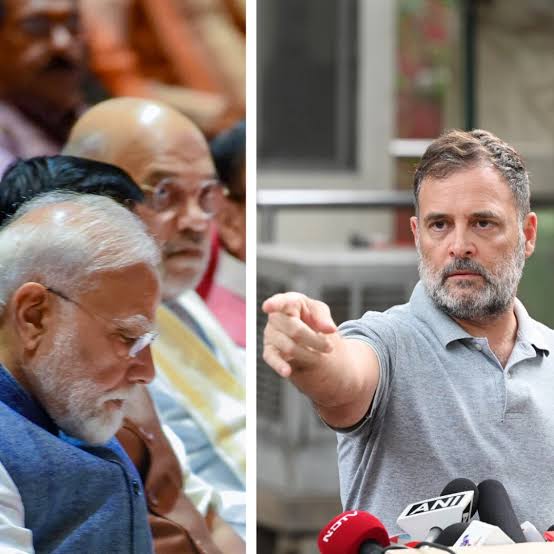
Congress leader and Leader of Opposition in the Lok Sabha Rahul Gandhi has intensified his criticism of Union Home Minister Amit Shah over the alleged use of pellet guns and excessive force during the Cockroach Janta Party’s (CJP) ‘Sansad Chalo’ march near Parliament on July 20. With Parliament’s Monsoon Session resuming on Monday, the controversy over the police action is expected to become a major point of confrontation between the Opposition and the government.
The political dispute comes at a time when the government is preparing to advance legislation aimed at strengthening the legal framework against examination paper leaks and other forms of malpractice in competitive examinations. While the Centre is seeking to push ahead with its proposed amendments to the law on unfair means in public examinations, the Congress-led INDIA bloc is preparing to press the government over the alleged treatment of protesters during the July 20 demonstration.
The march, which was organised amid growing anger over issues surrounding examination paper leaks and demands for stronger action to protect students, had resulted in clashes and a heavy security response near the Parliament complex. Opposition parties have alleged that protesters were subjected to excessive force, while authorities have denied some of the specific allegations.
Rahul Gandhi has now directly sought answers from Amit Shah, arguing that responsibility for security forces operating in the national capital ultimately rests with the Union Home Ministry. His intervention has shifted the political focus towards the Home Minister and away from the Education Ministry, particularly after the resignation of former Education Minister Dharmendra Pradhan.
Rahul Gandhi questions Amit Shah over alleged pellet gun use
Gandhi has accused the authorities of using disproportionate force against students and protesters during the march. He claimed that several demonstrators suffered serious injuries, including fractures, and alleged that pellet guns were used during the police action.
The Congress leader has specifically raised the case of 19-year-old student Sahil Lochab, whom he said was seriously injured and could potentially lose an eye as a result of pellet-related injuries. Gandhi has used the incident to question the government’s handling of student protests and the manner in which security forces responded to the demonstration.
In a letter addressed to Amit Shah, Gandhi asked whether the Home Minister had personally authorised the use of pellet guns or other forms of force against the protesters. He also questioned who had approved the deployment of personnel in plain clothes who were allegedly seen using force against students.
The Congress leader’s questions have placed the Home Ministry at the centre of the controversy. Gandhi argued that if the use of such force was not directly authorised by Shah, the government should clarify who took the decision and under what circumstances.
The allegations have added another layer to the political confrontation surrounding the student-led agitation. Gandhi and other Opposition leaders have maintained that peaceful protest is a democratic right and that grievances raised by students should be addressed through dialogue rather than force. 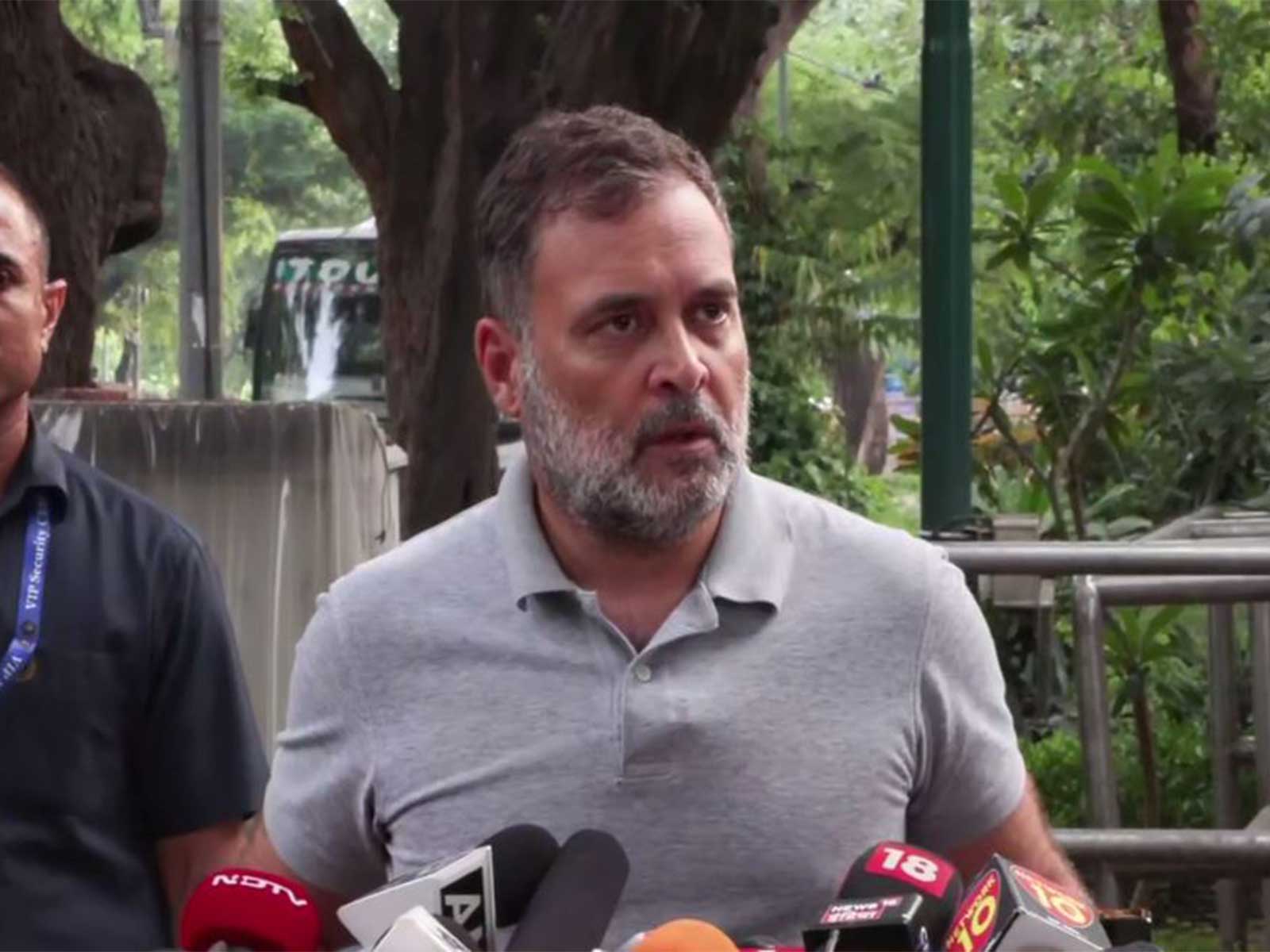
Opposition prepares to raise issue in Parliament
The controversy is expected to spill over into both Houses of Parliament as the Monsoon Session resumes. Opposition parties have indicated that the alleged use of force during the July 20 protest will be raised during proceedings.
Trinamool Congress Rajya Sabha deputy leader Sagarika Ghose has reportedly sought an immediate discussion on allegations of the use of lethal and semi-lethal force against protesters. The demand includes questions surrounding reports of pellet injuries allegedly suffered by demonstrators.
The Opposition is expected to argue that the government must provide a clear account of the events surrounding the protest and establish responsibility for the alleged injuries. The issue could further complicate parliamentary proceedings, which have already witnessed disruptions since the beginning of the session.
At the same time, Delhi Police has denied that its personnel used pellet guns during the protest. Questions have also been raised over the alleged involvement of other security personnel, with the Opposition seeking greater clarity about the identity and role of those accused of using force.
The competing claims are likely to form the basis of a heated political debate as lawmakers return to Parliament.
Government moves ahead with anti-paper leak legislation
While the Opposition is preparing to focus on the protest crackdown, the government is moving forward with its legislative agenda on examination reforms.
The Centre is set to introduce the Public Examinations (Prevention of Unfair Means) Amendment Bill, 2026, in the Lok Sabha. The proposed legislation seeks to make the existing legal framework tougher by increasing punishments for individuals, service providers and organised groups involved in examination-related malpractice and paper leaks.
Under the proposed changes, the minimum prison sentence for individuals accused of offences would increase from three years to five years, while the maximum punishment would rise from five years to 10 years. The maximum fine would also be increased substantially, reaching up to ₹50 lakh.
The proposed amendments would also impose stricter penalties on service providers found to be involved in examination malpractice. Such entities could face fines of up to ₹5 crore and could be blacklisted for a period of up to eight years.
Senior officials, directors and management personnel of service providers could also face tougher criminal penalties. The proposed law reportedly provides for a minimum five-year prison sentence in such cases, along with financial penalties that could reach ₹5 crore.
The legislation also seeks to address organised criminal activity linked to paper leaks. The minimum imprisonment in such cases would reportedly be raised to seven years, accompanied by a minimum fine of ₹10 crore.
Fast-track trials proposed for paper leak cases
Another major feature of the proposed amendments is the introduction of strict timelines for investigations and judicial proceedings.
Investigations into cases involving examination malpractice would be required to be completed within two months. The proposed framework also provides for Special Fast Track Courts to conduct trials on a day-to-day basis, with an aim to conclude proceedings within three months of the filing of the chargesheet.
The legislation further proposes a mechanism for appeals to be heard by a bench comprising at least two High Court judges. Such appeals would, as far as possible, be disposed of within three months.
The government’s move is intended to send a stronger message against examination fraud at a time when concerns over paper leaks have become a major national issue. The proposed changes are also aimed at restoring confidence among students and families who depend on the integrity of competitive and public examinations.
However, the Opposition is expected to argue that legislative action on paper leaks cannot overshadow questions about the handling of student protests. The two issues are therefore likely to run parallel during the current parliamentary session.
Political pressure continues after ministerial resignation
The controversy has also emerged against the backdrop of political pressure over the government’s handling of the examination crisis. The resignation of Dharmendra Pradhan has not brought an end to the Opposition’s campaign, with leaders now directing sharper criticism towards the Home Ministry over the alleged police response to the protest.
For Rahul Gandhi, the issue represents both a question of accountability and a broader political challenge to the government’s approach towards student demonstrations. By directly questioning Amit Shah, Gandhi has sought to shift the debate towards the chain of command responsible for maintaining law and order in Delhi.
The government’s response to the allegations could become a key point of discussion in Parliament, particularly if Opposition parties insist on a detailed explanation of the events of July 20.
Meanwhile, another political controversy is beginning to emerge around Road Transport and Highways Minister Nitin Gadkari over criticism related to ethanol-blended E20 petrol. A separate protest has reportedly been planned in Delhi, indicating that the government could face multiple political flashpoints in the days ahead.
With the Monsoon Session now underway, the confrontation over the alleged use of force against protesters and the government’s proposed anti-paper leak legislation are set to dominate the political discourse. The Opposition is seeking accountability over the July 20 police action, while the government is attempting to advance reforms intended to strengthen the examination system.
The coming days in Parliament are therefore likely to see a direct clash between demands for answers over the treatment of protesters and the government’s push for tougher laws against examination malpractice. The controversy surrounding the CJP march has ensured that the issue of student protests remains firmly at the centre of the political debate.