
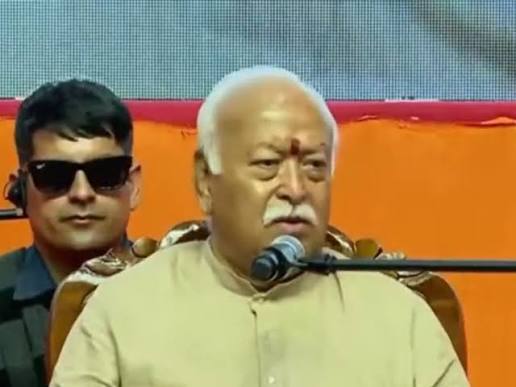
Rashtriya Swayamsevak Sangh (RSS) chief Mohan Bhagwat has said that members of the LGBTQ+ community are an integral part of Indian society and should not be isolated or treated as outsiders. Speaking at an event in Telangana, Bhagwat emphasised the need for a sympathetic and inclusive approach towards people with diverse sexual orientations and gender identities.
Bhagwat said the presence of LGBTQ+ people is not limited to any particular country or culture, arguing that such communities have existed across societies, including India, for generations. He maintained that their existence should be acknowledged as part of the broader social fabric rather than viewed through a lens of exclusion or inferiority.
“There is a place for them within the vast tapestry of social life,” Bhagwat said while discussing the position of the LGBTQ+ community in society.
The RSS chief also spoke about the different ways in which individuals may come to understand or identify their sexual orientation or gender identity. According to him, some people may recognise these aspects of themselves from birth, while others may become aware of them at a later stage in life.
Bhagwat’s comments come amid continuing discussions in India over the social acceptance, dignity and rights of LGBTQ+ people. His remarks highlighted the importance of recognising the community as part of society rather than treating its members as separate from the mainstream.
Bhagwat refers to India’s traditional approach
During his address, Bhagwat referred to Indian traditions and social practices to argue that the existence of people with diverse identities has historically been acknowledged in the country. He said Indian society, in his view, has traditionally maintained a degree of understanding and sympathy towards such communities.
He pointed to the presence of distinct religious and cultural traditions associated with members of the community, as well as their participation in religious spaces and events. He said these aspects demonstrated that their presence has long been recognised within Indian society.
Bhagwat argued that the approach should not be based on considering LGBTQ+ people inferior or fundamentally different from other members of society. Instead, he said, they should be recognised as human beings who have a legitimate place in the social order.
His comments appeared to stress the importance of social inclusion while also reflecting his interpretation of India’s traditional cultural framework. He suggested that society has historically dealt with such matters without necessarily making them the subject of excessive public attention or confrontation.
The RSS chief’s remarks are significant because they come from one of the country’s most influential social and cultural organisations and touch upon a subject that has often generated intense public debate. The issue of LGBTQ+ rights and acceptance has increasingly become part of wider conversations around equality, individual freedom, family structures and social change. 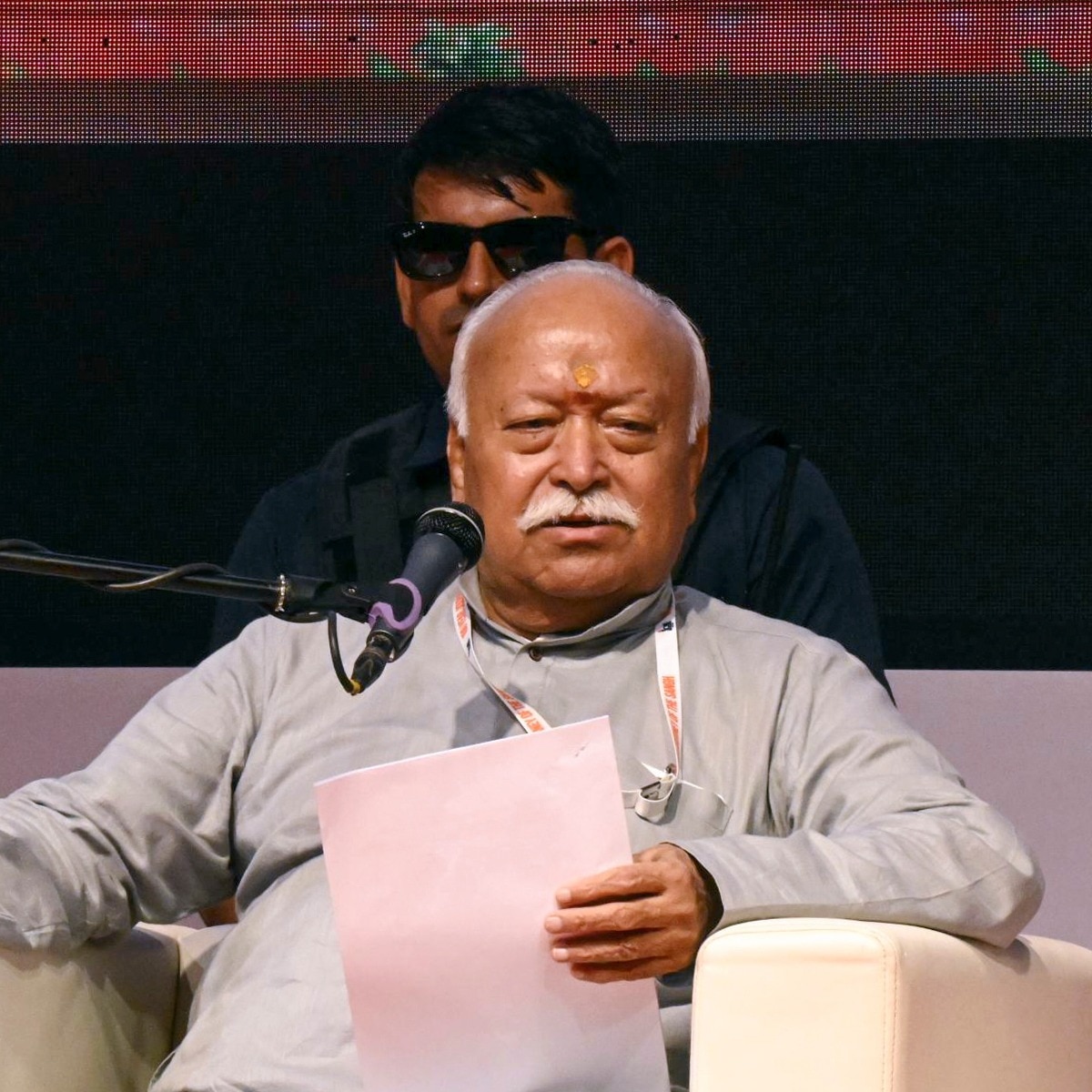
Gender roles and equality
Bhagwat also addressed the broader debate surrounding gender roles and the relationship between men and women. He questioned the idea that one gender should automatically be considered superior to the other and argued that society should move beyond such comparisons.
He said debates over whether men or women are superior can become counterproductive because both perspectives ultimately create a hierarchy between the genders. Instead, he stressed the importance of cooperation and complementarity between men and women.
According to Bhagwat, neither men nor women can independently accomplish everything in every aspect of life. He argued that meaningful progress often requires both to work together and contribute in different ways.
He also raised questions about the position of women within families and marriage. Referring to the idea that women may be expected to remain subordinate within traditional family structures, he questioned why such arrangements should continue if society genuinely believes in women’s equality and dignity.
At the same time, Bhagwat rejected the notion that either men or women are capable of doing everything on their own. He described such assumptions as unrealistic and said that the functioning of society requires cooperation between the two.
Wider debate over inclusion
Bhagwat’s comments on the LGBTQ+ community and gender roles come at a time when questions of equality and social inclusion continue to occupy an important place in India’s public discourse. While legal and social attitudes towards LGBTQ+ people have changed significantly in recent years, debates over acceptance, discrimination and representation remain ongoing.
The RSS chief’s remarks sought to place the discussion within the context of Indian society and its traditions. His assertion that LGBTQ+ people should not be ostracised underscores the broader argument that individuals belonging to minority communities should not be excluded from social life.
At the same time, his comments on how people experience or understand their identities reflect a particular perspective and are likely to remain part of the wider public discussion surrounding LGBTQ+ issues.
The remarks also connected the question of LGBTQ+ inclusion with a larger discussion about how society treats people who do not fit conventional expectations. By emphasising that such individuals are part of the social fabric, Bhagwat called for an approach that recognises their humanity and place in society.
His observations on gender equality further broadened the discussion, highlighting the need to move away from simplistic ideas of superiority between men and women. Instead, he advocated a model based on cooperation, mutual contribution and social balance.
Together, Bhagwat’s comments placed questions of LGBTQ+ inclusion and gender relations within a wider conversation about the nature of Indian society and the ways in which different groups can coexist with dignity and mutual respect.