

Two men from Karnataka were allegedly trafficked to Myanmar after responding to a Facebook advertisement promising well-paid overseas employment, according to police officials familiar with the investigation. The men, who believed they had secured legitimate jobs abroad, were reportedly forced to work inside a heavily guarded compound linked to an organised cybercrime network.
The two men were rescued on Monday following a coordinated operation involving Karnataka’s Cyber Command, the Indian Cyber Crime Coordination Centre, the Indian Embassy in Myanmar and local authorities in the neighbouring country.
The case has highlighted the growing connection between human trafficking and organised cybercrime, with investigators warning that international criminal networks are increasingly using fake job advertisements on social media to recruit unsuspecting Indians.
Promised lucrative jobs through social media
According to investigators, the two Karnataka residents came across a Facebook advertisement offering attractive salaries for overseas employment. Believing the opportunity to be genuine, they submitted their personal information through an online application.
The information reportedly included their educational qualifications and passport details. They were subsequently contacted by a recruiter for a virtual interview.
Police said the interview itself raised questions, as the alleged recruiter reportedly did not appear on camera. Despite this, the recruitment process appeared convincing to the two men because they soon received visas and airline tickets.
The men eventually left Bengaluru on July 10, believing they were travelling abroad to begin new employment.
Investigators said the recruitment network maintained contact with the victims during their journey. Before their departure, one of the men reportedly received a WhatsApp call from a person who claimed to be their manager. The caller allegedly asked him to send a photograph after boarding the flight.
Officials suspect that such instructions were part of a wider system used by trafficking networks to monitor recruits from the moment they leave India until they reach their final destination.
Taken from Thailand to Myanmar
The two men reportedly travelled to Bangkok before being moved towards Mae Sot, a town located near the Thailand-Myanmar border. Investigators said they were subsequently taken across the border and transported by road to a compound in Myanmar’s Kayin State.
According to police, the men were allegedly escorted by individuals dressed in military-style uniforms. Once inside the compound, their passports were reportedly confiscated, leaving them without control over their travel documents.
Investigators said the men were then instructed to sign certain documents before being assigned work inside the facility.
The compound was reportedly occupied by workers from India and other countries. Police said the facility was allegedly operated under the supervision of Chinese nationals and was subject to strict security and surveillance. 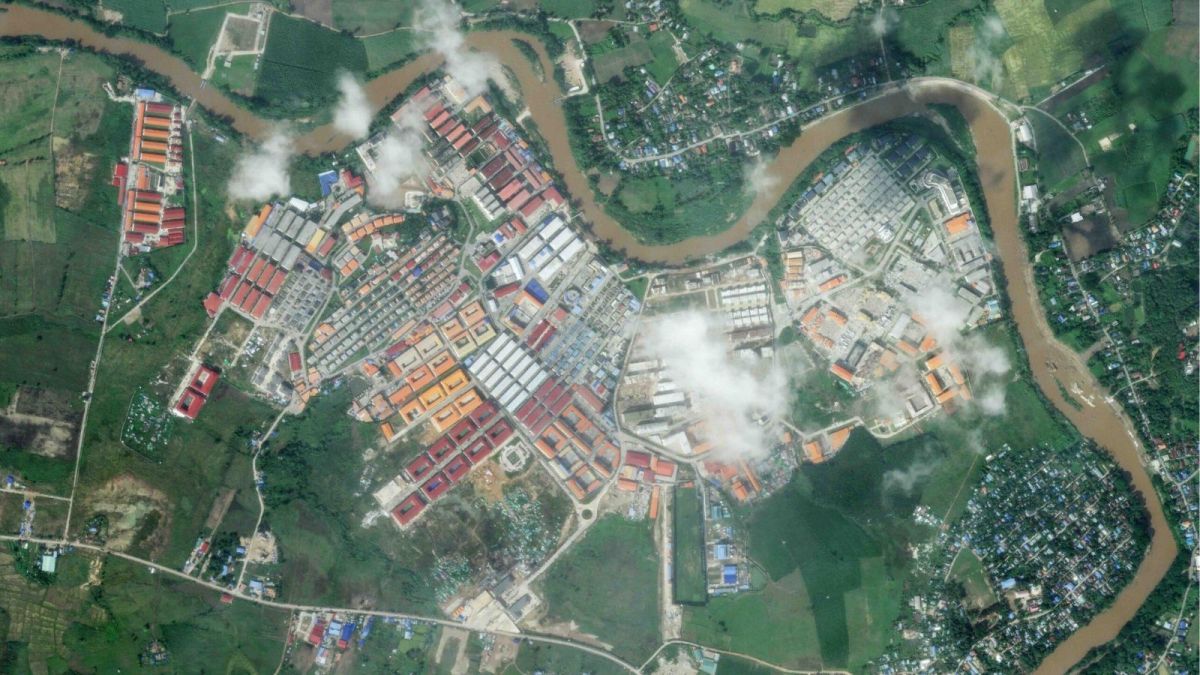
Workers allegedly forced into long shifts
The investigation has revealed disturbing details about the conditions allegedly faced by people trapped inside the compound.
According to officials, workers were kept under constant surveillance and were required to work for extremely long periods, with shifts reportedly lasting as long as 16 hours a day. Their access to mobile phones was also severely restricted, with workers allegedly allowed to use them for only about an hour.
Their sleeping time was reportedly limited, while guards allegedly conducted regular inspections of the living areas to enforce strict discipline.
Investigators further alleged that workers who violated the rules faced increasingly severe forms of punishment. Initial violations were reportedly met with warnings, but repeated breaches could allegedly lead to physical exercises, electric shocks and confinement in dark rooms, along with restrictions on food.
The allegations have raised serious concerns about the exploitation of Indians who are recruited through fraudulent employment offers and subsequently transported to foreign countries against their expectations.
Family alert leads to rescue operation
The case reportedly came to light after a relative of one of the men became suspicious about their communication and alerted the authorities.
The unusual nature of their interactions prompted officials to investigate their whereabouts and circumstances. The subsequent inquiry helped authorities trace their movements from India to Thailand and then towards Myanmar.
The rescue operation was eventually carried out with cooperation between Indian agencies, diplomatic officials and local authorities in Myanmar.
Officials said the successful rescue demonstrated the importance of quick intervention when families report suspicious changes in communication involving relatives who have travelled abroad for employment.
Fake job offers becoming a recruitment tool
Investigators believe the case is part of a broader pattern in which trafficking groups use social media and online recruitment platforms to target people searching for jobs abroad.
Police officials said advertisements offering employment in sectors such as information technology, customer support and data entry are increasingly being used to attract potential victims. The advertisements often promise high salaries and overseas opportunities, making them particularly appealing to job seekers.
After establishing contact, traffickers allegedly collect personal documents and arrange travel, creating the impression that the recruitment process is legitimate. Victims may only discover the reality after reaching another country, where they can be isolated, have their passports taken away and be forced to work under threat.
Authorities believe such networks are increasingly connected to cybercrime operations that use trafficked workers to conduct online fraud.
Human trafficking and cybercrime overlap
Karnataka Director General of Police, CID, Pranob Mohanty said the case demonstrated how human trafficking networks and organised cybercrime groups are increasingly operating together.
According to the police, individuals recruited through apparently legitimate overseas employment offers can eventually find themselves trapped inside organised cyber scam compounds. Once there, they may be forced to participate in fraudulent activities targeting people across different countries.
The development reflects a wider challenge for law enforcement agencies, as traditional human trafficking investigations are now intersecting with cybercrime investigations. Criminal groups can use digital advertising to identify potential victims, online communication to establish trust and international travel arrangements to move them across borders.
The investigation into the Karnataka case is expected to shed further light on the network involved and the larger system through which vulnerable job seekers are allegedly recruited and transported.
The incident also serves as a warning to people seeking employment abroad. Police officials have urged job seekers to carefully verify overseas job offers, recruitment agencies and employers before sharing passport details or making travel arrangements.
As international trafficking networks increasingly exploit digital platforms to reach potential victims, authorities are focusing on identifying fraudulent recruitment advertisements and disrupting the criminal networks that connect trafficking with cyber-enabled fraud.