
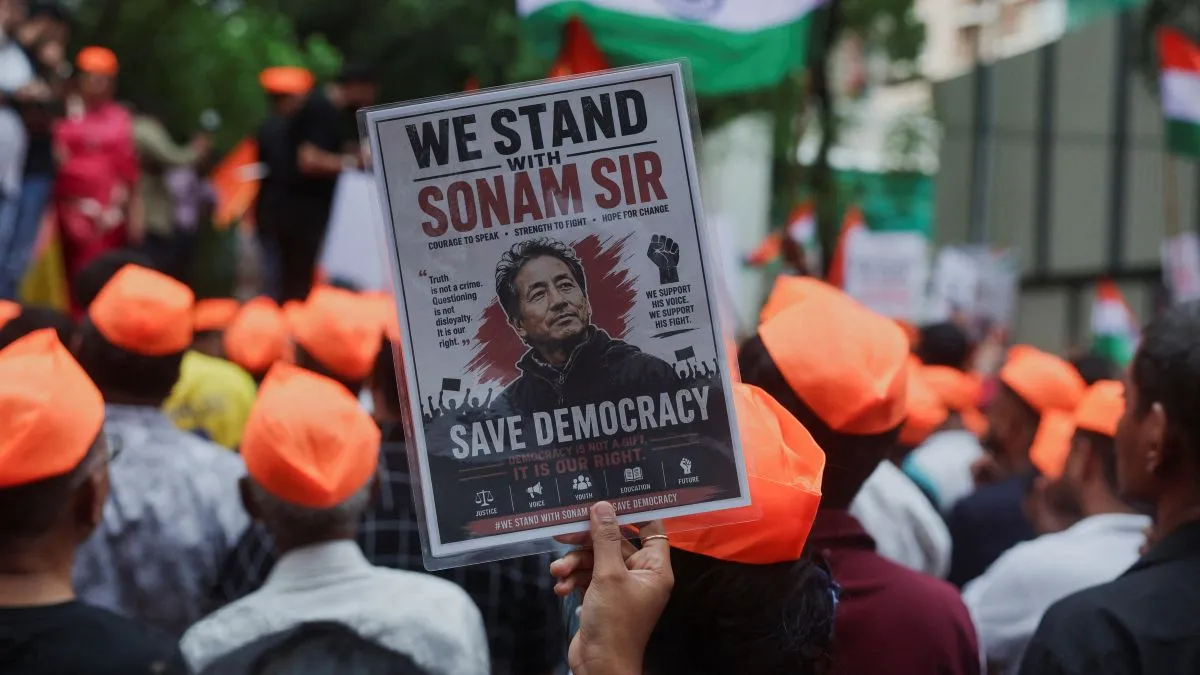
Supporters and activists in the United States have staged demonstrations in New York and San Jose in solidarity with environmentalist and education reformer Sonam Wangchuk, who has been associated with the ongoing agitation seeking attention to the demands of protesters involved in the CJP movement.
The demonstrations abroad reflect growing support among sections of the Indian diaspora for the issues being raised by activists and protesters. Participants used the gatherings to express solidarity with Wangchuk and highlight concerns surrounding the movement, while urging authorities to take the protesters’ demands seriously.
The protests in New York and San Jose were reportedly organised as expressions of support for Wangchuk’s hunger strike and the broader campaign. Demonstrators raised slogans and displayed messages backing the cause, seeking to draw international attention to the developments surrounding the protest movement.
Wangchuk has emerged as a prominent voice on issues related to environmental protection, sustainable development and the rights of communities. His public campaigns have often focused on the need to balance development with ecological concerns and to ensure that local communities have a greater role in decisions affecting their lives and surroundings.
The solidarity demonstrations in the United States come amid heightened attention to the CJP protests and the response to those participating in the movement. Supporters have argued that the concerns raised by protesters should be addressed through dialogue and democratic engagement rather than allowing tensions to escalate.
The gatherings also underline the role played by overseas Indian communities in drawing attention to political and social developments in India. Activists living abroad have frequently organised public demonstrations, awareness campaigns and solidarity events to amplify causes that they believe require greater public and governmental attention.
In New York, participants reportedly gathered to express their support for Wangchuk and the protesters. Similar sentiments were echoed in San Jose, where activists and members of the Indian community came together to highlight the issues associated with the ongoing agitation.
The demonstrations have added an international dimension to the debate surrounding the protest movement. While the organisers and supporters maintain that their actions are intended to raise awareness and press for a response to the protesters’ concerns, the developments have also prompted wider discussion about civil liberties, peaceful protest and the importance of engaging with dissenting voices.
Wangchuk’s hunger strike has further intensified public attention on the matter. Hunger strikes have historically been used as a form of non-violent protest in India, with activists employing the method to press governments to respond to specific demands. Such actions often generate public debate because of the physical risks involved and the political pressure they can create.
The latest solidarity events in the United States suggest that the campaign has resonated beyond India’s borders. For supporters, the demonstrations represent an effort to ensure that the concerns of protesters remain visible internationally and that the movement receives attention from a broader audience.
The protests also come at a time when social movements increasingly rely on diaspora networks and digital platforms to build international awareness. Events organised in cities with significant Indian communities can help activists communicate their positions to a global audience and encourage wider discussion about the issues at the centre of a protest.
As the agitation continues to attract attention, the focus remains on how authorities respond to the demands being raised by protesters and supporters. The demonstrations in New York and San Jose indicate that the issue has become a subject of concern among sections of the Indian diaspora, with activists continuing to call for meaningful engagement and a peaceful resolution.
The international expressions of solidarity are likely to keep the spotlight on Wangchuk’s hunger strike and the wider CJP protest movement. The developments have also highlighted the continuing influence of diaspora activism in shaping conversations around major social and political issues in India.