
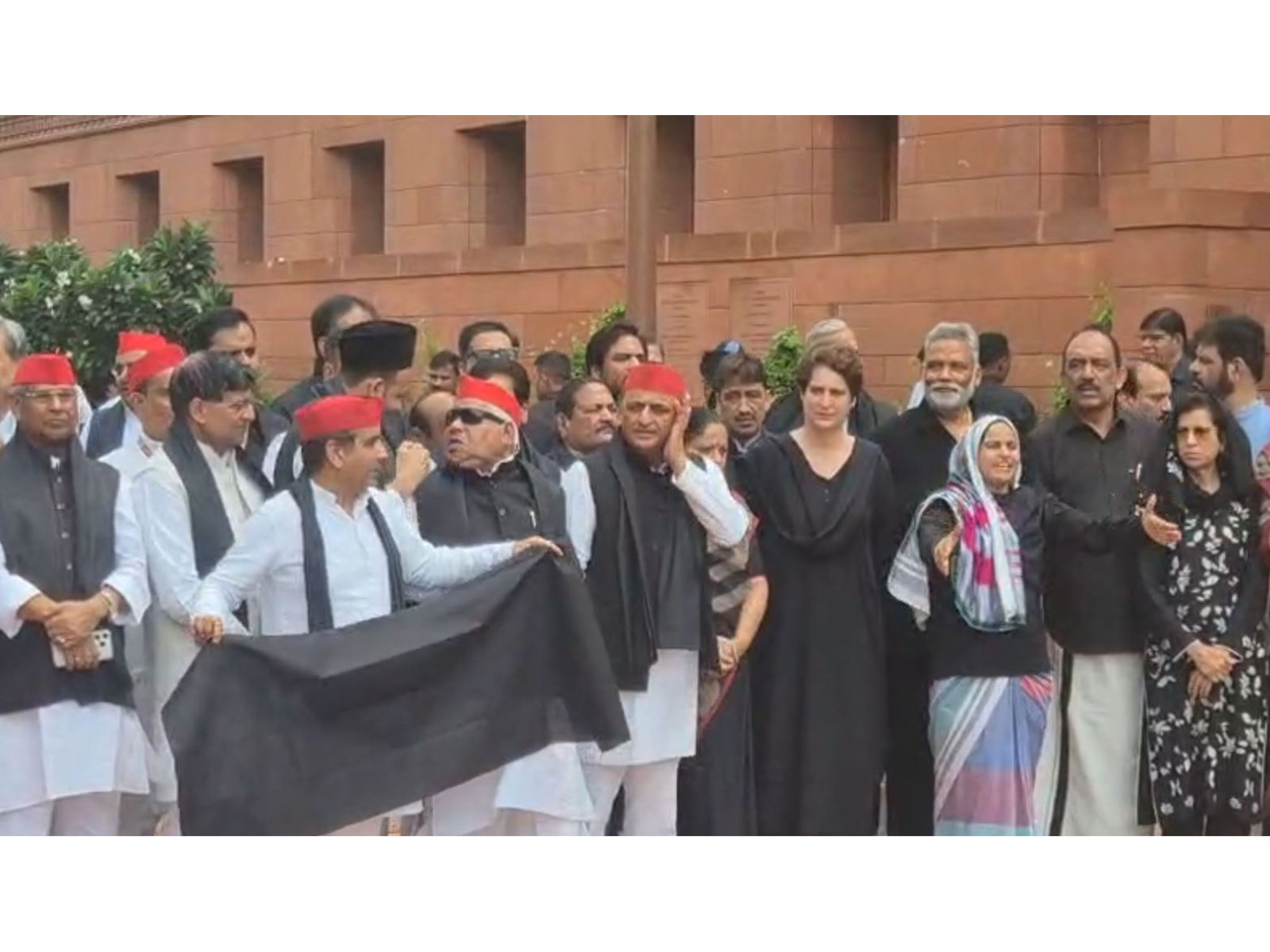
The Monsoon Session of Parliament witnessed strong political protests on Tuesday as opposition Members of Parliament staged a coordinated demonstration, observing what they described as a “Black Day” to protest alleged police brutality against student demonstrators in the national capital. The protest intensified political tensions between the ruling government and opposition parties, with lawmakers accusing authorities of suppressing democratic voices and demanding accountability for the alleged use of force.
The demonstration was led by members of the opposition alliance, who assembled inside the Parliament complex wearing black clothing and carrying placards to symbolize their protest. The MPs alleged that students exercising their democratic right to protest had been subjected to excessive police action, raising concerns about civil liberties and freedom of expression.
Opposition Raises Concerns Over Democratic Rights
Opposition leaders claimed that the alleged police crackdown reflected an attempt to silence dissent and discourage peaceful public demonstrations. They argued that students, regardless of their political affiliations, should have the constitutional right to express their opinions without facing intimidation or force.
Several lawmakers criticized the handling of the protest, asserting that educational institutions and students should not become targets of aggressive law enforcement measures. They called upon the government to ensure that democratic principles are upheld and that peaceful protests are protected under the Constitution.
The opposition further maintained that the incident represented a larger issue concerning the treatment of citizens participating in public demonstrations. According to the protesting MPs, the government must address concerns regarding the alleged misuse of police powers and initiate an impartial review of the events.
Black Clothing and Placards Mark Symbolic Protest
As Parliament convened for the day’s proceedings, opposition MPs assembled wearing black attire as a mark of protest. Many held placards carrying slogans demanding justice for students and calling for greater accountability from law enforcement agencies.
The demonstration attracted significant attention within the Parliament complex, with opposition leaders describing the protest as a symbolic reminder of what they termed an attack on democratic values.
Some MPs also accused the government of avoiding discussions on issues affecting students and young citizens. They demanded that Parliament devote adequate time to debating the circumstances surrounding the alleged police action and the broader concerns regarding the protection of civil rights. -1784705362716.webp&w=1200&q=75)
Demand for Accountability
Opposition parties urged the central government to clarify the sequence of events that led to the police action and sought assurances that similar incidents would not occur in the future. They also demanded an independent investigation into the allegations, emphasizing that transparency would help restore public confidence.
According to opposition leaders, accountability is essential whenever allegations of excessive force are made against law enforcement agencies. They argued that public institutions must remain answerable to citizens and that any violation of constitutional rights should be examined through appropriate legal and administrative processes.
Government Yet to Accept Allegations
While opposition leaders strongly criticized the alleged police action, the government has not accepted the accusations made during the protest. Officials have maintained that law enforcement agencies act according to established legal procedures and take necessary measures to maintain public order whenever required.
Government representatives have also indicated that any assessment of police action should be based on verified facts and official reports rather than political allegations.
Political Tensions During the Monsoon Session
The protest added to the already charged atmosphere surrounding the ongoing Monsoon Session, where several contentious national issues have led to repeated confrontations between the treasury benches and opposition parties.
Parliament has witnessed frequent disruptions in recent days as opposition parties continue to press the government on various political and governance-related matters. Tuesday’s “Black Day” protest further highlighted the widening differences between the two sides over issues concerning democratic rights, public accountability, and the handling of public protests.
Political observers believe that such demonstrations are likely to continue throughout the session as opposition parties seek greater discussion on issues they consider to be of national importance.
Broader Debate on Democratic Freedoms
The controversy has once again sparked debate over the balance between maintaining law and order and protecting citizens’ constitutional rights to peaceful protest. Student movements have historically played an important role in India’s democratic landscape, and incidents involving alleged police action often trigger wider political discussions.
Legal experts note that while authorities are empowered to maintain public order, they are also expected to ensure that any restrictions on protests remain proportionate and consistent with constitutional safeguards. Any allegations of excessive force typically become subject to legal scrutiny and public debate.
As Parliament continues its Monsoon Session, the issue is expected to remain politically significant, with opposition parties likely to continue demanding answers from the government while pressing for greater accountability regarding the alleged police action against student demonstrators.