
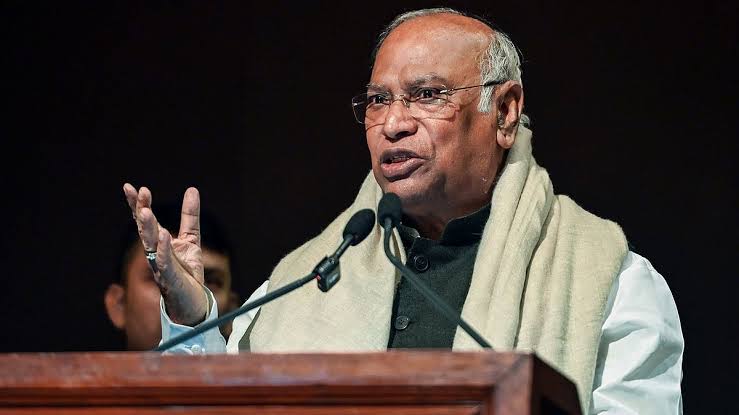
Congress president and Leader of Opposition in the Rajya Sabha Mallikarjun Kharge on Tuesday strongly criticised the government’s handling of a student protest in New Delhi, questioning why young people demanding action over the alleged NEET-UG paper leak were met with police force.
Kharge raised the issue during the opening day of the Monsoon Session of Parliament, expressing concern over the use of batons and tear gas against protesters who had gathered to raise questions about the future of thousands of students affected by the controversy surrounding the medical entrance examination.
The Congress leader said the protest had been organised to draw attention to concerns over the alleged examination irregularities and to demand accountability from the authorities. He questioned the government’s response to students who, according to him, were seeking justice and clarity over an issue that could have a significant impact on their academic and professional futures.
The issue came to the forefront after thousands of protesters gathered at Jantar Mantar in Delhi on Monday. The demonstrators were associated with a planned march towards Parliament and were seeking the resignation of Union Education Minister Dharmendra Pradhan over the NEET-UG paper leak controversy.
The proposed march, however, was not permitted by the Delhi Police. Authorities had imposed restrictions in parts of the New Delhi area, citing security and law-and-order concerns. Police action was subsequently taken to disperse the gathering, with reports of baton charges and the use of tear gas during the confrontation.
Kharge condemned the action and argued that the concerns of students deserved to be heard rather than suppressed. He said the controversy was not merely a political matter but one involving the future of a large number of young people who had invested years of preparation and effort in competitive examinations.
During his intervention in the Rajya Sabha, Kharge highlighted the broader implications of the issue and called for an independent and merit-based education system. He argued that the government should address the concerns raised by students and provide a transparent response to allegations surrounding the examination process.
The Congress president also raised the NEET-UG paper leak issue in Parliament, leading to disruptions in the Rajya Sabha. The House was adjourned until noon and later again until 2 pm amid the opposition’s demand for discussion on the matter. 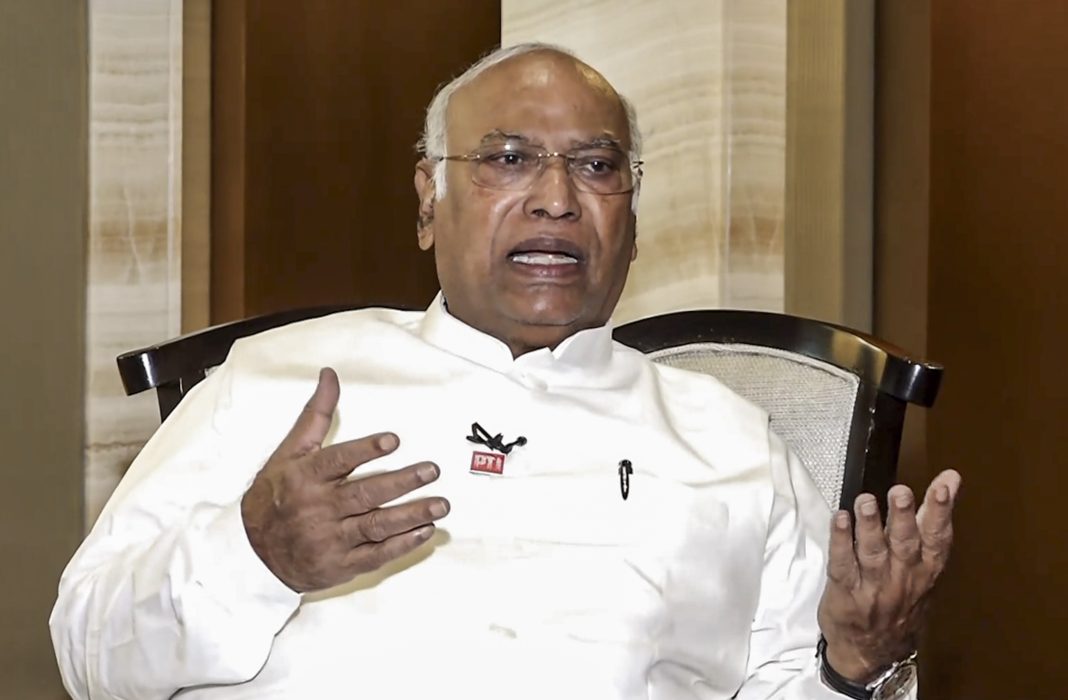
Kharge later criticised the police response in a public statement, saying that students who had gathered to voice concerns over the examination controversy had been subjected to baton charges and tear gas. He described the incident as deeply troubling and questioned the justification for using such measures against young protesters.
The Congress leader’s remarks came at a time when the NEET controversy had become a major political issue, with opposition parties repeatedly demanding greater accountability and transparency in the examination system. The controversy has also intensified public debate over the security of competitive examinations and the consequences of paper leaks for students.
For many aspirants, examinations such as NEET-UG represent years of preparation and determine access to highly competitive professional courses. Any allegation of question-paper leaks or irregularities can therefore have serious consequences, particularly for students who have prepared for the examination through significant financial, academic and personal investment.
Kharge’s intervention also brought the issue into the larger political debate over the functioning of India’s education system. He argued that the government must ensure that students are able to compete in an environment based on merit and fairness, without being affected by examination-related irregularities.
The Congress leader further demanded that the government allow a detailed discussion on the matter in Parliament. He maintained that the concerns surrounding the examination process warranted a full debate so that the grievances of students could be properly addressed and the public could receive clarity on the steps being taken by the authorities.
The confrontation at Jantar Mantar and the subsequent political debate have once again placed the NEET-UG controversy at the centre of national attention. While authorities have cited restrictions and security considerations surrounding the proposed march, opposition leaders have questioned whether force was an appropriate response to students raising concerns about their examination and future.
Kharge also decided not to celebrate his birthday on Tuesday in view of the incident involving the protesting students. His decision was presented as a gesture of solidarity with those who had taken part in the demonstration.
The developments have added to the political tensions surrounding the Monsoon Session of Parliament, with the opposition seeking discussion on issues concerning students and the examination system. The demand for accountability is expected to remain a key point of contention as political parties debate the government’s handling of the NEET-UG controversy.
The episode has also renewed calls for stronger safeguards in the conduct of major competitive examinations. The controversy has highlighted the need for secure examination procedures, transparent investigations into alleged irregularities and timely communication with affected candidates.
As the political debate continues, the central concern remains the impact of examination controversies on students. With competitive entrance tests playing a crucial role in determining educational and career opportunities, calls for a fair, transparent and credible examination system have gained renewed importance.
Kharge’s criticism has therefore placed the government’s response to student protests and the NEET-UG controversy under renewed scrutiny. The Congress leader’s demand for a discussion in Parliament reflects the opposition’s push to make the issue a subject of wider political and public accountability.