
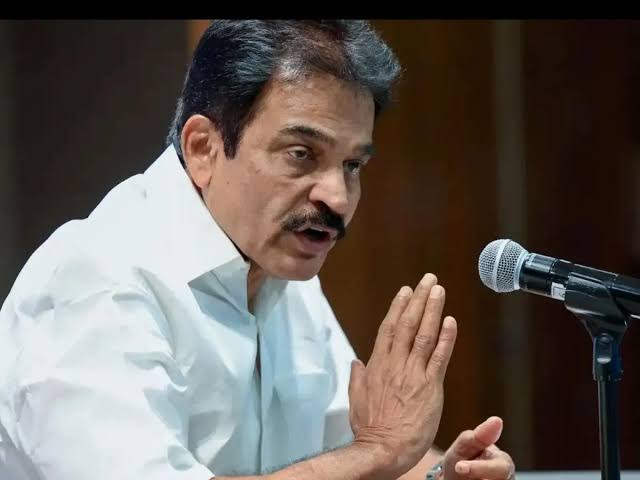
The Congress party has launched a strong attack on the Central government over the ongoing fast by environmentalist and education reform advocate Sonam Wangchuk, while also raising serious concerns about recent examination-related issues and the proposed Higher Education Bill. Senior Congress leader K.C. Venugopal accused the Union government of ignoring democratic voices and failing to address the concerns of students, educators, and civil society.
Speaking on the issue, Venugopal said that Wangchuk’s indefinite fast has become a symbol of growing public dissatisfaction with the Centre’s policies. He alleged that instead of engaging in meaningful dialogue with those raising legitimate concerns, the government has chosen to remain silent, allowing uncertainty and public anxiety to grow.
According to the Congress leader, Wangchuk’s protest reflects broader concerns surrounding governance, transparency, and accountability. He argued that citizens have the constitutional right to peacefully express their views and that the government should respond through dialogue rather than indifference. Venugopal maintained that a democratic government must be willing to listen to differing opinions, particularly when public welfare and national interests are involved.
Concerns Over Examination Issues
Venugopal also criticized the Centre over examination-related controversies, stating that repeated irregularities have shaken the confidence of students and parents across the country. He said that examination systems must remain transparent, fair, and credible, as they directly impact the future of millions of young people.
The Congress leader emphasized that students deserve equal opportunities and a dependable assessment process. He argued that repeated controversies surrounding examinations have raised questions about administrative preparedness and the effectiveness of existing systems. According to him, restoring trust requires immediate corrective measures, stronger institutional oversight, and greater accountability from the authorities responsible for conducting examinations.
He further stated that the government should prioritize educational reforms that strengthen academic standards instead of introducing policies that create confusion among students and educational institutions. 
Opposition to the Higher Education Bill
Another major issue raised by Venugopal was the proposed Higher Education Bill. The Congress leader expressed strong opposition to the legislation, alleging that several provisions could reduce the autonomy of educational institutions and increase centralized control over higher education.
He argued that universities and academic institutions function best when they enjoy institutional independence and academic freedom. Any attempt to concentrate decision-making authority, he claimed, could weaken the country’s higher education system and limit opportunities for innovation, research, and independent academic thought.
Venugopal maintained that reforms in higher education should emerge through extensive consultations with universities, faculty members, students, education experts, and state governments. He said policies affecting millions of students should be formulated through consensus rather than unilateral decision-making.
Demand for Democratic Consultation
The Congress leader urged the Central government to engage constructively with stakeholders instead of dismissing criticism. He said that public consultations and transparent policymaking are essential for maintaining confidence in democratic institutions.
He also called for immediate attention to concerns raised by students and educational communities, stressing that education should remain inclusive, accessible, and free from excessive political interference. According to him, long-term reforms should focus on improving quality, expanding opportunities, and strengthening institutional accountability.
Political Debate Intensifies
The issues surrounding Sonam Wangchuk’s fast, examination reforms, and the proposed Higher Education Bill have become key points of political debate, with opposition parties questioning the government’s approach to governance and education policy. The Congress has indicated that it will continue to raise these matters both inside and outside Parliament, demanding greater transparency and wider public consultation before major policy decisions are implemented.
As discussions continue, the developments are expected to remain at the centre of national political and educational discourse, particularly as stakeholders seek clarity on the future direction of higher education reforms and the government’s response to ongoing public concerns.