
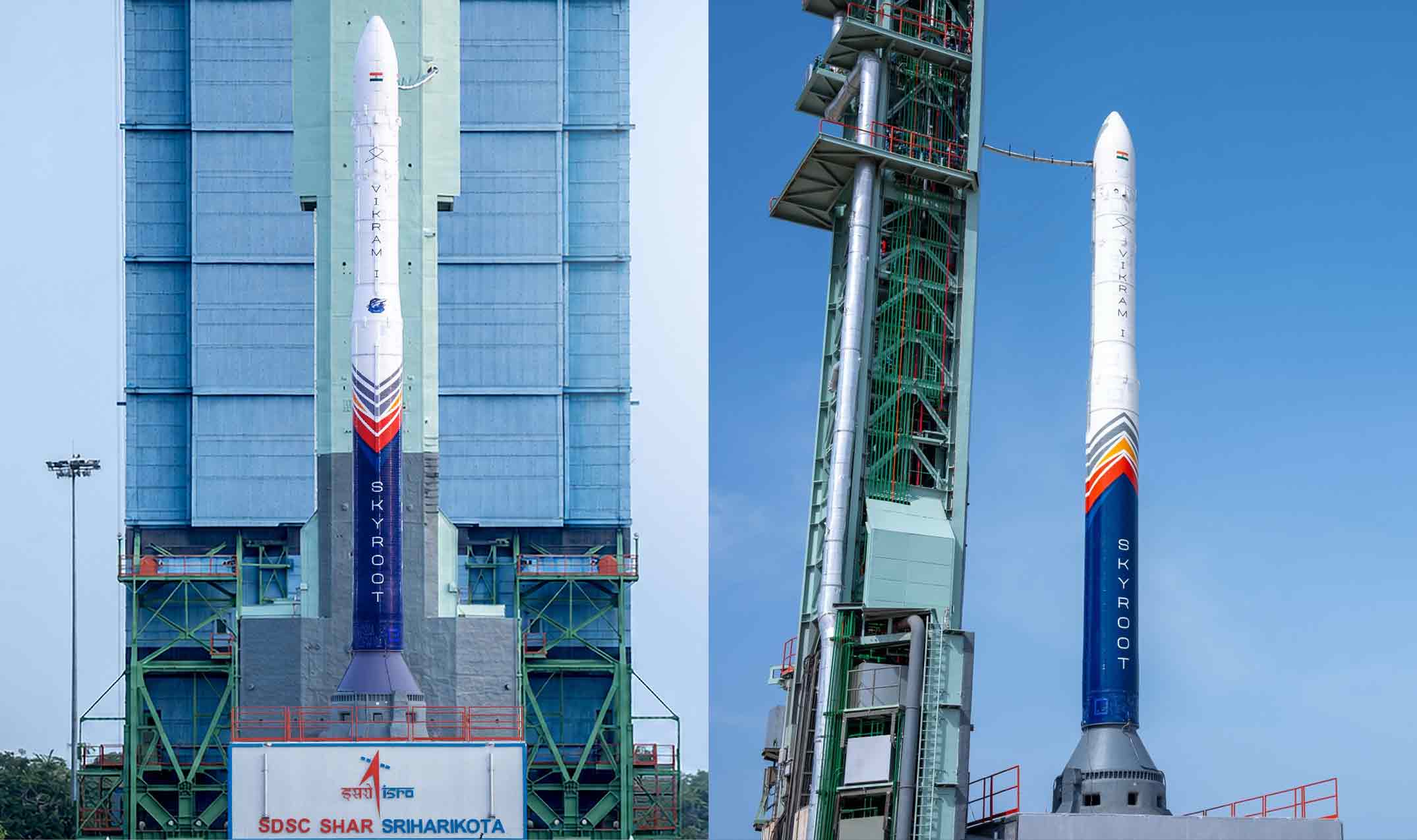
India is set to witness a landmark moment in its rapidly expanding space sector as private aerospace company Skyroot Aerospace prepares to launch Vikram-1, its first orbital launch vehicle. Ahead of the highly anticipated mission, Prime Minister Narendra Modi extended his best wishes to the company, describing the launch as another significant milestone in India’s journey toward becoming a global leader in space technology and innovation.
The upcoming mission is expected to represent a defining achievement for India’s private space industry, highlighting the country’s growing capabilities beyond government-led space exploration. If successful, Vikram-1 will become one of the first privately developed Indian rockets to place satellites into orbit, demonstrating the increasing role of domestic startups in advancing the nation’s space ambitions.
PM Modi Congratulates Skyroot Team
Prime Minister Narendra Modi praised the efforts of Skyroot Aerospace and its engineers, scientists, and innovators who have worked toward making the Vikram-1 mission possible. In his message, he expressed confidence that the launch would inspire a new generation of innovators while strengthening India’s position in the global space economy.
The Prime Minister emphasized that India’s expanding ecosystem of private space enterprises reflects the country’s technological progress and the success of reforms aimed at encouraging innovation, entrepreneurship, and scientific excellence.
He noted that the mission represents not only a technological accomplishment but also a symbol of India’s confidence in empowering private companies to contribute to strategic sectors that were once dominated exclusively by government agencies.
A Historic Mission for India’s Private Space Sector
Vikram-1 is designed as a three-stage launch vehicle capable of carrying small satellites into low Earth orbit. The rocket has been developed entirely by Skyroot Aerospace, a Hyderabad-based startup that has emerged as one of India’s leading private space companies.
The mission is expected to demonstrate the company’s capability to independently design, manufacture, integrate, and launch an orbital-class rocket. A successful launch would significantly strengthen India’s commercial launch services while opening new opportunities for domestic and international satellite customers.
The mission follows Skyroot’s earlier achievement with the successful launch of Vikram-S, India’s first privately built rocket, which served as a technology demonstration and validated several critical systems required for future orbital missions. 
Strengthening India’s Space Ecosystem
India’s space sector has undergone a major transformation following policy reforms that opened the industry to private participation. These changes have enabled startups to collaborate with national space institutions while independently developing launch vehicles, satellite technologies, propulsion systems, and advanced aerospace solutions.
The emergence of companies such as Skyroot Aerospace reflects the growing confidence of investors, researchers, and entrepreneurs in India’s space economy. Experts believe that increased private participation will help expand commercial launch capabilities, encourage technological innovation, and generate high-skilled employment across the aerospace sector.
The Vikram-1 mission is viewed as an important step toward building a competitive commercial launch industry capable of serving global satellite operators.
Technological Significance of Vikram-1
The Vikram-1 launch vehicle incorporates several advanced engineering features developed by the company over years of research and testing. It has been designed to deliver reliable and cost-effective launch services for small satellite missions, a market that continues to grow rapidly worldwide.
With increasing demand for Earth observation, communication, navigation, scientific research, and commercial satellite constellations, launch providers capable of offering flexible and affordable missions are expected to play an increasingly important role in the global space industry.
A successful orbital launch would validate Skyroot’s technologies and establish the company as a serious competitor in the expanding international small satellite launch market.
Growing Role of Indian Startups
The rise of private aerospace companies reflects a broader transformation in India’s innovation landscape. Government initiatives encouraging startups, research institutions, and private investment have accelerated the development of advanced technologies across multiple sectors, including aerospace, artificial intelligence, robotics, and deep technology.
Industry observers believe that the success of Vikram-1 could encourage additional investment into India’s emerging space startups while creating opportunities for collaboration with international customers seeking reliable and economical launch solutions.
The mission also demonstrates the increasing synergy between public institutions and private enterprises in achieving national technological goals.
Looking Ahead
As Vikram-1 prepares for its maiden orbital mission, expectations remain high across India’s scientific and industrial communities. Beyond the immediate objective of placing satellites into orbit, the launch symbolizes the country’s growing confidence in home-grown innovation and the expanding role of private enterprise in strategic technological development.
Prime Minister Modi’s message of encouragement underscores the national importance of the mission and reflects the government’s commitment to supporting India’s rapidly evolving space ecosystem. A successful launch would not only mark a historic achievement for Skyroot Aerospace but also reinforce India’s emergence as a major force in the global commercial space industry, paving the way for future private missions and strengthening the nation’s position in the new era of space exploration.