
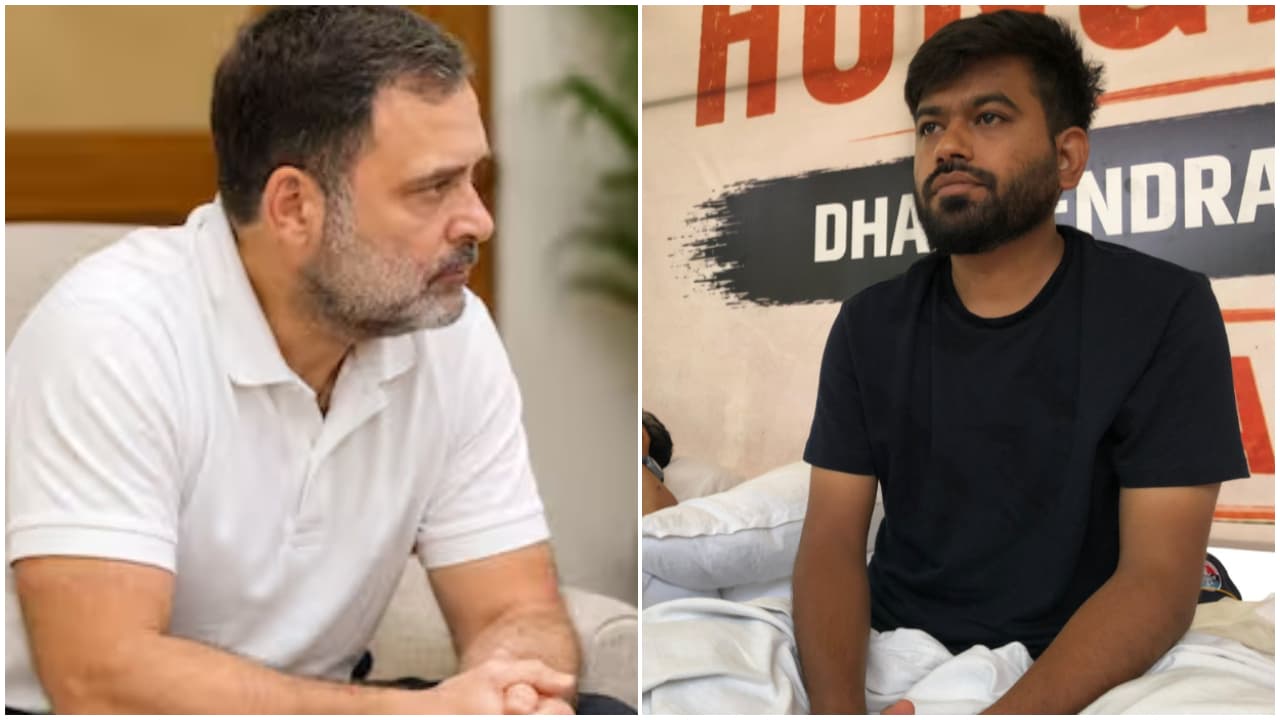
Travel vlogger Abhijeet Dipke has found himself at the center of a social media controversy after an old post related to Congress leader Rahul Gandhi’s Bharat Jodo Yatra resurfaced online. The renewed attention comes amid an ongoing public campaign involving activist Sonam Wangchuk and the Citizens for Justice and Peace (CJP), triggering widespread debate across digital platforms.
The controversy erupted after internet users rediscovered a four-year-old social media post allegedly shared by Dipke, in which he had commented on Rahul Gandhi’s Bharat Jodo Yatra. While the post had remained largely unnoticed for years, it quickly gained traction after being widely circulated on social media, prompting mixed reactions from users.
The resurfaced post has generated intense online discussion, with supporters and critics expressing contrasting opinions. Some users questioned Dipke’s political views and motivations, while others argued that old social media posts should not be used to judge individuals years later. The debate rapidly expanded beyond the original post, drawing attention to the broader issue of political expression by content creators.
The timing of the controversy has added another layer to the discussion. The old post began circulating widely during public conversations surrounding activist Sonam Wangchuk and demonstrations reportedly supported by the Citizens for Justice and Peace. Although the issues are unrelated in substance, the overlap in timing amplified public scrutiny and encouraged online users to revisit Dipke’s past social media activity.
As screenshots of the post spread across various social media platforms, many users called for clarification from the travel vlogger. Others defended him, arguing that personal opinions expressed in the past should not automatically define an individual’s present-day identity or professional work.
The episode has once again highlighted how archived digital content can unexpectedly return to public attention years after it was originally published. In the age of social media, historical posts frequently resurface during periods of heightened political or social debate, often influencing public perception regardless of their original context.
Political observers note that social media has increasingly become a space where public personalities, influencers, and digital creators face intense scrutiny over their online history. Even posts made years earlier can become the subject of fresh debate when they intersect with current political events or public movements.
The controversy surrounding Dipke has also reignited discussions about digital accountability, freedom of expression, and the permanence of online content. While some argue that public figures should remain accountable for their past statements, others believe that opinions expressed years earlier should be viewed within their historical context rather than being evaluated solely through contemporary political developments.
As of now, there has been no official indication of any legal action related to the resurfaced post. The debate continues largely on social media, where users remain divided over whether historical online activity should significantly influence public opinion about content creators and influencers.
The incident serves as another reminder of the lasting digital footprint created by social media. As online archives remain easily accessible, past statements can quickly become part of present-day public discourse, shaping conversations well beyond their original context.