
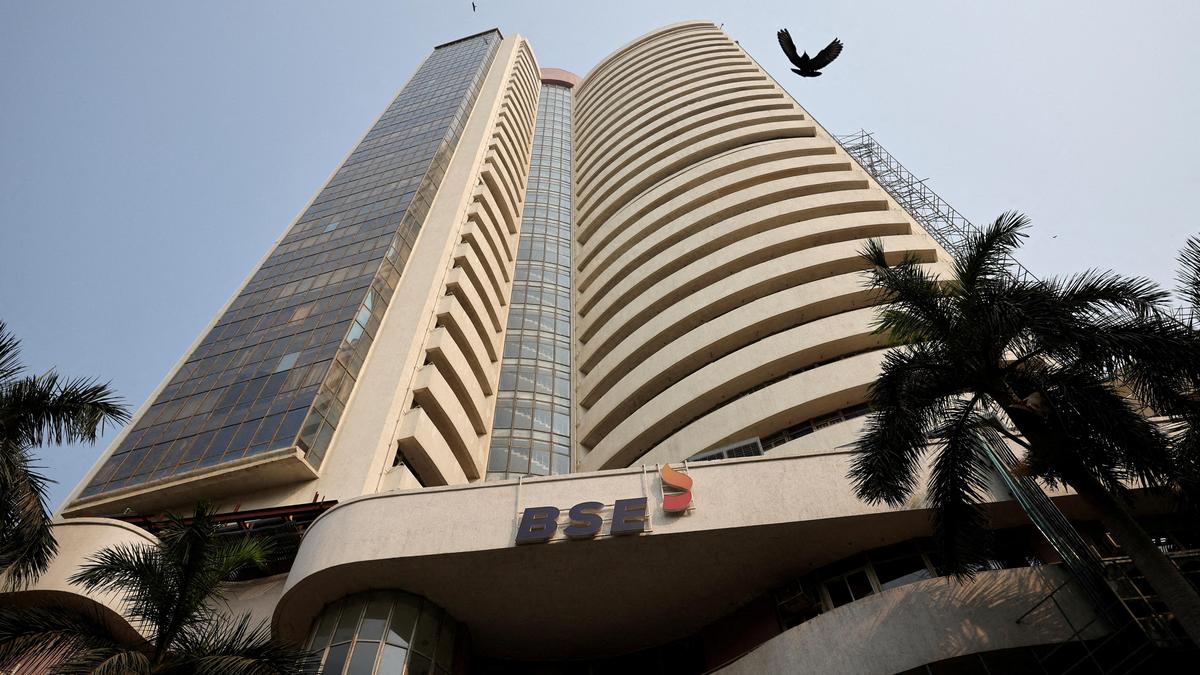
Indian benchmark equity indices witnessed a weak start to trading as escalating crude oil prices and cautious global market sentiment prompted investors to reduce exposure to equities. The domestic market came under selling pressure across several key sectors, reflecting growing concerns over inflationary risks, corporate earnings, and the broader economic outlook.
The benchmark BSE Sensex dropped by more than 550 points during early trade, while the NSE Nifty50 also declined significantly, extending losses amid weakness across banking, information technology, automobile, and metal stocks. The decline highlighted investors’ growing caution as external economic uncertainties continued to influence domestic market sentiment.
Crude Oil Prices Weigh on Market Confidence
One of the primary reasons behind the sharp decline was the sustained increase in international crude oil prices. Higher oil prices have historically posed challenges for the Indian economy because the country imports a substantial portion of its crude oil requirements.
An increase in crude prices raises the nation’s import bill, contributes to inflationary pressures, and may widen the current account deficit. Investors fear that prolonged elevated oil prices could impact corporate profitability by increasing operating costs across industries, especially those dependent on transportation, manufacturing, and energy consumption.
Higher fuel costs can also affect consumer spending, creating additional pressure on economic growth. These concerns contributed to cautious investor behaviour during the opening session.
Global Market Weakness Adds to Selling Pressure
Apart from rising energy prices, weakness in international equity markets further dampened investor sentiment. Market participants closely monitored global economic developments, including geopolitical tensions, inflation trends, and expectations regarding monetary policy decisions by major central banks.
Global uncertainties often influence foreign institutional investment flows into emerging markets such as India. With risk appetite remaining subdued, investors preferred defensive positions, resulting in widespread selling across multiple sectors.
Analysts noted that the domestic market’s decline was largely driven by external factors rather than any major negative domestic economic development. 
Banking, IT and Auto Stocks Lead the Decline
Selling pressure was visible across most major sectoral indices during early trade. Banking and financial stocks, which carry significant weight in benchmark indices, witnessed notable declines. Information technology companies also traded lower as investors remained cautious over global economic conditions and potential pressure on overseas demand.
Automobile manufacturers came under pressure due to concerns that persistently high fuel prices could affect consumer demand and increase production and logistics costs.
Metal stocks also experienced losses amid worries about slowing global industrial activity and weaker commodity demand.
The broad-based nature of the decline indicated that investors were reducing exposure across sectors rather than reacting to company-specific developments.
Market Experts Urge Caution
Market analysts observed that while short-term volatility remains elevated, investors should avoid making decisions based solely on daily market fluctuations. They pointed out that rising crude oil prices remain one of the most significant macroeconomic risks currently affecting equity markets.
Experts believe that future market direction will depend on several factors, including the movement of international oil prices, inflation data, foreign institutional investor activity, global economic indicators, and upcoming corporate earnings.
Investors are also expected to closely monitor policy signals from central banks around the world, as interest rate expectations continue to influence global financial markets.
Long-Term Outlook Remains Supported by Domestic Fundamentals
Despite the sharp decline in early trading, analysts maintained that India’s long-term economic fundamentals remain relatively strong. Robust domestic demand, continued infrastructure spending, improving manufacturing activity, and sustained economic growth continue to support the broader investment outlook.
However, in the near term, markets are expected to remain volatile as investors assess evolving geopolitical developments, fluctuations in commodity prices, and global economic uncertainty.
Market participants are therefore likely to remain cautious until greater clarity emerges regarding inflation trends, oil price stability, and international financial conditions.
Outlook
The latest decline in Indian equities underscores the sensitivity of financial markets to global developments, particularly fluctuations in crude oil prices. While domestic economic fundamentals continue to provide long-term support, rising energy costs and uncertain international conditions are expected to keep market volatility elevated in the coming sessions.
Investors are likely to remain focused on crude oil movements, foreign investment flows, corporate earnings, and macroeconomic indicators as they assess the direction of Indian equity markets in the weeks ahead.