
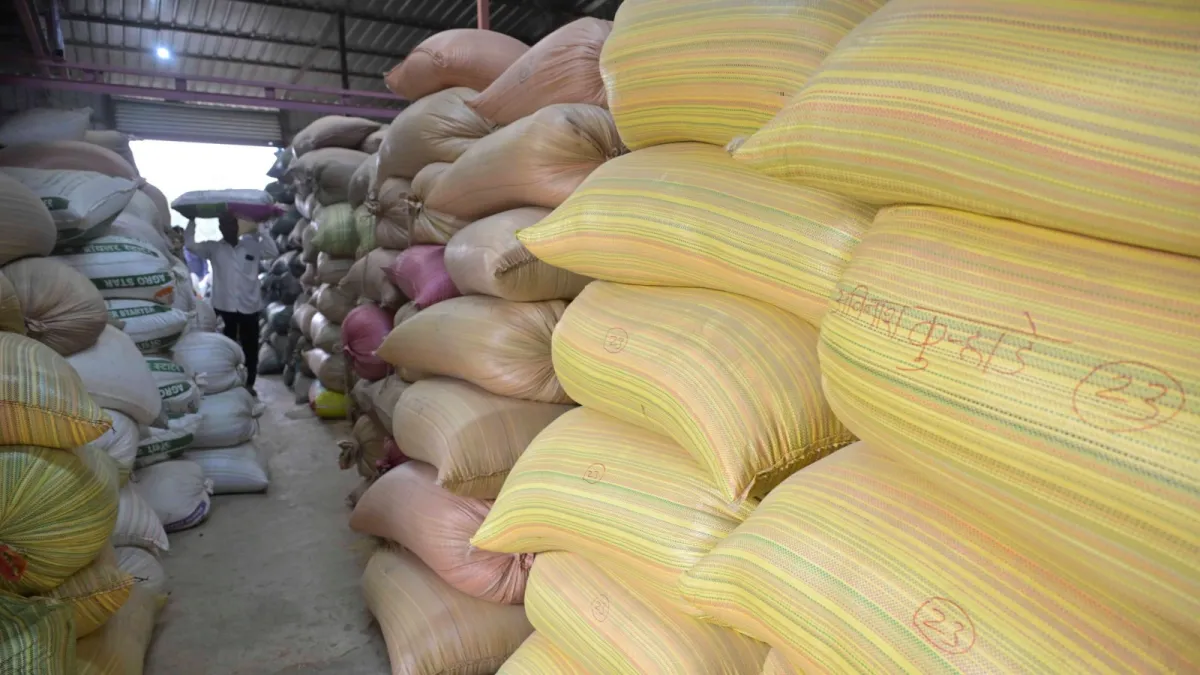
The Central government has strongly dismissed allegations that rice worth ₹1,160 crore was diverted for ethanol production in Madhya Pradesh, describing the claims as inaccurate and misleading. Officials clarified that the country’s ethanol blending programme operates under a transparent and well-regulated framework, with strict monitoring mechanisms in place to ensure that food security is not compromised.
The clarification came after reports and claims suggested that a significant quantity of rice had allegedly been diverted from government stocks for ethanol production in Madhya Pradesh, resulting in a substantial financial loss. Responding to these allegations, the concerned government body stated that the figures being circulated do not accurately represent the functioning of the ethanol procurement and allocation system.
According to the official response, rice supplied for ethanol production is allocated only after following established government procedures and policy guidelines. Authorities stressed that the procurement process is monitored at multiple levels and is designed to balance the objectives of promoting clean energy while safeguarding food grain availability for the public distribution system and other welfare programmes.
Officials explained that India’s ethanol blending initiative is a key component of the country’s strategy to reduce dependence on imported fossil fuels, lower greenhouse gas emissions, and strengthen energy security. Ethanol is primarily produced using sugarcane-based feedstock such as molasses and sugar syrup, while the use of food grains, including rice and maize, is permitted only under specific policy provisions and regulated conditions.
The government noted that only surplus food grains that are not required for public welfare schemes or food security obligations can be considered for ethanol production. Every allocation is subject to approval through prescribed administrative channels, ensuring accountability and compliance with national policy.
Rejecting the allegation of a ₹1,160 crore diversion, officials said there was no evidence to support the claim that government rice stocks had been misused or diverted outside the approved policy framework. They maintained that all allocations are documented and audited, leaving little room for irregularities.
Authorities further emphasised that the ethanol programme has played a significant role in increasing domestic fuel blending levels, supporting farmers by creating additional demand for agricultural produce, and reducing India’s import bill for crude oil. The initiative has also contributed to environmental sustainability by encouraging the use of cleaner fuels.
The government reiterated that transparency remains a core principle of the ethanol procurement process. Digital record-keeping, periodic audits, and oversight by multiple departments are intended to ensure that procurement and utilisation of food grains adhere strictly to approved guidelines.
Officials also urged stakeholders to rely on verified information before drawing conclusions about government policies. They cautioned that unverified claims could create unnecessary confusion regarding a programme that has become an important part of India’s renewable energy transition.
Experts note that the ethanol blending programme has expanded rapidly in recent years as India works towards achieving higher blending targets. Policymakers have consistently maintained that food security remains the highest priority and that any use of food grains for ethanol production is carefully regulated to avoid affecting the availability of essential commodities.
The government’s latest clarification seeks to reassure the public that the country’s ethanol policy continues to function within established legal and administrative safeguards. By rejecting the allegation of large-scale rice diversion, authorities have reiterated their commitment to maintaining transparency, protecting food security, and advancing India’s clean energy goals through a regulated ethanol blending programme.