
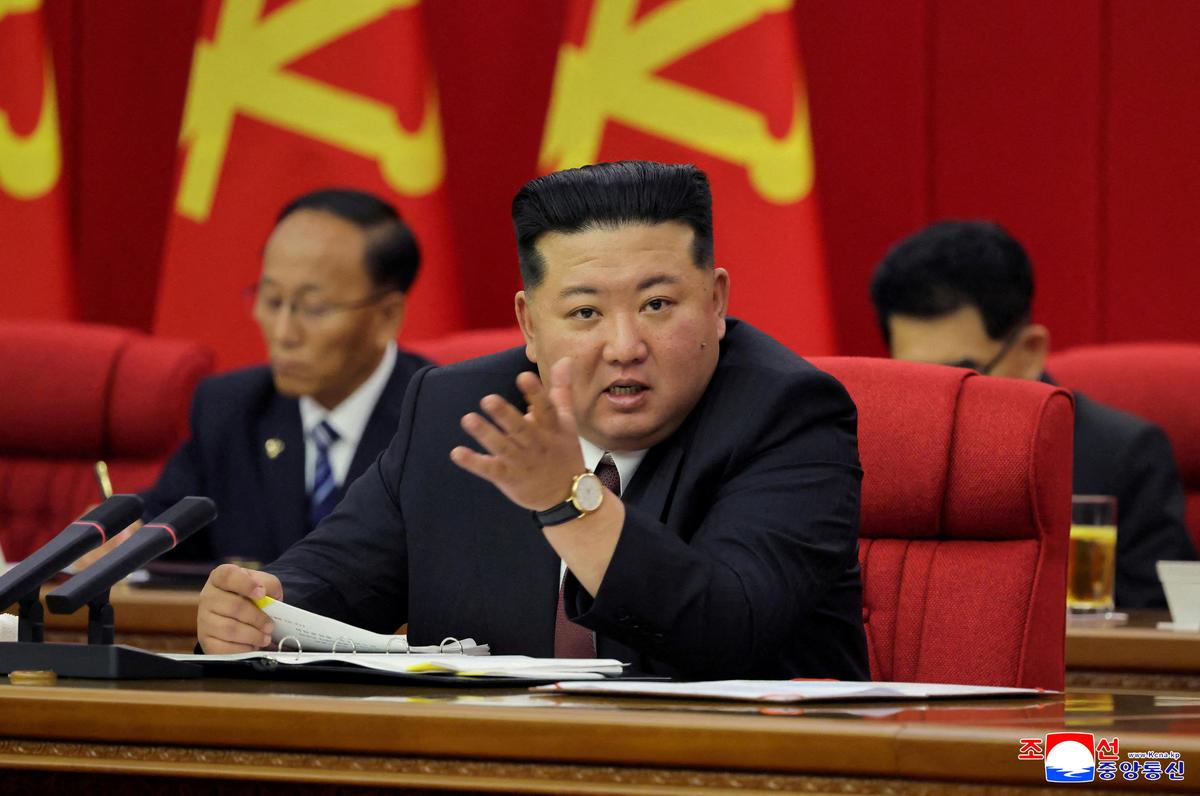
North Korea has strongly criticised the recent NATO summit, rejecting calls for its denuclearisation and insisting that nuclear disarmament should begin with the United States and its allies. In a forceful statement, Pyongyang accused the Western military alliance of pursuing confrontational policies that undermine international peace while demanding unilateral concessions from North Korea.
The latest remarks underscore North Korea’s continued commitment to maintaining and strengthening its nuclear arsenal, which it describes as essential for protecting national sovereignty and deterring external threats. The statement also highlights the growing divide between Pyongyang and Western nations over the future of global nuclear security.
Pyongyang Condemns NATO’s Position
North Korea’s Foreign Ministry criticised the conclusions reached during the NATO summit, claiming the alliance is intensifying military rivalry rather than promoting dialogue and peace. According to the statement, NATO’s expanding cooperation with countries in the Indo-Pacific region reflects an attempt to extend its military influence beyond Europe.
Pyongyang argued that the alliance continues to portray North Korea as a security threat while strengthening defence partnerships and increasing military preparedness in the region. It claimed such actions only fuel instability and heighten the risk of confrontation.
The North Korean government further accused NATO of encouraging bloc politics and military alliances that, in its view, contribute to global insecurity instead of resolving international disputes through diplomacy.
Calls for Nuclear Disarmament Directed at the U.S. and Allies
Rejecting international demands for North Korea to abandon its nuclear weapons programme, Pyongyang stated that meaningful denuclearisation should begin with nations that possess or deploy nuclear weapons around the world.
North Korea argued that the United States continues to maintain a powerful nuclear deterrent while extending security guarantees to allies such as South Korea and Japan. It also criticised countries participating in nuclear-sharing arrangements, claiming they should address their own nuclear policies before demanding that North Korea dismantle its arsenal.
According to Pyongyang, calls for its unilateral denuclearisation ignore what it considers the broader imbalance created by existing nuclear powers.
North Korea Reaffirms Commitment to Nuclear Deterrence
The government reiterated that it has no intention of giving up its nuclear capabilities and instead pledged to continue strengthening its strategic deterrent.
Officials stated that North Korea’s nuclear weapons are necessary to safeguard the country against military pressure and what it describes as hostile policies pursued by the United States and its allies. The statement indicated that continued military exercises, expanded defence cooperation, and strategic deployments in the region reinforce the need for a strong nuclear defence.
The declaration aligns with North Korea’s long-standing policy of modernising its military capabilities through the development of advanced missile systems and nuclear technology.
Rising Security Tensions in the Indo-Pacific
The latest exchange comes amid growing security cooperation between NATO and several Indo-Pacific partners, including South Korea, Japan, Australia, and New Zealand. These partnerships have expanded in recent years as concerns over regional security, missile development, and strategic competition have increased.
North Korea views these developments as evidence of an expanding military network aimed at containing its influence and increasing pressure on the country. Pyongyang has repeatedly argued that such alliances contribute to regional instability rather than improving security.
The government warned that continued military cooperation among Western nations and their regional partners could further complicate the security environment in Northeast Asia.
Diplomatic Stalemate Continues
Efforts to revive negotiations over North Korea’s nuclear programme have remained at a standstill for several years. Previous diplomatic initiatives failed to produce a lasting agreement, largely due to disagreements over sanctions relief, security guarantees, and the sequencing of denuclearisation measures.
Since then, North Korea has accelerated the development of its military capabilities while repeatedly declaring that its nuclear status is permanent and non-negotiable. International efforts to persuade Pyongyang to reverse course have so far yielded little progress.
Global Implications
North Korea’s latest statement illustrates the deep divisions that continue to shape international nuclear diplomacy. While NATO and its member states maintain that North Korea should completely abandon its nuclear weapons programme, Pyongyang insists that genuine denuclearisation must begin with countries that already possess nuclear arsenals and provide extended nuclear protection to their allies.
As geopolitical tensions continue to rise across multiple regions, the prospects for renewed dialogue remain uncertain. The latest exchange highlights the ongoing challenges facing international diplomacy and underscores the widening gap between competing visions of global security and nuclear disarmament.