
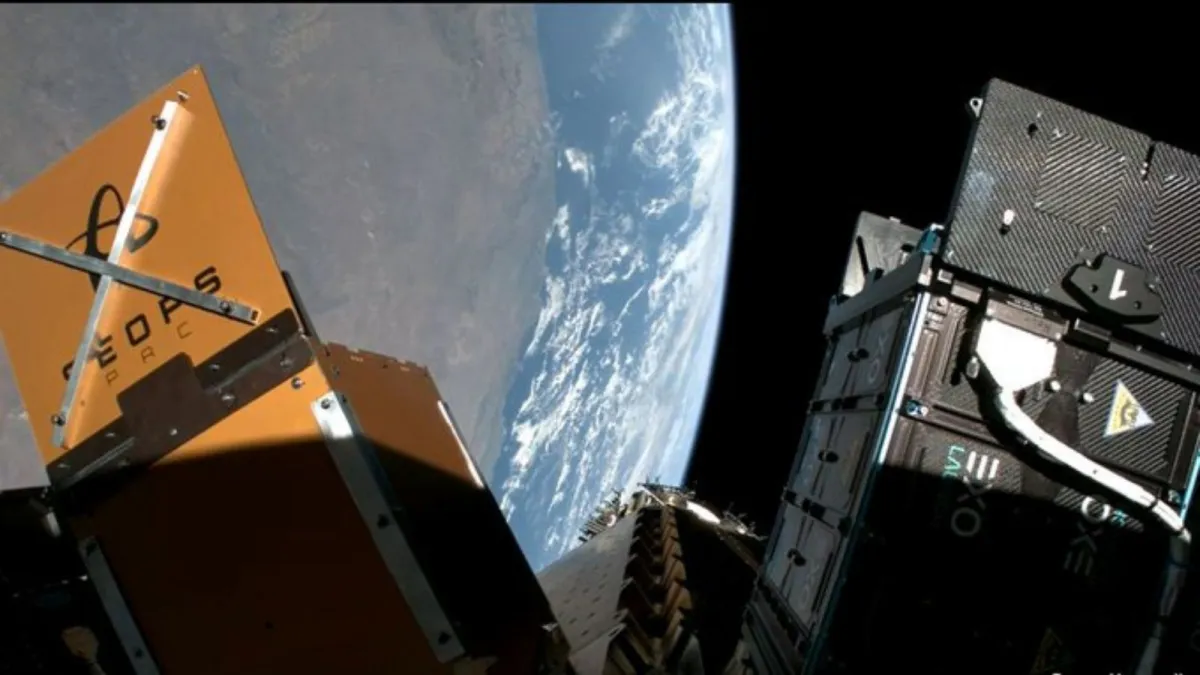
In a landmark achievement for the global space industry, SpaceX has successfully launched the world’s first commercial nuclear-powered satellite, opening a new chapter in satellite technology and long-duration space missions. The mission is being viewed as a major technological milestone that could significantly influence the future of commercial space exploration, deep-space research, and advanced satellite operations.
Unlike conventional satellites that rely primarily on solar panels and rechargeable batteries, this next-generation spacecraft is equipped with a compact nuclear power system capable of delivering continuous and reliable energy regardless of sunlight availability. The breakthrough is expected to overcome one of the biggest limitations faced by satellites operating in distant or shadowed regions of space.
The successful launch demonstrates the growing role of advanced energy systems in the commercial space sector and reflects increasing investment in technologies designed for long-term missions beyond Earth’s orbit.
A New Approach to Powering Satellites
Traditional satellites depend heavily on solar energy to generate electricity. While solar technology has powered thousands of successful missions over the past several decades, it has certain limitations. Solar panels become less efficient as spacecraft travel farther from the Sun, and they cannot generate electricity during prolonged periods of darkness or when operating in environments with limited sunlight.
The newly launched satellite addresses these challenges by using nuclear energy as its primary power source. The onboard system is designed to provide uninterrupted electrical power for extended periods, allowing scientific instruments, communication systems, navigation equipment, and onboard computers to function continuously without relying solely on solar energy.
This capability makes nuclear-powered satellites particularly suitable for deep-space exploration, lunar missions, planetary research, and long-duration scientific observations.
Potential Benefits for Future Space Missions
Experts believe nuclear-powered spacecraft could transform the way satellites and exploration missions are planned. Continuous energy availability allows spacecraft to operate advanced instruments, process large volumes of scientific data, and maintain communication links for years without major power interruptions.
Some of the major advantages include:
- Reliable power generation independent of sunlight.
- Extended operational lifespan compared to conventional satellites.
- Greater capability for deep-space exploration.
- Improved performance during lunar nights or planetary shadow periods.
- Enhanced support for complex scientific payloads and autonomous systems.
Such technologies may become increasingly important as governments and private companies prepare for missions to the Moon, Mars, and other distant destinations within the solar system. 
Commercial Space Industry Reaches Another Milestone
The successful deployment represents more than a technological accomplishment—it also signals the growing maturity of the commercial space industry.
Private aerospace companies have steadily expanded their capabilities over the past decade, moving beyond launch services into satellite manufacturing, reusable rocket systems, broadband internet constellations, lunar exploration, and advanced spacecraft development.
The introduction of commercial nuclear-powered satellites demonstrates that private companies are now participating in technologies that were once limited primarily to government space agencies and military programs.
Industry analysts suggest that reliable onboard nuclear power could support future commercial ventures involving deep-space communications, scientific observation, resource exploration, and autonomous robotic missions.
Safety Measures Remain a Priority
Although the use of nuclear technology in space often raises public concerns, engineers emphasize that modern nuclear space systems are designed with multiple layers of safety.
The power system is engineered to remain secure throughout launch, deployment, and operational phases. Extensive testing, safety protocols, and regulatory oversight are intended to minimize risks associated with transporting and operating nuclear-powered spacecraft.
Historically, several space agencies have successfully used nuclear energy in deep-space probes, particularly for missions where solar power was insufficient. These systems have enabled spacecraft to explore distant planets and operate for decades in harsh space environments.
The commercial adoption of similar technology reflects advances in engineering, materials science, and safety standards.
Expanding Opportunities Beyond Earth Orbit
One of the most significant implications of this mission is its potential contribution to future exploration beyond Earth’s immediate neighborhood.
Reliable long-term energy supplies could enable spacecraft to travel farther while carrying more sophisticated instruments capable of conducting detailed scientific research. Nuclear-powered systems may also support future lunar infrastructure, autonomous exploration vehicles, and communication networks designed for permanent human presence beyond Earth.
As space exploration increasingly shifts toward sustained operations rather than short-duration missions, dependable energy generation will become one of the defining factors in mission success.
Growing Interest in Nuclear Space Technology
Several countries and commercial organizations are actively investing in advanced nuclear technologies for space applications. Researchers continue developing smaller, safer, and more efficient reactors capable of powering spacecraft for years without requiring frequent maintenance or energy replenishment.
The latest commercial launch demonstrates that nuclear energy is gradually becoming a practical option for missions requiring high endurance, particularly where conventional solar power cannot meet operational demands.
This technological evolution is expected to encourage further innovation in spacecraft design, onboard computing, artificial intelligence, deep-space communications, and autonomous exploration systems.
Looking Ahead
The successful launch of the world’s first commercial nuclear-powered satellite represents a significant advancement in modern aerospace engineering. By combining private-sector innovation with advanced nuclear energy technology, the mission establishes a new benchmark for future commercial space operations.
As the global space industry continues to evolve, nuclear-powered satellites may become an essential component of long-duration missions, enabling scientific discoveries, expanding commercial opportunities, and supporting humanity’s ambitions to explore deeper into the solar system. The achievement highlights the rapid pace of innovation in space technology and underscores the growing role of commercial companies in shaping the future of space exploration.