
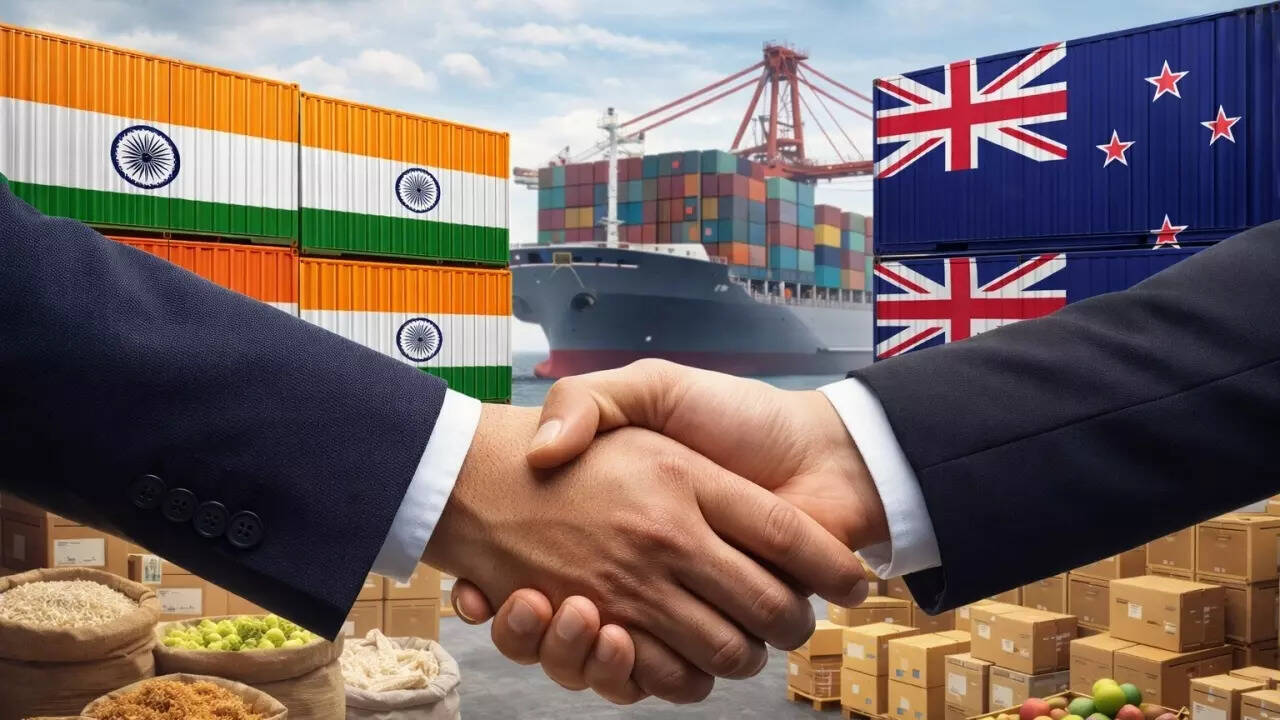
India and New Zealand have reached a historic milestone in their bilateral relationship by signing a comprehensive Free Trade Agreement (FTA) that is expected to significantly enhance trade, investment, and economic cooperation between the two countries. The agreement marks one of the most substantial developments in India-New Zealand relations in recent years, with New Zealand Prime Minister Christopher Luxon announcing that 57 percent of New Zealand’s exports to India will now enjoy duty-free access.
The announcement came during Prime Minister Narendra Modi’s official visit, where both leaders emphasized their shared commitment to expanding economic collaboration and strengthening strategic ties in the Indo-Pacific region.
Major Breakthrough in Bilateral Trade
The newly signed agreement is designed to remove trade barriers, simplify market access, and encourage stronger commercial engagement between businesses in both countries. By eliminating tariffs on more than half of New Zealand’s exports destined for India, the deal is expected to reduce costs for exporters and create fresh opportunities across multiple sectors.
Prime Minister Christopher Luxon described the agreement as a landmark achievement, noting that it represents a major step forward in deepening the economic relationship between the two nations. He highlighted that the tariff concessions would improve the competitiveness of New Zealand products in one of the world’s fastest-growing economies.
Officials from both governments believe the agreement lays the groundwork for a more balanced and dynamic trading partnership while opening new avenues for investment and industrial cooperation.
Benefits for Indian Consumers and Businesses
The Free Trade Agreement is expected to benefit not only exporters but also consumers and businesses across India. Reduced import duties on selected New Zealand products could lead to more competitive pricing, increased product availability, and stronger supply chains.
Indian industries that rely on imported raw materials or specialized products from New Zealand may also benefit from lower procurement costs, potentially improving productivity and encouraging greater manufacturing efficiency.
Businesses on both sides are expected to gain from streamlined customs procedures, improved regulatory cooperation, and greater certainty in cross-border trade. 
Expanding Economic Cooperation
Beyond tariff reductions, the agreement seeks to strengthen broader economic engagement between India and New Zealand. Areas expected to witness enhanced collaboration include agriculture, food processing, education, technology, renewable energy, innovation, tourism, and professional services.
The two countries have increasingly recognized the importance of diversifying trade partnerships amid changing global economic conditions. The agreement reflects a shared vision of building resilient supply chains, promoting sustainable growth, and encouraging greater private-sector participation.
Government officials believe stronger trade relations will also support job creation, encourage investment flows, and provide businesses with improved access to new markets.
Strengthening Strategic Partnership
During bilateral discussions, Prime Ministers Narendra Modi and Christopher Luxon reaffirmed their commitment to expanding cooperation beyond trade. The leaders discussed opportunities to deepen collaboration in areas such as digital technology, clean energy, education, innovation, maritime security, and regional connectivity.
The agreement is viewed as part of a broader effort to strengthen strategic ties between India and New Zealand while contributing to stability and economic prosperity across the Indo-Pacific region.
Both countries have expressed confidence that closer engagement will benefit businesses, entrepreneurs, students, researchers, and investors by creating a more predictable and mutually beneficial economic environment.
Boost for Investment and Business Confidence
Trade experts believe the agreement sends a strong signal to international investors about the commitment of both governments to open markets and long-term economic cooperation.
Lower tariffs, improved market access, and enhanced regulatory transparency are expected to encourage companies from both countries to explore joint ventures, expand operations, and invest in emerging sectors.
The agreement also reflects India’s broader strategy of pursuing high-quality trade partnerships with key global economies while supporting domestic economic growth and export competitiveness.
Future Outlook
The India-New Zealand Free Trade Agreement is expected to serve as a catalyst for stronger bilateral trade over the coming years. As tariff barriers are gradually reduced and commercial cooperation expands, businesses from both nations are likely to benefit from improved market access and greater investment opportunities.
Economic analysts believe the agreement could significantly increase bilateral trade volumes while strengthening long-term cooperation across diverse sectors. With both governments committed to implementing the agreement effectively, the partnership is expected to usher in a new phase of economic engagement marked by innovation, sustainability, and shared prosperity.
The landmark trade pact not only reinforces the growing relationship between India and New Zealand but also demonstrates the importance both countries place on free, fair, and mutually beneficial trade in an increasingly interconnected global economy.