
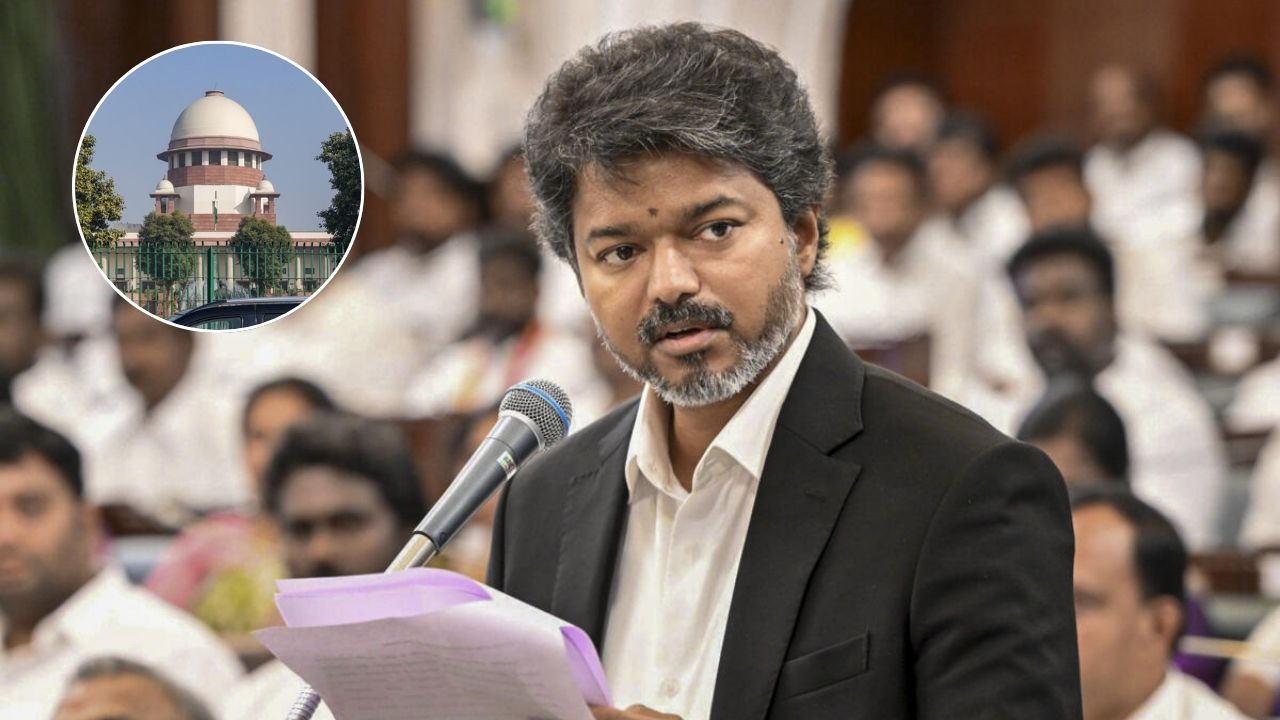
The Supreme Court has expressed strong reservations over an attempt by the Dravida Munnetra Kazhagam (DMK) to seek judicial intervention against political speeches delivered by actor-turned-politician Vijay and leaders of the Tamilaga Vettri Kazhagam (TVK). During the hearing, the apex court observed that political criticism and public debate are integral to a healthy democracy and questioned whether courts should be drawn into resolving political disagreements.
The remarks came while hearing a petition that sought restrictions on Vijay and other TVK functionaries over their public speeches, alleging that certain statements made during political campaigns and public meetings were objectionable. The court, however, appeared unconvinced that such issues warranted judicial restraint, emphasizing that political discourse is expected to involve criticism, disagreement, and competing viewpoints.
Court Highlights Importance of Democratic Debate
During the proceedings, the Supreme Court underscored that democracy thrives on open discussion and political contestation. The bench indicated that political parties frequently criticize one another, and such exchanges are part of the democratic process rather than matters requiring judicial censorship.
The judges questioned the rationale behind seeking court-imposed restrictions on political leaders merely for making speeches against rival parties. They suggested that democratic institutions should allow space for political expression unless there is a clear violation of law.
The court’s observations reflected the broader constitutional principle that freedom of speech and political expression occupies a central place in India’s democratic framework. Judicial intervention, the bench indicated, should not become a mechanism to settle political rivalries.
Petition Sought Restraint on Vijay and TVK Leaders
The petition was filed against Vijay and members of the Tamilaga Vettri Kazhagam, alleging that their speeches targeted the ruling political establishment in Tamil Nadu. The petitioner sought judicial directions to restrain the party and its leaders from making statements considered inflammatory or objectionable during public events.
However, the Supreme Court questioned whether such grievances should instead be addressed through the political process or under existing legal mechanisms if any specific law had been violated.
The bench emphasized that courts cannot become forums for regulating routine political criticism or campaign speeches unless there are exceptional circumstances that justify intervention. 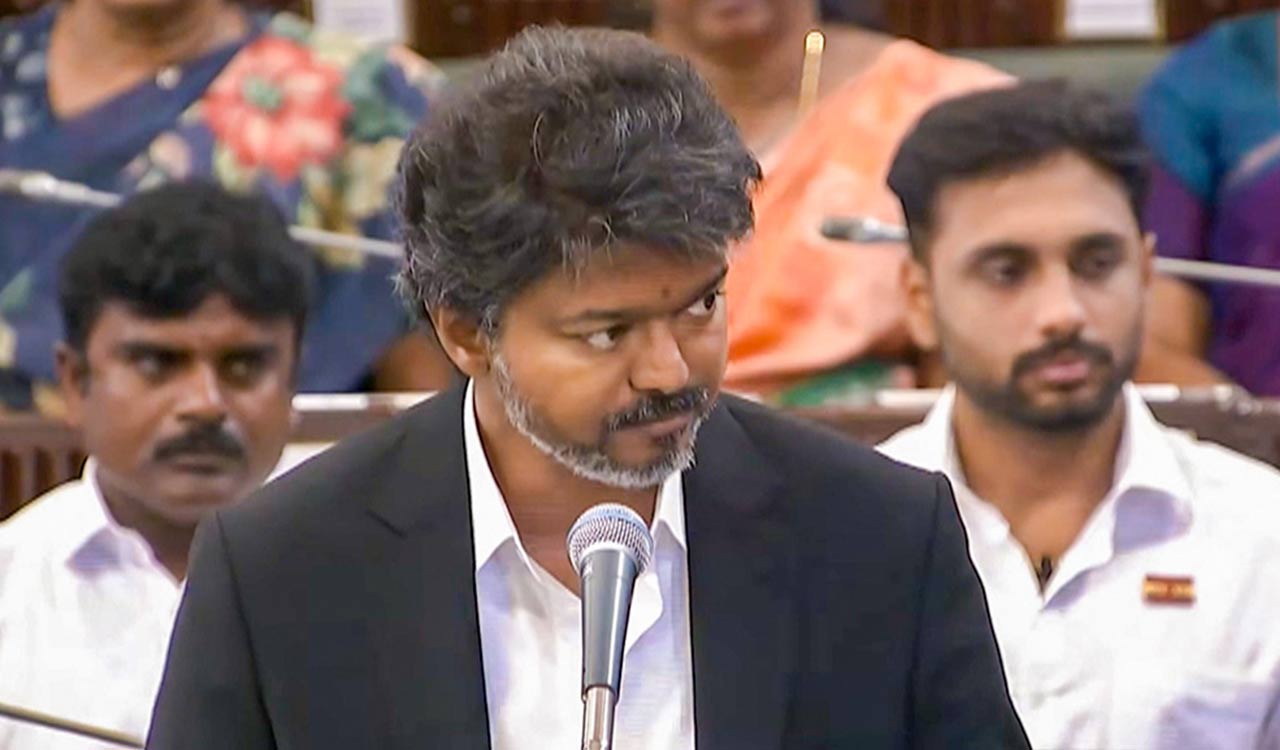
Freedom of Speech Remains a Constitutional Guarantee
The hearing also highlighted the constitutional protection available to political speech. While freedom of expression is subject to reasonable restrictions under Indian law, the court indicated that criticism of political opponents, by itself, does not justify judicial restraint.
The observations reinforced the judiciary’s long-standing view that robust public debate is an essential feature of constitutional democracy. Political leaders are expected to face criticism from opponents, and voters ultimately evaluate such competing narratives during elections.
Legal experts note that the Supreme Court has consistently maintained a cautious approach when asked to impose prior restraints on political speech, preferring to protect democratic dialogue unless there is a direct and substantial threat to public order or other legally recognized concerns.
Political Context
The case comes at a time when Tamil Nadu’s political landscape is witnessing significant changes following Vijay’s entry into active politics through the Tamilaga Vettri Kazhagam. His speeches and political campaigns have attracted considerable public attention, often featuring criticism of established political parties in the state.
As the party expands its political presence, exchanges between TVK and other major political formations, including the DMK, have become increasingly prominent. The legal challenge reflected the growing intensity of political competition ahead of future electoral contests.
Despite these developments, the Supreme Court’s remarks suggest that political disagreements should primarily be addressed through democratic engagement rather than judicial intervention.
Broader Constitutional Significance
The court’s observations are significant because they reaffirm the judiciary’s commitment to protecting democratic freedoms while maintaining a clear distinction between political disputes and legal controversies. By questioning the need for judicial restraint on political speeches, the Supreme Court reinforced the principle that courts should avoid entering the arena of political competition unless there is a compelling constitutional or legal basis.
The matter may continue through the judicial process depending on further submissions, but the court’s remarks have already highlighted the importance of safeguarding free political expression within India’s democratic framework.
The proceedings serve as a reminder that while political speech may often be sharp, provocative, or critical, democratic systems are designed to accommodate such debate, leaving it to the electorate—not the judiciary—to ultimately judge political arguments.