
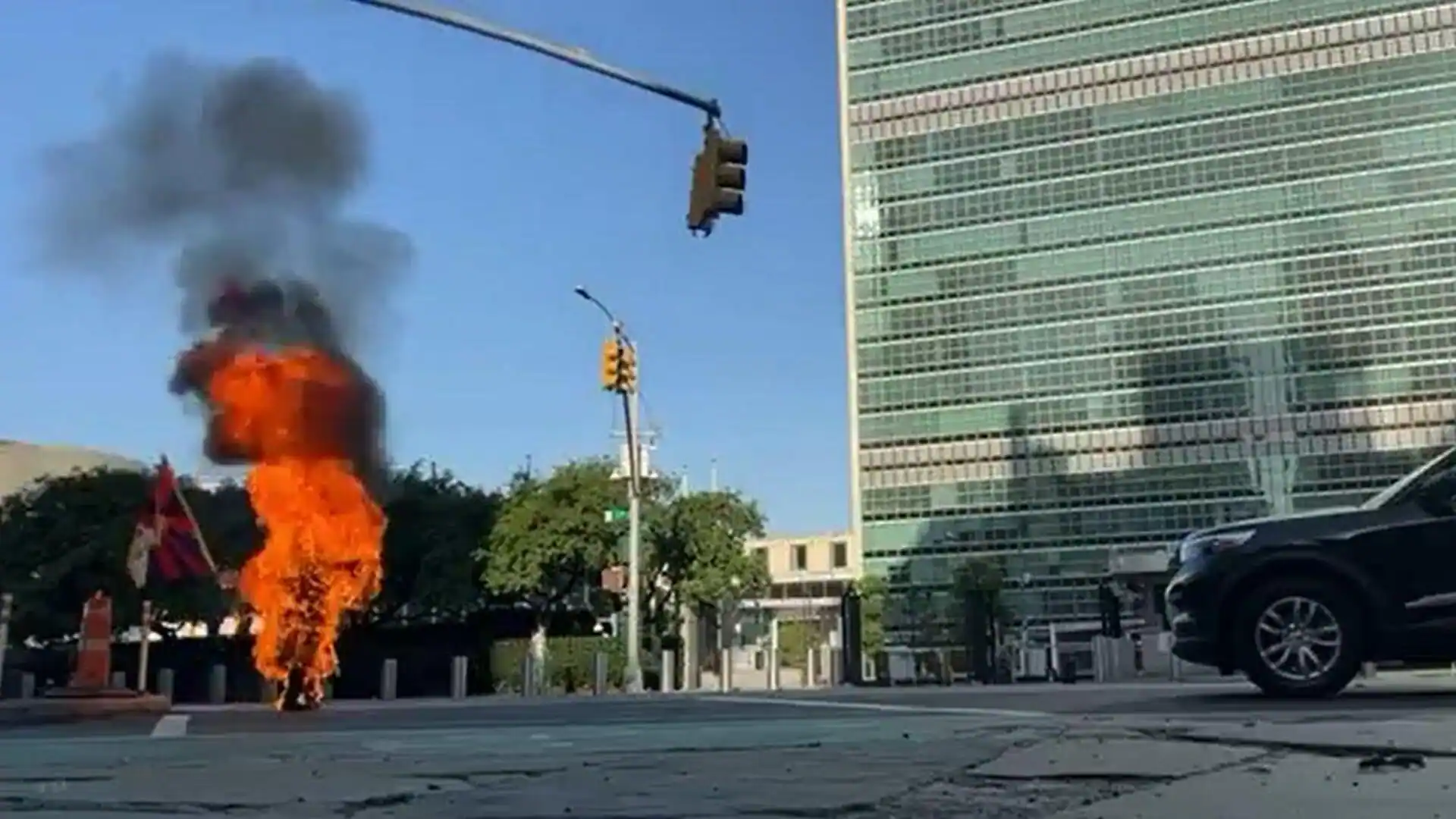
A tragic act of protest outside the United Nations headquarters in New York has once again drawn international attention to the long-standing human rights concerns surrounding Tibet. A Tibetan activist succumbed to severe burn injuries after setting himself on fire in what supporters described as a desperate appeal for global intervention on the Tibetan issue.
The incident occurred near the UN complex, where the activist reportedly carried out the self-immolation while calling for freedom for Tibet and urging the international community to take stronger action against what Tibetan advocacy groups describe as decades of political repression, cultural restrictions, and limitations on religious freedom in the region.
Protest Ends in Tragedy
Emergency responders rushed to the scene shortly after the protest began, extinguishing the flames and transporting the individual to a nearby hospital in critical condition. Despite intensive medical treatment, the activist later died from injuries sustained during the incident.
Authorities secured the area as investigations into the circumstances surrounding the protest continued. Officials have not indicated that any other individuals were involved, and there were no reports of injuries to bystanders.
Witnesses described the incident as deeply distressing, with several people attempting to assist before emergency services arrived. The dramatic protest unfolded in one of the world’s most visible diplomatic locations, underscoring the activist’s intention to draw international attention to the Tibetan cause.
Message Directed at the International Community
Supporters and Tibetan rights organizations stated that the protest was intended as a symbolic appeal to world leaders gathered at the United Nations. According to activists, the individual believed that peaceful demonstrations alone had failed to generate sufficient international pressure regarding conditions inside Tibet.
Advocacy groups said the self-immolation reflected profound frustration over what they view as limited global action despite repeated allegations of restrictions on religious practices, cultural identity, language preservation, and political freedoms in Tibet.
Several organizations expressed grief over the activist’s death while emphasizing that the protest should be viewed as a call for renewed international engagement rather than an isolated incident. 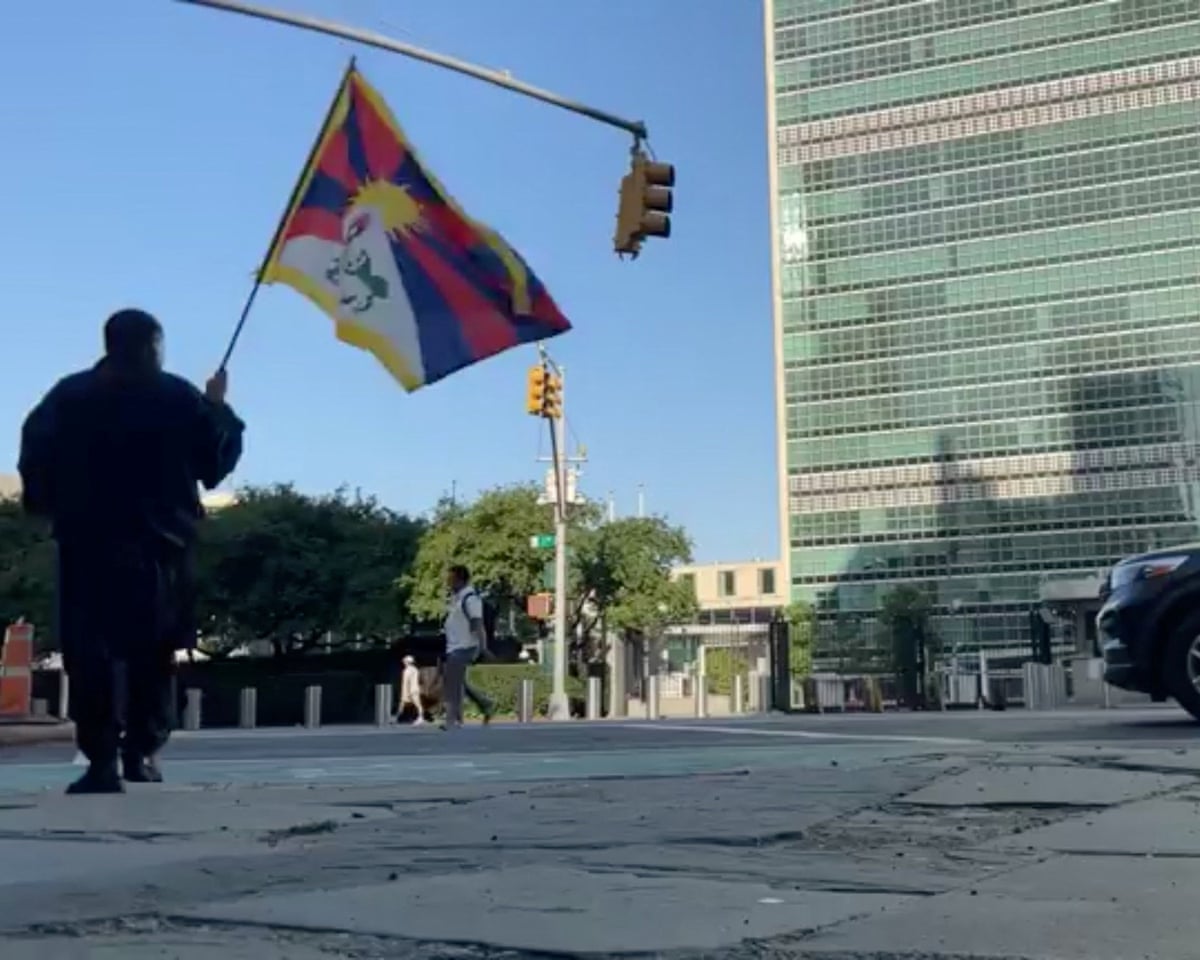
Tibet’s Long-Running Human Rights Debate
The incident has once again highlighted the enduring dispute surrounding Tibet’s political status and human rights situation.
Since coming under Chinese administration in the mid-20th century, Tibet has remained a source of international debate. Tibetan exile groups have consistently accused Chinese authorities of suppressing religious freedom, limiting cultural expression, and imposing strict controls on local communities.
Chinese authorities, however, maintain that Tibet is an integral part of China and argue that government policies have significantly improved infrastructure, economic development, education, healthcare, and living standards across the region. Beijing has repeatedly rejected allegations of systemic human rights abuses and has criticized what it describes as external interference in its internal affairs.
History of Self-Immolation Protests
Self-immolation has emerged over the years as one of the most extreme forms of protest associated with the Tibetan movement. Since 2009, numerous Tibetans—both inside Tibet and in exile—have resorted to self-immolation to protest Chinese policies and to call for greater freedoms.
Human rights organizations have documented these incidents as expressions of profound despair and political frustration. Many of those involved have called for the protection of Tibetan culture, greater religious autonomy, and the return of the Tibetan spiritual leadership to their homeland.
Governments and international organizations have consistently expressed concern over both the loss of life resulting from such protests and the underlying issues that continue to fuel tensions.
Calls for International Attention
Following the activist’s death, Tibetan advocacy groups renewed appeals for the United Nations and governments worldwide to place greater emphasis on Tibet during diplomatic discussions with China.
Several organizations urged world leaders to support independent monitoring of human rights conditions, encourage dialogue between stakeholders, and promote peaceful solutions to longstanding disputes.
The incident has also reignited discussions among human rights advocates regarding the effectiveness of international institutions in responding to grievances raised by marginalized communities seeking global attention.
Wider Diplomatic Implications
The self-immolation is expected to add momentum to ongoing international conversations surrounding human rights, freedom of expression, and the responsibilities of global institutions in addressing politically sensitive issues.
While governments remain divided over their approaches toward China, the tragedy serves as a stark reminder that the Tibetan question continues to resonate internationally despite decades of diplomatic and political complexity.
As investigations into the incident proceed, the activist’s death is likely to become another significant moment in the broader global discourse on Tibet, human rights, and international accountability. It also underscores the enduring emotional and political significance of the Tibetan struggle for supporters around the world, even as calls grow for peaceful dialogue and constructive engagement to address one of the world’s longest-running geopolitical disputes.