
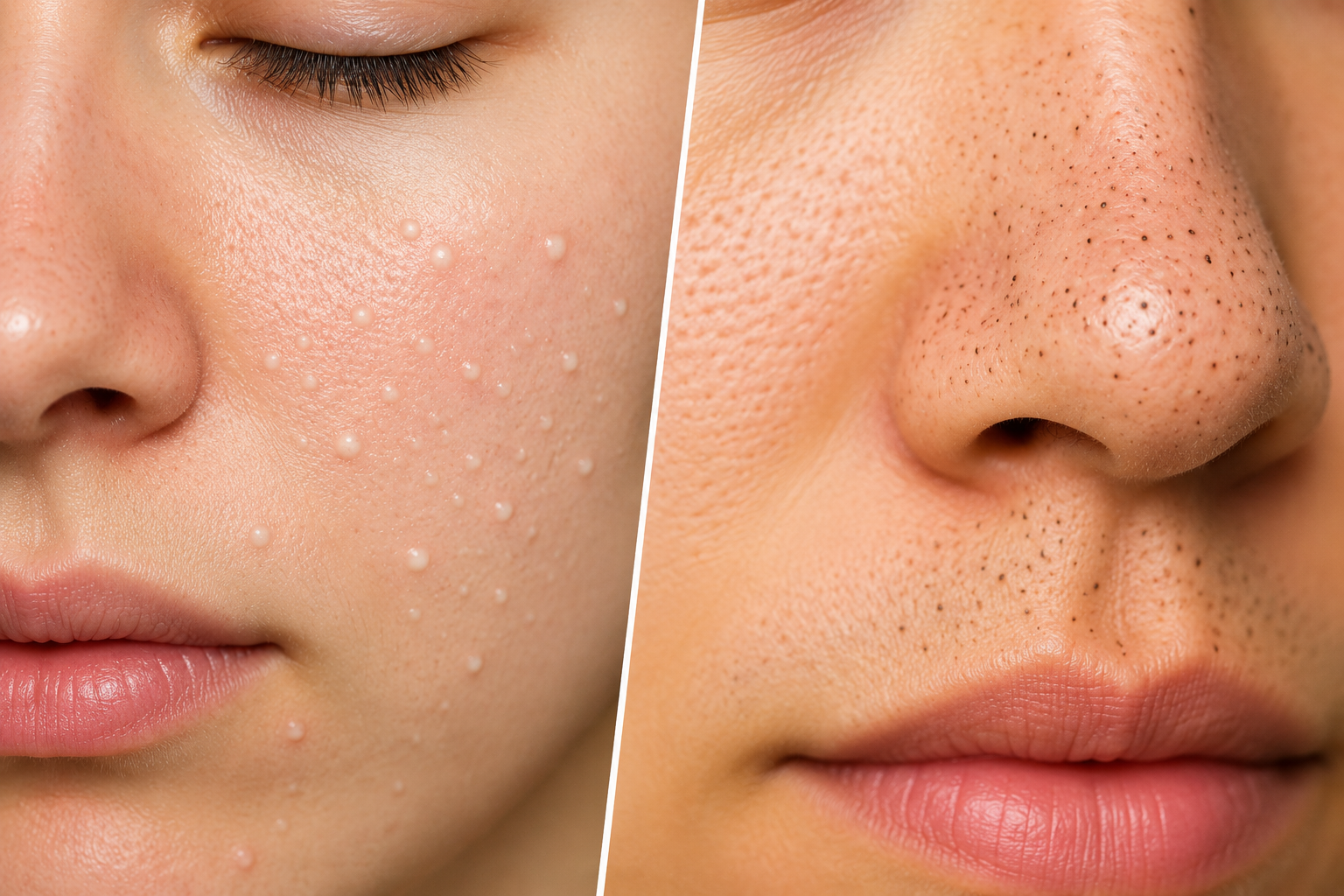
Healthy and clear skin is often considered a reflection of good skincare habits, yet common concerns such as blackheads and whiteheads continue to affect millions of people worldwide. These small but persistent blemishes can appear during adolescence, adulthood, and even later in life, often causing frustration and affecting self-confidence. Although they may seem similar at first glance, blackheads and whiteheads develop differently and require specific approaches for effective treatment and prevention.
Both conditions are classified as comedonal acne, a non-inflammatory form of acne that occurs when hair follicles or pores become blocked with excess oil (sebum), dead skin cells, and other impurities. Factors such as hormonal fluctuations, genetics, environmental pollution, stress, and the use of unsuitable skincare products can increase the likelihood of developing these clogged pores. While blackheads appear as dark spots on the skin’s surface, whiteheads present as small white or flesh-colored bumps, making them distinct in both appearance and formation.
What Are Whiteheads?
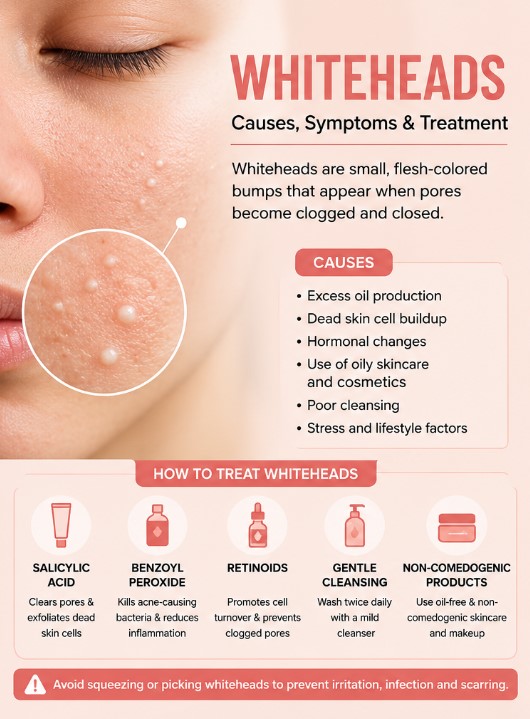
Whiteheads, also known as closed comedones, develop when oil, dead skin cells, and bacteria become trapped inside a pore that remains closed. Since the contents are not exposed to air, the clogged pore appears as a small white or flesh-coloured bump on the skin.
Whiteheads commonly appear on the face, forehead, chin, chest, shoulders, and back.
What Are Blackheads?
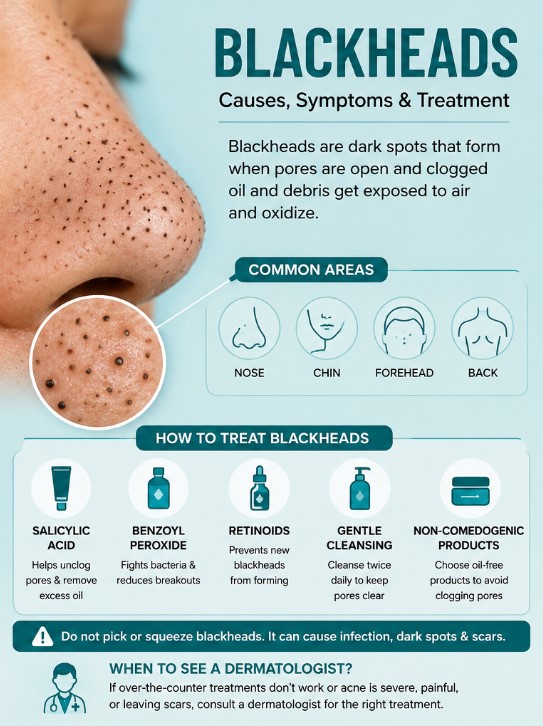
Blackheads, or open comedones, occur when clogged pores remain open. The trapped oil and dead skin cells come into contact with oxygen, causing oxidation that gives the surface its dark appearance. Contrary to popular belief, the black colour is not caused by dirt.
Blackheads are frequently found on the nose, chin, forehead, and other oily areas of the skin.
Common Causes of Whiteheads and Blackheads
Several factors can contribute to the development of these skin conditions, including:
- Excess oil production
- Accumulation of dead skin cells
- Hormonal changes during puberty, menstruation, pregnancy, or stress
- Bacteria inside clogged pores
- Use of oily or comedogenic cosmetic products
- Inadequate cleansing of the skin
- Genetics and lifestyle factors
How to Treat Whiteheads and Blackheads
Dermatologists recommend maintaining a consistent skincare routine to manage and prevent breakouts. Common treatment options include:
Salicylic Acid
Salicylic acid helps remove excess oil and exfoliates dead skin cells, preventing pores from becoming clogged.
Benzoyl Peroxide
This ingredient targets acne-causing bacteria and helps reduce inflammation associated with breakouts.
Retinoids
Retinoid-based products encourage cell turnover and help prevent new comedones from forming.
Gentle Cleansing
Washing the face twice daily with a mild cleanser can help remove impurities without irritating the skin.
Non-Comedogenic Products
Using oil-free and non-comedogenic makeup and skincare products can reduce the risk of blocked pores.
Avoid Squeezing Pimples
Experts warn against picking or squeezing blackheads and whiteheads, as doing so may cause irritation, infection, pigmentation, and even permanent scarring.
When Should You See a Dermatologist?
If over-the-counter treatments fail to improve the condition or acne becomes severe and painful, consulting a dermatologist is recommended. A specialist can prescribe stronger medications or suggest professional procedures for long-term management.
With proper skincare and timely treatment, most cases of whiteheads and blackheads can be effectively controlled, helping individuals achieve clearer and healthier skin.