

A heated political confrontation unfolded in Parliament after BJP MP Nishikant Dubey launched a strong attack on the Nehru-Gandhi family, accusing it of betraying the nation and misleading the public through decades of political influence. His remarks triggered sharp protests from Congress members and intensified the ongoing war of words between the ruling Bharatiya Janata Party (BJP) and the opposition Congress.
The controversy erupted during a parliamentary debate when Dubey referred to a number of books and historical accounts that, according to him, contained critical assessments of the Nehru-Gandhi family’s role in shaping India’s political trajectory. The BJP MP argued that discussions in Parliament should not be limited to unpublished documents and memoirs but should also include published works that scrutinize the decisions and legacy of former Congress leaders.
Dubey Labels Nehru-Gandhi Family as ‘Traitors’ and ‘Deceivers’
In his speech, Dubey used highly critical language while describing the Nehru-Gandhi family, alleging that historical decisions taken under their leadership had caused long-term damage to the country. He claimed that the family deserved labels such as “traitors” and “deceivers,” citing what he described as policy failures, corruption allegations, and controversial political decisions that have been debated for decades.
The BJP leader further argued that numerous published books contain information that raises serious questions about the actions of former Congress governments. He urged Parliament to allow broader discussions on these works, asserting that public discourse should include all available historical perspectives rather than focusing solely on selective narratives.
Opposition Reacts Strongly
Dubey’s comments immediately drew objections from Congress members, who accused him of making inappropriate and provocative remarks against a family that has played a significant role in India’s political history. Opposition MPs protested the statements, leading to a tense atmosphere inside the House.
Congress leaders reportedly approached the Speaker’s office to register their objections and questioned the decision to allow such remarks during parliamentary proceedings. The disagreement soon escalated into a broader political confrontation between BJP and opposition lawmakers, reflecting the deep ideological divide that continues to characterize national politics. 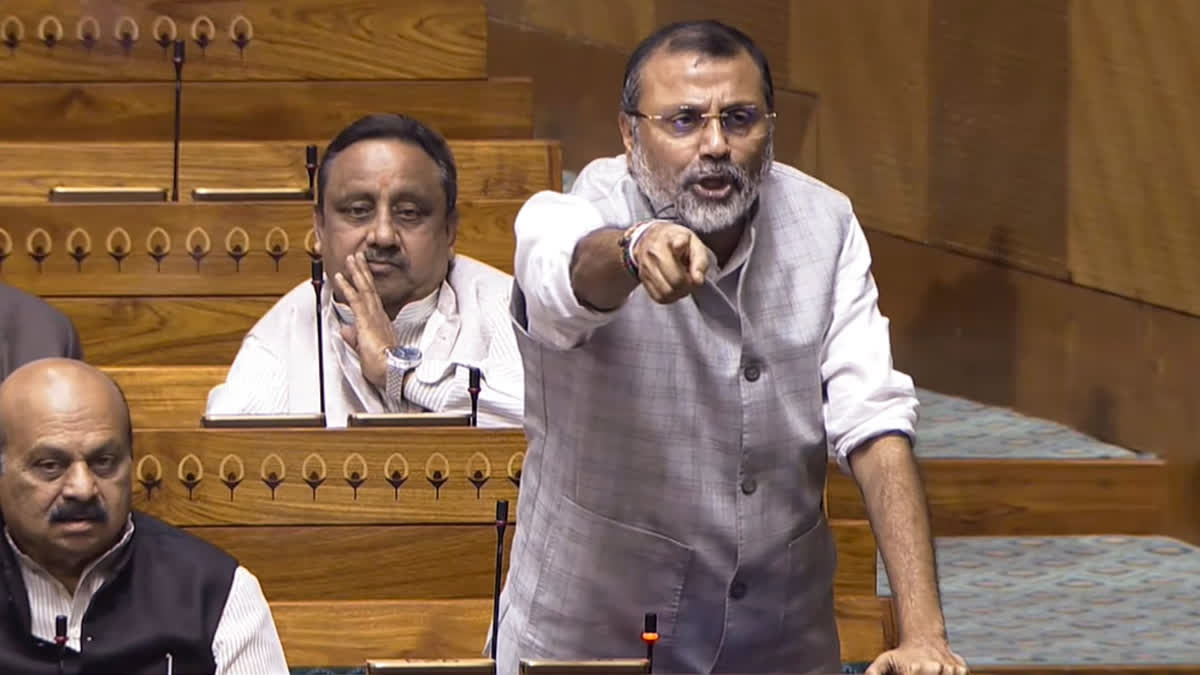
Debate Over Historical Narratives
The episode has reignited a long-running debate over how India’s political history should be interpreted and discussed in Parliament. BJP leaders have frequently criticized the Nehru-Gandhi family’s legacy, arguing that certain historical events and policy decisions deserve greater scrutiny. Congress, on the other hand, maintains that attempts to target the family are politically motivated efforts designed to divert attention from contemporary issues.
Dubey argued that numerous historical publications document controversies associated with past Congress governments and should be openly debated. He claimed that these materials offer alternative perspectives on major national developments and deserve public examination.
Political Tensions Continue to Rise
The latest remarks come amid an already charged political environment in Parliament, where debates over historical events, national security issues, and governance records have frequently led to confrontations between the treasury benches and the opposition.
Political observers note that disputes involving the Nehru-Gandhi family often become flashpoints in national politics, given the family’s long association with the Congress party and its central role in India’s post-independence political history. As both sides continue to defend their positions, the controversy is expected to fuel further debate inside and outside Parliament.
Broader Political Implications
The incident highlights how historical interpretations remain a powerful tool in contemporary political discourse. While BJP leaders continue to question the legacy of former Congress governments, opposition parties argue that such attacks are intended to shape public perception ahead of future political contests.
With Parliament witnessing repeated clashes over historical narratives and political accountability, the latest controversy surrounding Nishikant Dubey’s remarks is likely to remain a significant talking point in national politics in the days ahead.