
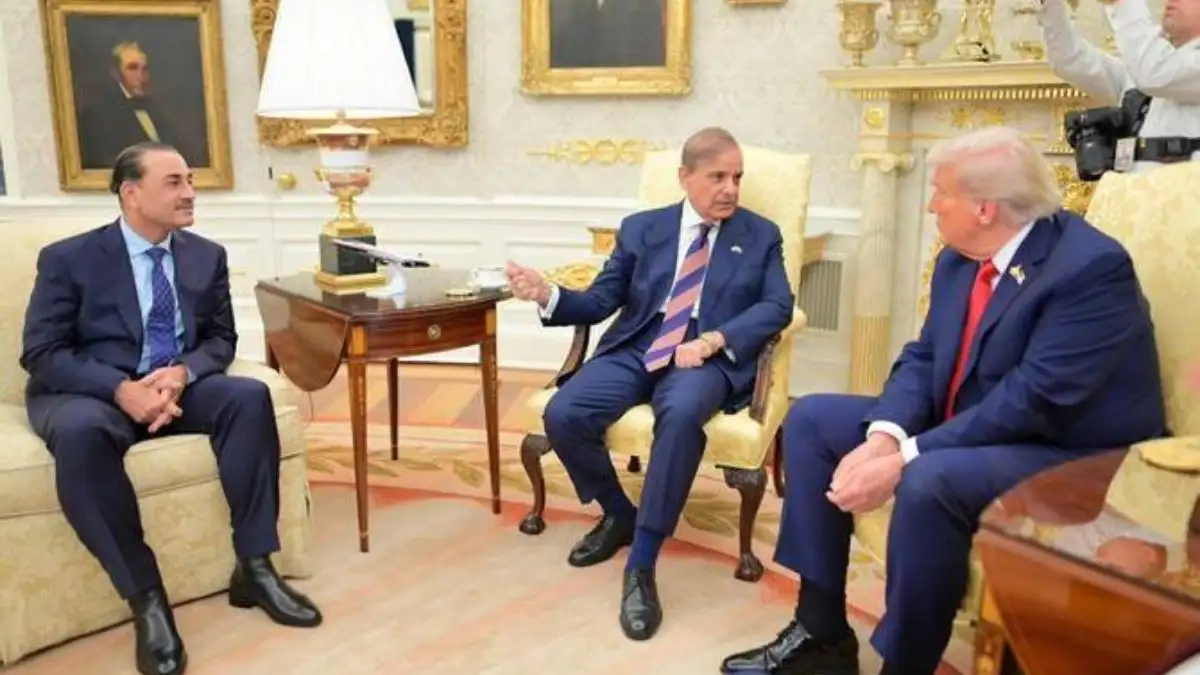
Growing international discussions surrounding the Abraham Accords have once again placed Pakistan’s long-standing position on Israel under the global spotlight. Political analysts and diplomatic observers believe that shifting geopolitical alliances, changing Middle East dynamics, and renewed pressure from global powers could eventually influence Islamabad’s approach toward recognizing Israel.
The debate has intensified following renewed interest in expanding the Abraham Accords framework — a diplomatic initiative aimed at normalizing relations between Israel and several Muslim-majority nations. The agreements, first introduced during the administration of former US President Donald Trump, marked a major transformation in Middle Eastern diplomacy and altered decades-old regional political equations.
While Pakistan has officially maintained that it will not recognize Israel until a fair resolution to the Palestinian issue is achieved, changing regional realities have prompted fresh conversations among policymakers, strategic experts, and political commentators.
What Are the Abraham Accords?
The Abraham Accords refer to a series of normalization agreements signed between Israel and several Arab nations, including the United Arab Emirates, Bahrain, Morocco, and Sudan. The agreements aimed to establish formal diplomatic ties, enhance trade cooperation, strengthen security partnerships, and improve economic collaboration between the participating nations and Israel.
The accords were viewed as a historic breakthrough because many Arab and Muslim-majority countries had traditionally refused to establish formal relations with Israel due to the unresolved Palestinian conflict.
Supporters of the agreements argued that engagement and diplomacy could create new opportunities for peace, regional stability, and economic growth. Critics, however, claimed the accords weakened collective pressure on Israel regarding Palestinian statehood and human rights concerns.

Why Pakistan’s Position Matters
Pakistan remains one of the most influential Muslim-majority nations that has not recognized Israel. Islamabad’s foreign policy has historically aligned strongly with support for Palestinian self-determination, and the issue carries deep political, religious, and emotional significance domestically.
The Pakistani passport itself reportedly contains restrictions related to travel to Israel, symbolizing the country’s official non-recognition policy. Any future change in this stance would therefore represent a major diplomatic and political shift.
Experts believe Pakistan’s position is also shaped by broader regional considerations, including relations with key Gulf allies such as Saudi Arabia and the United Arab Emirates. As several Gulf nations deepen engagement with Israel in areas such as technology, trade, defense, and tourism, speculation continues over whether Islamabad may eventually face growing diplomatic pressure to reconsider its approach.
Domestic Challenges and Political Sensitivities
Despite international speculation, any move toward recognizing Israel would likely face intense scrutiny and opposition within Pakistan. Religious organizations, opposition parties, and sections of civil society have consistently voiced strong support for Palestine and resistance to normalization efforts.
Political analysts note that Pakistani governments have historically treated the Israel issue with caution due to the domestic political implications attached to it. Public sentiment in the country remains largely sympathetic toward Palestinians, making any policy shift highly sensitive.
At the same time, some foreign policy experts argue that Pakistan may eventually be compelled to reassess its diplomatic strategy in response to evolving geopolitical realities, economic priorities, and regional partnerships. 
Strategic and Economic Dimensions
Observers believe that normalization with Israel could potentially open new economic and technological opportunities for Pakistan. Israel is widely recognized for advancements in agriculture, cybersecurity, water management, defense innovation, and high-tech industries.
Supporters of engagement argue that improved relations could create avenues for trade, investment, and strategic cooperation. However, critics warn that economic benefits alone may not outweigh the political and ideological costs associated with abandoning Pakistan’s traditional position on Palestine.
The issue has therefore become part of a larger debate over whether geopolitical pragmatism should take precedence over long-standing ideological commitments in modern diplomacy.
Global Diplomacy and Future Outlook
The evolving Middle East landscape continues to reshape alliances across the region. With multiple Arab states already participating in the Abraham Accords framework, international attention remains focused on whether other Muslim-majority nations may eventually follow a similar path.
For Pakistan, the question involves not only foreign policy calculations but also domestic politics, regional partnerships, public opinion, and its historical support for the Palestinian cause.
Although there is currently no official indication of immediate policy change from Islamabad, diplomatic discussions surrounding Israel recognition are likely to continue as geopolitical conditions evolve. The broader debate reflects the growing complexity of international relations in a rapidly changing global order, where strategic interests, economic priorities, and ideological positions increasingly intersect.