
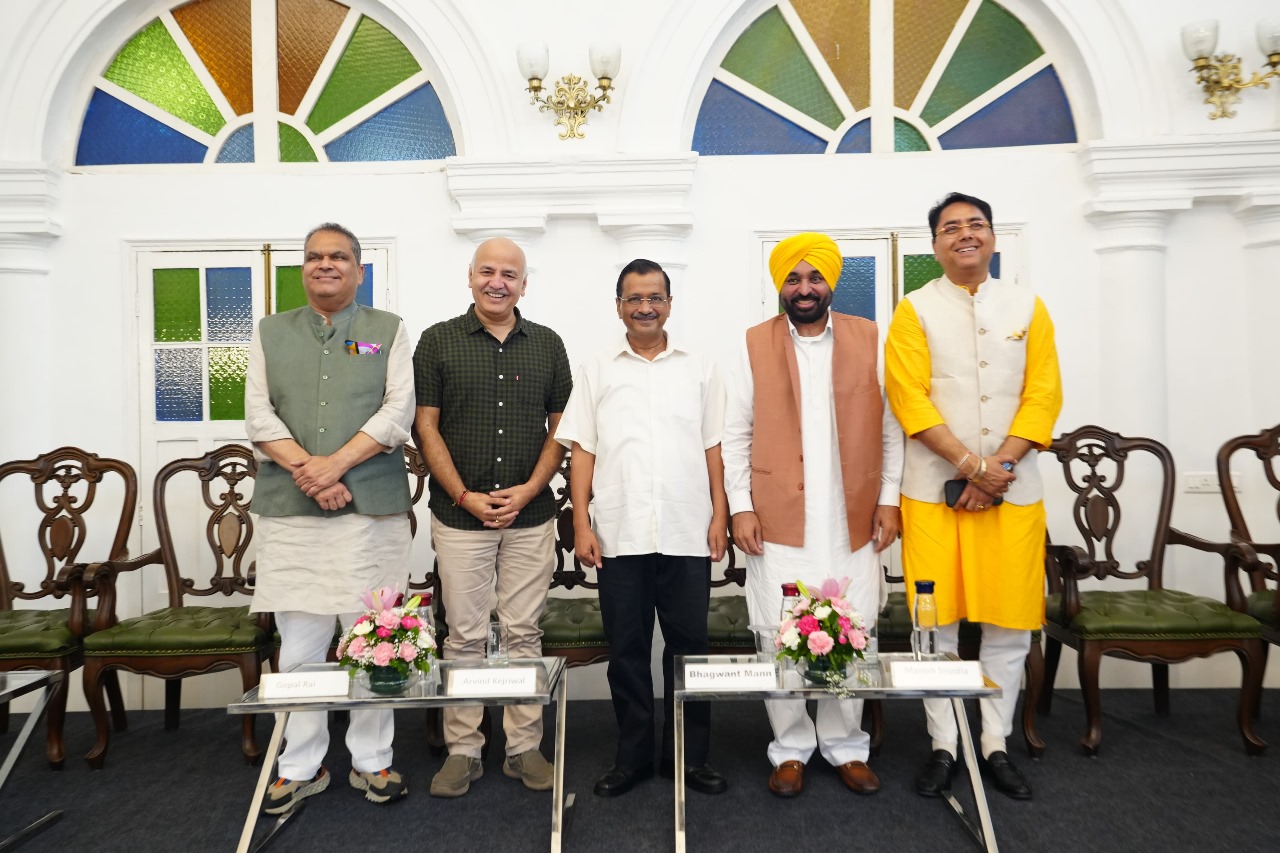
Aam Aadmi Party national convenor Arvind Kejriwal has described the recent electoral outcome in Gujarat’s Narmada region as an indication of a changing political landscape in the state ahead of the 2027 Assembly elections. Speaking after the results, Kejriwal claimed that the verdict reflected growing public dissatisfaction with traditional political forces and demonstrated increasing support for alternative governance models.
The AAP leader asserted that the outcome was not merely a local electoral development but a broader political signal emerging from rural and tribal regions of Gujarat. According to him, voters are increasingly seeking issues-based politics focused on education, healthcare, employment, and public welfare rather than conventional political narratives.
Kejriwal stated that the result has energized party workers and strengthened the Aam Aadmi Party’s confidence about expanding its footprint in Gujarat over the coming months. He maintained that people in several parts of the state are looking for political change and are closely observing AAP’s governance approach in states where the party has previously held power.
The Narmada result assumes significance because the district is considered politically sensitive due to its tribal population and its strategic importance in Gujarat’s electoral map. Political observers believe that shifts in voting patterns in tribal belts can influence the broader direction of Assembly contests in the state.
During his remarks, Kejriwal accused the ruling establishment of failing to adequately address local concerns, particularly unemployment, inflation, and access to quality public services. He argued that voters are becoming more aware of governance issues and are increasingly willing to support parties that present what he described as “practical and people-centric solutions.” 
The AAP chief also highlighted the party’s efforts to strengthen grassroots organization across Gujarat. He said the party would continue expanding its outreach campaign in rural, urban, and tribal areas ahead of the 2027 elections. Party leaders believe that sustained engagement with local communities could help the organization build a stronger political base in a state traditionally dominated by the Bharatiya Janata Party and the Congress.
Political analysts note that while AAP remains a relatively newer force in Gujarat compared to established parties, the organization has been attempting to position itself as a viable alternative through aggressive campaigning, local outreach, and issue-driven politics. The party has particularly focused on education reforms, electricity subsidies, healthcare services, and anti-corruption messaging in its Gujarat strategy.
The latest result is expected to intensify political activity in Gujarat as parties begin preparing for the next Assembly elections. With more than a year remaining before the 2027 contest gathers full momentum, regional outcomes and local body performances are likely to be closely monitored for indications of changing voter sentiment.
Leaders from rival parties, however, have downplayed AAP’s interpretation of the result and argued that isolated electoral performances should not be treated as indicators of statewide political transformation. They insist that Gujarat’s political structure continues to strongly favor established parties with deeper organizational networks.
Despite differing political interpretations, the Narmada outcome has once again brought attention to Gujarat’s evolving political dynamics. The result has triggered fresh debate over whether emerging political forces can significantly reshape electoral equations in the state in the years leading up to the next Assembly elections.
As campaigning and organizational efforts intensify across Gujarat, political parties are expected to increasingly focus on local governance issues, rural outreach, and tribal voter engagement. The developments in Narmada may therefore serve as an important reference point in assessing the state’s political direction ahead of 2027.