
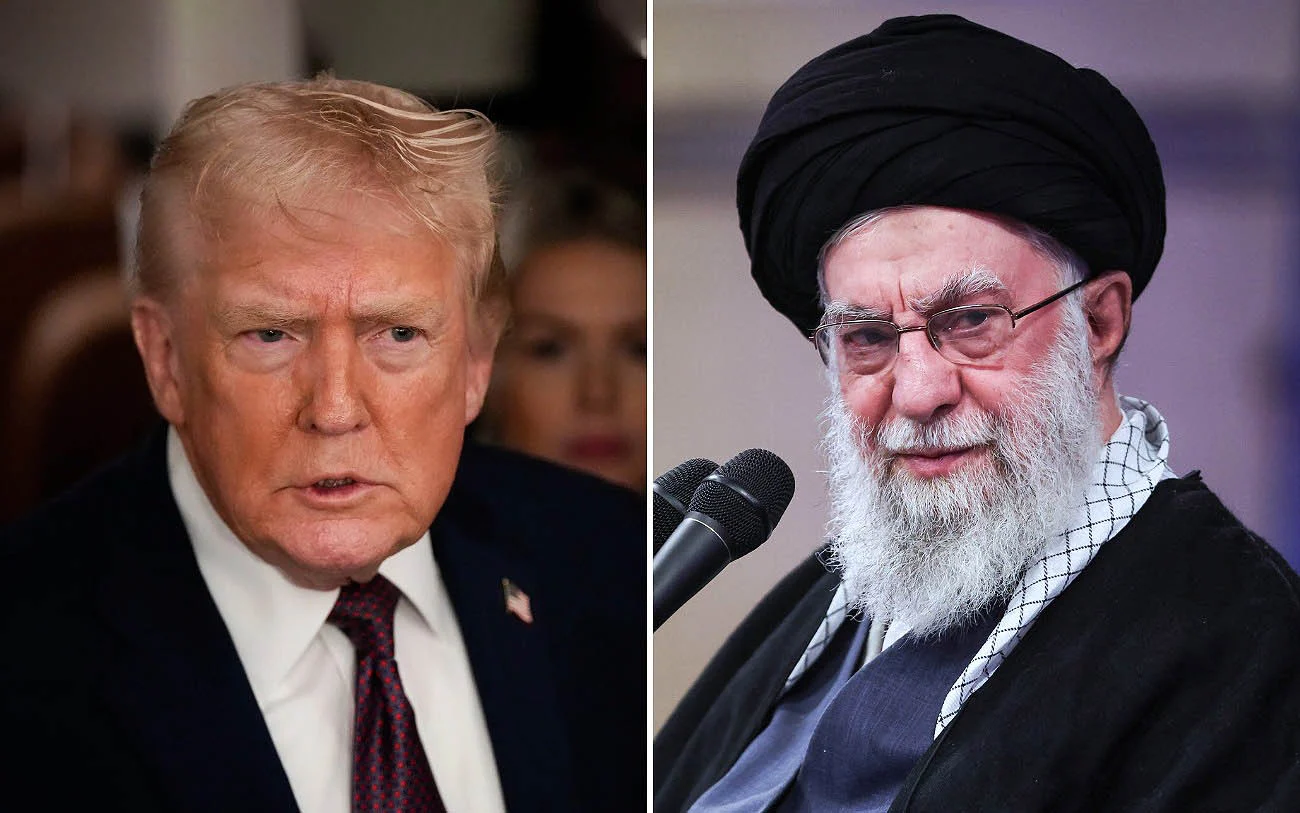
A startling new report has claimed that the United States and Israel allegedly explored the possibility of reinstating former Iranian President Mahmoud Ahmadinejad as part of a broader regime-change strategy in Iran during the recent conflict in the Middle East. The revelations have triggered widespread debate across diplomatic and political circles, given Ahmadinejad’s controversial history and his long-standing anti-Western rhetoric during his presidency.
According to the report, the alleged discussions emerged during a period of escalating military confrontation involving Iran, Israel, and the United States. The strategy reportedly revolved around the idea of establishing a new leadership structure in Tehran after the killing of several senior Iranian figures and the reported weakening of the country’s political establishment.
The report stated that senior American and Israeli officials believed that installing “someone from within” the Iranian political system could potentially stabilize the country while also weakening the influence of hardline clerical networks. Former Iranian President Mahmoud Ahmadinejad allegedly emerged as one of the names considered in those discussions.
Ahmadinejad, who served as Iran’s president from 2005 to 2013, remains one of the most controversial political figures in modern Iranian history. During his tenure, he became internationally known for his fiery speeches against Israel, criticism of Western governments, and strong support for Iran’s nuclear ambitions. His administration faced severe international sanctions, and his confrontational foreign policy significantly strained Iran’s relations with the West.
Despite his hardline image, reports suggest that Ahmadinejad’s relationship with Iran’s ruling establishment had deteriorated in recent years. Political analysts have noted that he increasingly clashed with senior clerics and elements of the Iranian security apparatus after leaving office. Some reports even claimed he faced restrictions on his movements and political activities inside Iran.
The report further alleged that Israeli intelligence agency Mossad had maintained indirect communication channels linked to Ahmadinejad during the conflict period. The objective, according to the claims, was to create a transitional political framework that could gain domestic legitimacy while also reducing the risk of complete state collapse in Iran. 
One of the most dramatic claims in the report involved an Israeli strike targeting Ahmadinejad’s residence in Tehran during the early phase of the conflict. While initial speculation suggested the attack may have been an assassination attempt, later accounts claimed the operation was allegedly intended to extract or free him from heavy surveillance imposed by Iranian security forces. Reports indicated that several guards linked to the Islamic Revolutionary Guard Corps were killed during the strike.
The alleged plan reportedly collapsed amid growing instability and uncertainty surrounding Iran’s political future. Analysts believe that deep divisions within Iran’s leadership, combined with the absence of a unified opposition movement, made any externally supported transition highly risky and unpredictable. Experts on Iranian politics have repeatedly argued that regime change efforts in Iran face enormous structural and social challenges because of the country’s powerful security institutions and fragmented opposition groups.
The broader geopolitical context also played a major role in shaping these developments. Following the escalation of military operations in Iran earlier in 2026, reports suggested that key Iranian military infrastructure, missile systems, and security installations suffered extensive damage from joint US-Israeli strikes. International observers described the situation as one of the most severe security crises in Iran in decades.
Meanwhile, political uncertainty intensified after the reported death of Supreme Leader Ali Khamenei during the conflict, triggering debates over succession and the future direction of the Islamic Republic. Several international reports indicated that Iran’s leadership transition mechanisms were placed under immense pressure during the crisis period.
The claims surrounding Ahmadinejad’s alleged involvement have sparked strong reactions globally because of the apparent contradiction between his past anti-Israel rhetoric and the idea that he could have been considered in a Western-backed political transition. During his presidency, Ahmadinejad frequently made inflammatory remarks against Israel and was widely viewed as a symbol of Iran’s hardline political ideology.
Political observers say the revelations highlight the complexity of power politics in the Middle East, where strategic interests can sometimes outweigh ideological differences. Some analysts believe the alleged discussions reflected a pragmatic attempt to identify a recognizable Iranian figure with existing political influence who could potentially prevent complete institutional breakdown after the conflict. Others, however, questioned the credibility and practicality of such a plan, arguing that Ahmadinejad’s polarizing image would likely have made him unacceptable to many Iranians.
As debates continue over the authenticity and implications of the report, neither American nor Israeli officials have publicly confirmed the allegations. Iranian authorities have also not officially responded in detail to the claims regarding Ahmadinejad’s alleged role in any regime-change discussions.
The controversy has nevertheless added another dramatic chapter to the already volatile political landscape of the Middle East, where regional conflicts, leadership struggles, and international rivalries continue to shape the future of Iran and the wider region.