
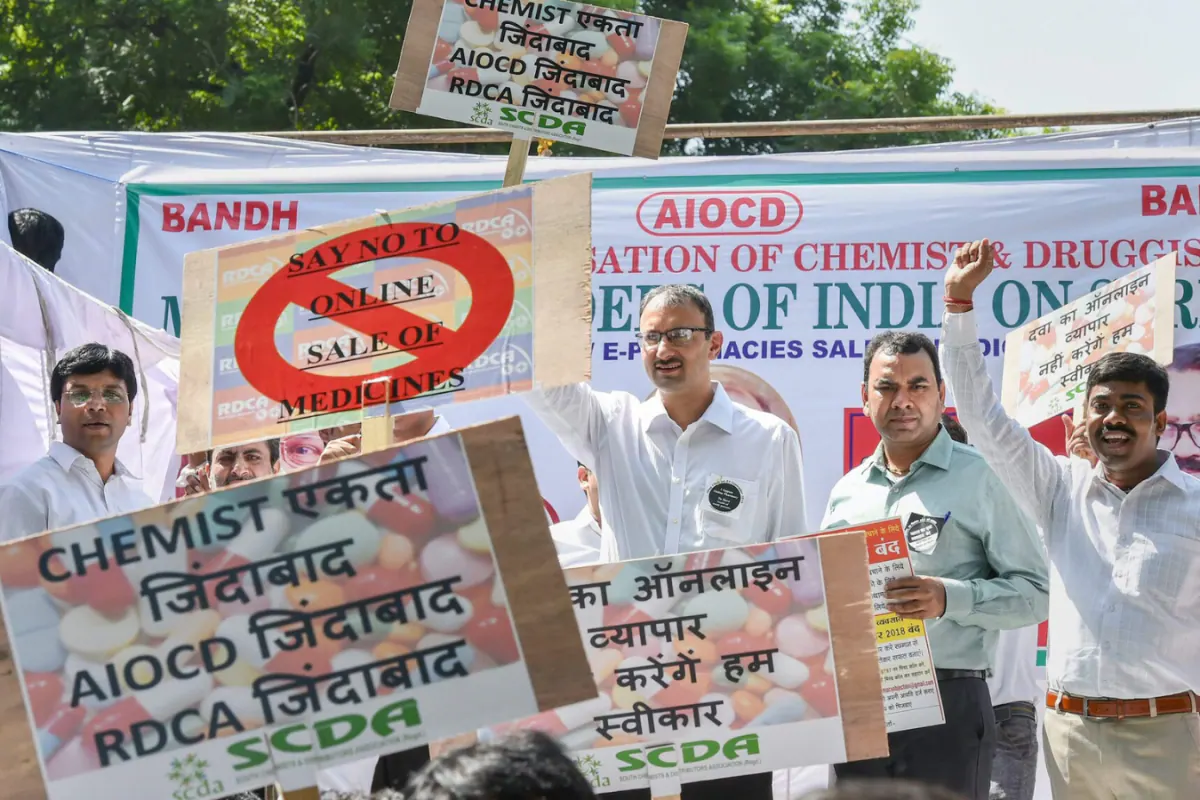
A large-scale shutdown of medical stores across Tamil Nadu disrupted access to medicines on Wednesday as thousands of pharmacies joined a nationwide strike called by chemists’ associations against online pharmacy operations and alleged unfair pricing practices by corporate platforms.
According to industry estimates, nearly 40,000 medical shops across the state remained closed as part of the one-day protest led by the All India Organisation of Chemists and Druggists (AIOCD). The agitation was organised to oppose the growing presence of e-pharmacies, deep discounting strategies by online medicine delivery companies, and what traders described as inadequate regulatory oversight in the sector.
The strike caused inconvenience for patients and customers in several cities, particularly those dependent on neighbourhood pharmacies for routine medicines and emergency prescriptions. However, the Tamil Nadu government stated that measures had been taken to ensure uninterrupted access to essential drugs and healthcare support during the shutdown.
Authorities confirmed that several hospital-linked pharmacy chains and government-supported medicine outlets continued operations despite the strike. Pharmacy outlets attached to hospitals, along with major retail chains and public-sector medicine distribution centres, remained functional to reduce the impact on patients.
Officials from the state drug control administration also deployed multiple drug inspectors across districts to monitor the availability of medicines and ensure public health services were not severely affected. District-level helplines were activated to address complaints related to medicine shortages and pharmacy closures. 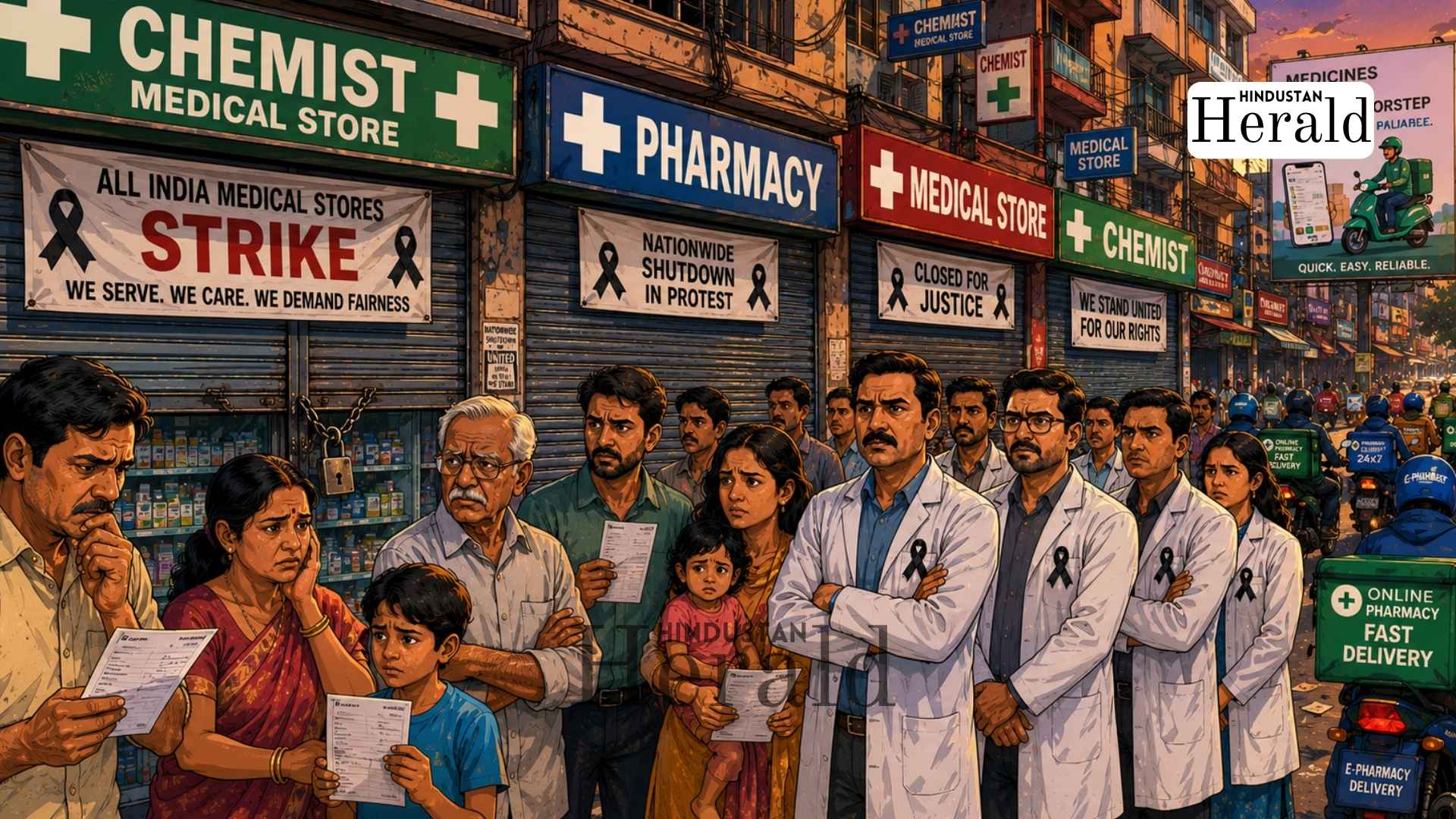
The nationwide protest reflects increasing tensions between traditional chemists and rapidly expanding digital pharmacy platforms. Retail pharmacy owners argue that online medicine sellers are benefiting from aggressive discount campaigns and relaxed operational rules, making it difficult for small and medium-sized medical stores to compete.
Trader associations have also raised concerns over the online sale of prescription medicines, alleging that weak verification systems could lead to misuse of habit-forming drugs and antibiotics. Industry representatives claim that temporary regulatory relaxations introduced during the pandemic have continued to benefit e-pharmacy businesses at the expense of conventional retailers.
While some states witnessed partial participation in the bandh, Tamil Nadu emerged as one of the most significantly affected regions due to the high number of participating pharmacies. Similar disruptions were also reported from Telangana, Karnataka, Odisha, and several other states where chemist associations extended support to the nationwide agitation.
Healthcare experts noted that the strike once again highlighted the urgent need for a balanced regulatory framework that supports digital innovation while protecting traditional pharmacy businesses and ensuring patient safety. The issue of online medicine delivery has become increasingly contentious in recent years as consumer demand for doorstep healthcare services continues to grow.
Despite the widespread closure of retail pharmacies, authorities maintained that emergency healthcare services remained operational throughout the day and urged citizens not to panic. Officials said adequate arrangements had been made to maintain medicine availability through hospital pharmacies and government-run centres.