
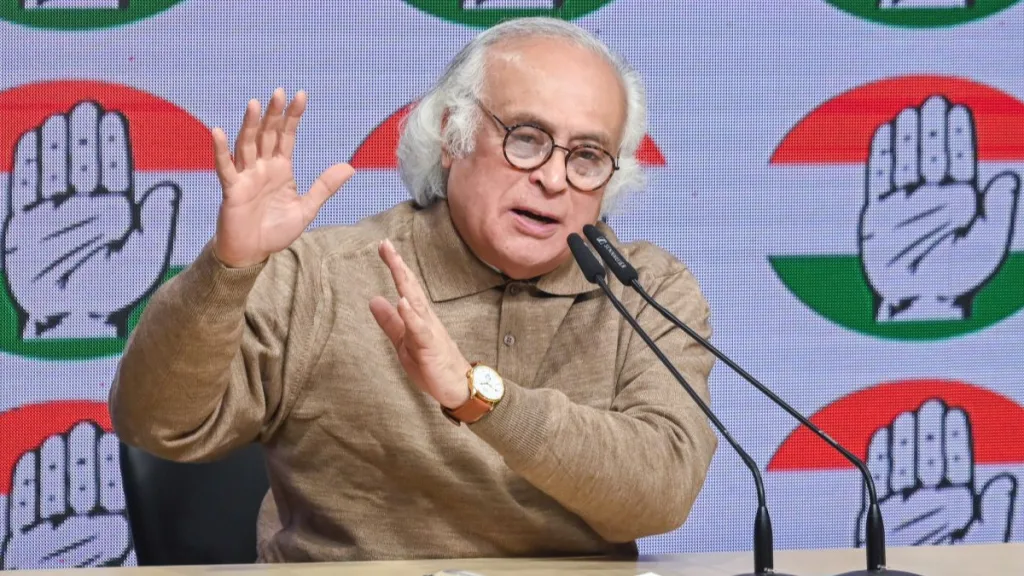
The political debate over India’s approach toward China intensified on Tuesday after the Congress party launched a sharp attack on the Union government, accusing it of following a policy of “calibrated capitulation” in its dealings with Beijing. The opposition party alleged that the Centre’s recent diplomatic engagements and public messaging reflected weakness rather than strategic firmness, particularly in the backdrop of unresolved border tensions and continuing geopolitical concerns.
Senior Congress leaders questioned the government’s handling of India-China relations, arguing that despite repeated assurances from the ruling establishment, the situation along the Line of Actual Control (LAC) has not fully returned to normal. The party claimed that India’s foreign policy posture toward China appeared inconsistent with the strong rhetoric projected domestically by the government.
The criticism comes at a time when diplomatic interactions between New Delhi and Beijing have shown signs of cautious engagement after years of strained relations triggered by the military standoff in eastern Ladakh. While both countries have held multiple rounds of military and diplomatic talks to reduce tensions, several friction points reportedly remain unresolved.
Congress leaders argued that the government has failed to provide transparency regarding the current ground realities along the border. They alleged that public discourse has been carefully managed to avoid acknowledging the full extent of the strategic challenges posed by China. According to the opposition party, this approach undermines democratic accountability and weakens India’s negotiating position.
The remarks were accompanied by renewed references to earlier statements made by Prime Minister Narendra Modi and senior ministers concerning border security and territorial integrity. Congress leaders contended that the government’s current diplomatic posture contradicts its earlier claims of a strong and uncompromising stand against Chinese aggression.
The party further asserted that India’s economic and trade engagement with China continues to expand despite repeated political assertions about reducing dependence on Chinese imports and investments. Congress spokespersons claimed that the widening trade imbalance reflects policy contradictions and raises concerns about long-term economic vulnerability. 
The Centre, however, has consistently maintained that India’s national security interests remain paramount in all engagements with China. Government officials have repeatedly stated that peace and stability along the border are essential prerequisites for the normalization of bilateral ties. The administration has also highlighted infrastructure development along border regions, military preparedness, and strategic partnerships with global allies as evidence of its commitment to safeguarding national interests.
Foreign policy analysts believe the issue remains politically sensitive because India-China relations are deeply linked to national security, regional stability, trade, and global diplomacy. The ongoing tensions since the Galwan Valley clashes significantly reshaped public perception of China in India and increased scrutiny of the government’s diplomatic strategy.
Experts note that while India has adopted measures aimed at strengthening domestic manufacturing, tightening investment rules, and boosting strategic alliances in the Indo-Pacific region, maintaining diplomatic channels with Beijing remains necessary due to the complexity of bilateral relations. China remains one of India’s largest trading partners, and both countries continue to play influential roles in multilateral organizations and regional forums.
The Congress party’s criticism also reflects broader political efforts by the opposition to challenge the government on foreign policy and national security issues ahead of future electoral battles. By framing the China policy debate around questions of transparency, sovereignty, and strategic consistency, the opposition seeks to place pressure on the ruling establishment over one of the country’s most critical geopolitical concerns.
Meanwhile, the government has avoided responding directly to the latest allegations, with officials reiterating that India’s approach toward China is guided by national interest, strategic caution, and long-term security considerations.
As diplomatic engagement between the two Asian powers continues amid persistent border concerns, political confrontation within India over the handling of China relations is expected to remain a major issue in national discourse.