
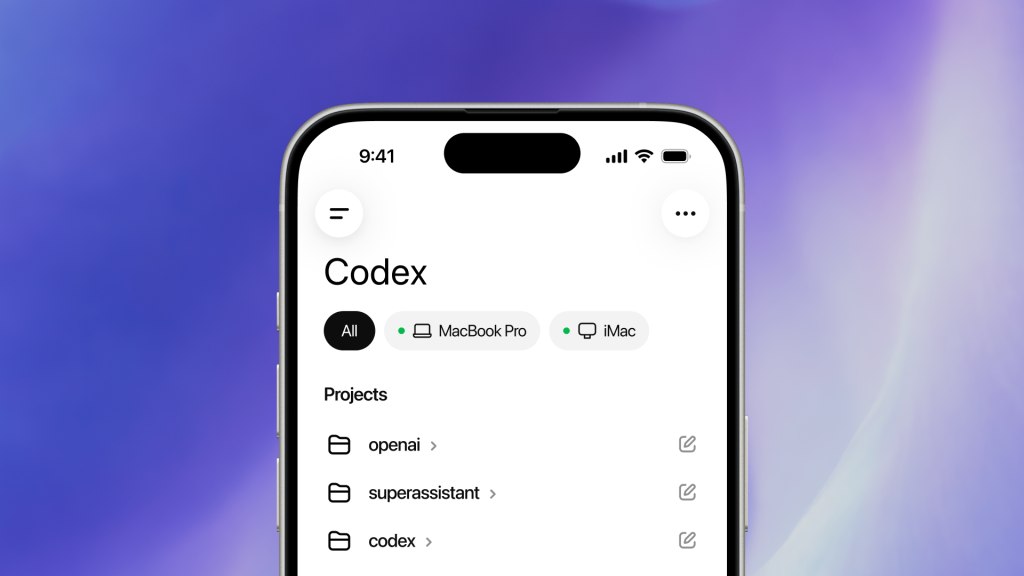
OpenAI has introduced its advanced coding assistant Codex to the ChatGPT mobile application, marking a significant step toward making AI-powered software development more accessible on smartphones and tablets. The move reflects the company’s broader push to integrate professional-grade AI coding tools into everyday workflows, enabling developers, students, and technology enthusiasts to write, review, and understand code directly from mobile devices.
The latest rollout brings Codex capabilities into the ChatGPT ecosystem on mobile platforms, allowing users to interact with AI-assisted coding features while on the move. The integration is expected to streamline programming tasks for users who increasingly rely on mobile devices for productivity and collaboration.
Codex, which powers many AI coding experiences, is known for its ability to generate programming code, explain software logic, debug scripts, and assist with technical problem-solving through natural language prompts. By embedding the tool into the ChatGPT mobile app, OpenAI aims to make coding support more immediate and portable, reducing the need for desktop-only environments in certain development scenarios.
The company’s decision comes at a time when demand for AI-assisted software development tools continues to rise globally. Developers across industries are increasingly using generative AI systems to automate repetitive coding tasks, accelerate debugging processes, and improve efficiency in software engineering projects. Mobile accessibility further broadens the usability of such systems for remote teams, freelance programmers, and learners.
Industry observers view the integration as part of a larger trend in artificial intelligence where conversational AI platforms are evolving into multifunctional productivity ecosystems. Rather than serving only as chat interfaces, these applications are gradually becoming all-in-one digital assistants capable of supporting coding, content creation, research, data analysis, and workplace collaboration. 
With Codex on mobile, users can reportedly generate code snippets, ask technical questions, receive explanations of programming concepts, and troubleshoot issues within the ChatGPT app interface. This functionality may prove particularly useful for quick coding references, educational purposes, or reviewing scripts while away from a computer workstation.
The expansion also highlights the growing competition among major technology companies developing AI coding assistants. Over the past year, the market has seen rapid advancements in tools designed to help programmers write software faster and with fewer errors. AI coding systems are increasingly being integrated into development platforms, enterprise software suites, and cloud-based engineering tools.
OpenAI’s continued investment in Codex suggests that the company sees software development assistance as one of the most commercially valuable applications of generative AI technology. By extending access to mobile users, the company is targeting a broader audience that includes students, startup founders, independent developers, and professionals working in fast-paced digital environments.
The integration may also influence how coding education evolves in the coming years. AI-driven tools capable of explaining code logic and generating examples in real time are becoming important learning aids for beginners entering the programming field. Mobile availability makes such resources easier to access for users in regions where smartphones serve as the primary computing device.
Technology analysts believe that AI-powered coding assistants could significantly reshape software development practices by reducing development time and lowering technical barriers. However, experts also continue to emphasize the importance of human oversight, code verification, cybersecurity awareness, and responsible AI usage to avoid errors or vulnerabilities in generated code.
OpenAI has steadily expanded ChatGPT’s capabilities through new tools, integrations, and multimodal features. The addition of Codex to the mobile experience aligns with the company’s ongoing strategy of positioning ChatGPT as a central AI productivity platform rather than simply a conversational chatbot.
As generative AI adoption accelerates worldwide, mobile-first AI development tools are expected to play a major role in shaping the future of software engineering, digital learning, and workplace productivity.