
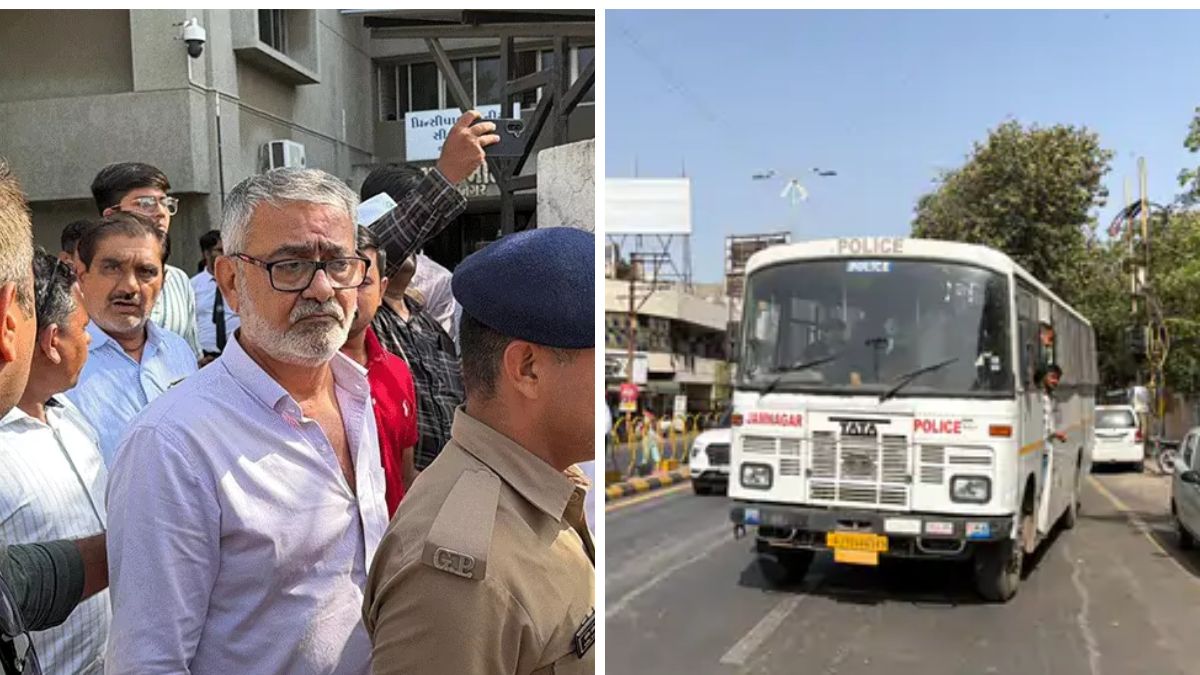
More than three decades after one of India’s most significant arms smuggling conspiracies came to light, a special court in Gujarat has delivered a landmark verdict, convicting 12 individuals in a case linked to underworld figure Dawood Ibrahim. The judgment marks the culmination of a prolonged legal and investigative process that began in the early 1990s.
The case traces back to 1993, when a large cache of weapons and explosives was clandestinely landed along the Gujarat coast. Investigators later established that the operation was part of a broader conspiracy orchestrated by criminal syndicates with international connections, aimed at destabilizing the country in the aftermath of the Babri Masjid demolition.
The case was registered in July 1993 under stringent anti-terror laws, including the Terrorist and Disruptive Activities (Prevention) Act (TADA), along with provisions of the Indian Penal Code, Arms Act, and Explosives Act. Over the years, the investigation stretched across decades, involving multiple law enforcement agencies and senior officers.
Authorities arrested 46 individuals in connection with the conspiracy, while several others remained absconding. The probe formally continued until 2018, reflecting the complexity and scale of the case.
During the trial, which began years later, the prosecution presented testimonies from dozens of witnesses and relied on extensive documentary and forensic evidence to establish the chain of events.
According to the prosecution, the smuggling operation was planned overseas, with key conspirators meeting in Dubai. The plan allegedly involved coordination with foreign elements, including maritime operatives, to transport weapons into Indian territory via sea routes.
The arms consignment reportedly included RDX explosives, assault rifles, hand grenades, and other ammunition. The weapons were transferred mid-sea between vessels before being brought ashore near the Gujarat coastline. From there, they were distributed to different locations across India, including parts of Gujarat and other states.
Investigators highlighted the use of advanced communication systems and coordinated logistics, pointing to a well-organized network operating across borders.
In its judgment, the special TADA court convicted 12 of the accused while acquitting 17 others due to lack of sufficient evidence. The court noted that several accused had either died during the prolonged trial or were discharged at various stages of the legal process.
Among those convicted, most have been sentenced to five years of imprisonment, while two individuals received longer sentences of seven years, reflecting their greater involvement in the conspiracy. 
The court’s decision comes nearly 33 years after the crime was first registered, underscoring the slow but persistent functioning of the justice system in complex terror-related cases.
Despite the convictions, several key accused—including high-profile figures linked to organized crime networks—remain absconding and are believed to be outside India. The case has long been associated with larger terror plots of the early 1990s, including networks allegedly connected to the 1993 Mumbai serial blasts.
Officials stated that the conspiracy was rooted in retaliatory motives following communal tensions, with the objective of spreading fear and unrest through coordinated acts of violence.
The verdict is being viewed as a significant milestone in India’s fight against organized crime and cross-border terrorism. Legal experts note that the case demonstrates the challenges of prosecuting complex conspiracies involving multiple jurisdictions, international actors, and long timelines.
At the same time, the judgment reinforces the importance of sustained investigation and judicial perseverance, even in cases where justice is delayed by decades.